
 Skip to main content
A permanent pool fence in St. Louis costs about $25 to $40 a foot installed in aluminum, or about $40 to $50 a foot in 4 foot vinyl picket, based on our own installed prices. For a 150 foot pool enclosure, that comes to about $3,750 to $6,000 in aluminum before gates. Removable mesh runs lower and glass far higher, as the HomeGuide figures further down show.

In today’s business climate, securing commercial properties is a critical concern that occupies the minds of property managers and business owners alike. We understand that the threats faced are not only diverse but also evolving with increasing sophistication.


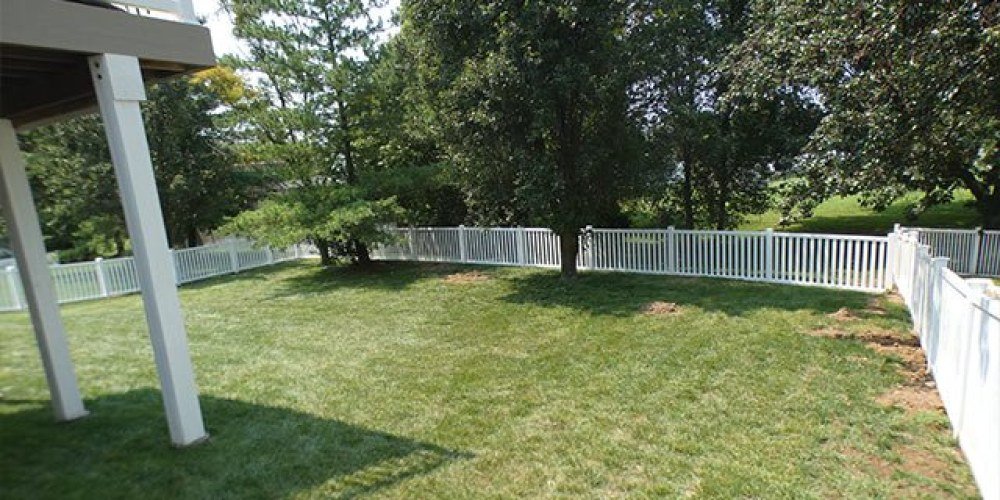
The best dog fence for a yard has nothing to climb, no gap at the ground, and pickets too close to squeeze through. Most fences for dogs only need to be 4 feet tall. Small dogs also need tight pickets, about 1 5/8 inches apart. Strong jumpers need 5 to 6 feet. I pick the gap first, because a tall fence does nothing if your dog can walk between the pickets.
Want the height and gap set for your dog? Read about our dog fence installation. Or call 636-464-1144, and we will measure your yard at a free, no-obligation estimate.
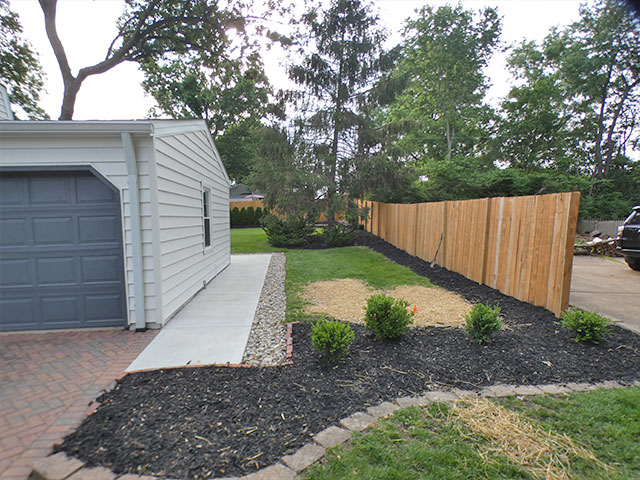
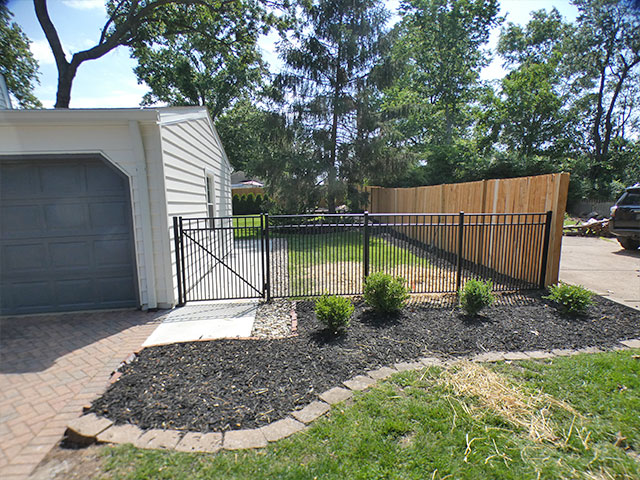
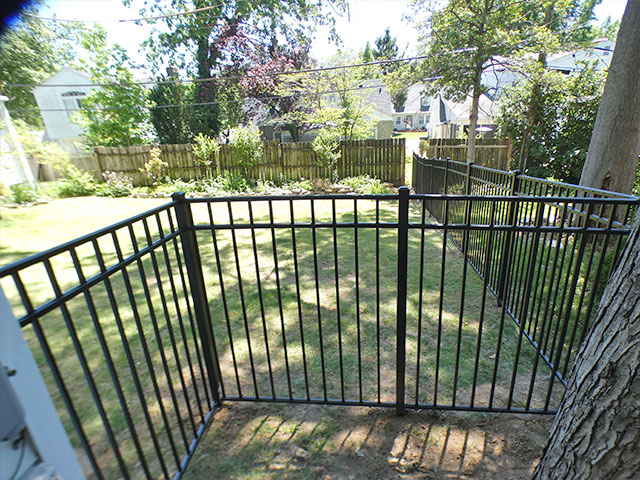
Choose in this order:
| Your dog | What to build |
|---|---|
| Small, squeezes through | 4 feet tall. Pickets about 1 5/8 inches apart. Aluminum with tight dog pickets. |
| Medium or large | 4 to 4 1/2 feet tall. Pickets 3 11/16 to 3 15/16 inches apart. Standard aluminum or vinyl picket. |
| Jumps | 5 to 6 feet tall, standard gap. No rail low enough to push off. |
| Digs | 4 feet tall, standard gap. Bottom rail kept tight to the ground, even on a slope. |
| Barks at people walking by | 5 to 6 feet tall, no gap. Solid vinyl privacy panels that block the view. |
| Chews | 4 feet tall, standard gap. Aluminum or vinyl, with nothing soft to chew. |
The gaps in this table come from real jobs, listed below. Standard picket gaps ran from 3 11/16 to 3 15/16 inches, because each fence style is a little different.
Test the gap against your smallest dog before you buy. Hold the fence sample next to it. If its head fits through the gap, choose a tighter gap. In Imperial, the homeowner ran this test first. Then we built 160 feet of white vinyl picket for their dogs.
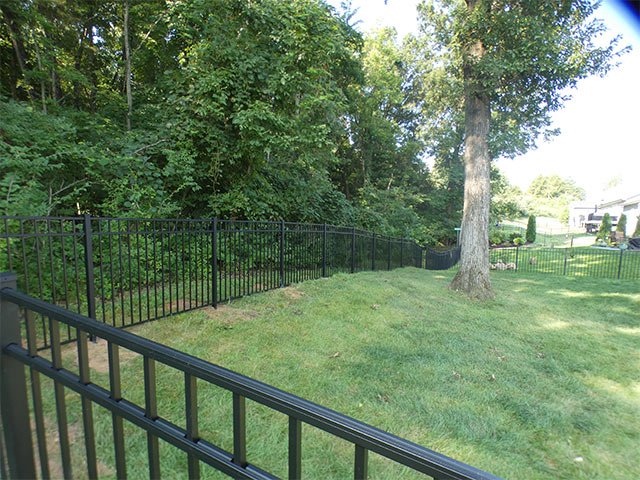
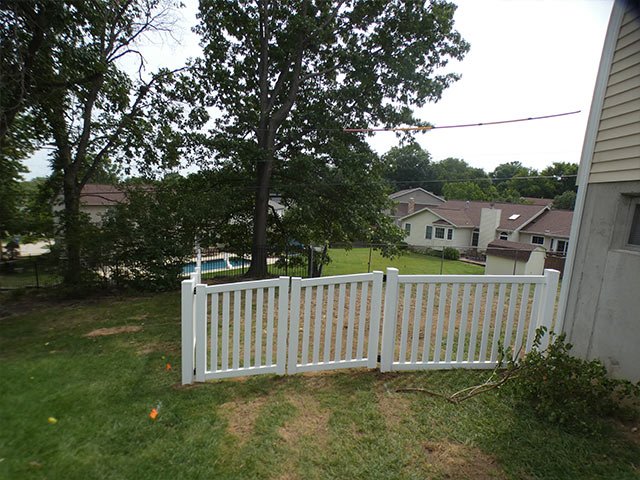
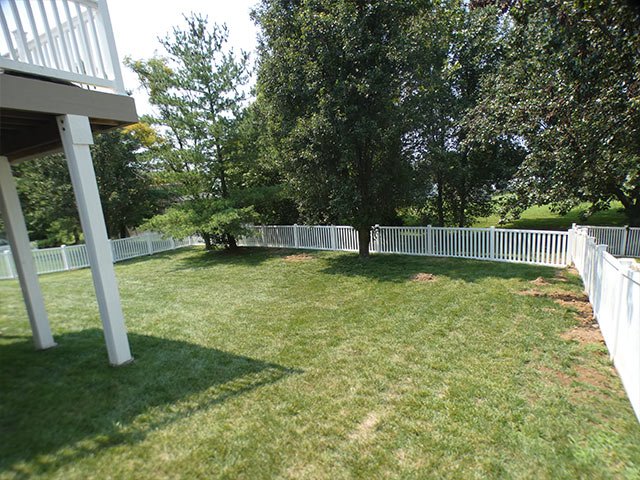
Click a town to see that job’s before and after photos.
All five fences were 4 to 4 1/2 feet tall. The height was never the hard part. The gap, the ground and the gates were.

Before you choose, watch your dog from inside the house for a few days. Dogs often behave differently when they know you are watching. How your dog tries to leave tells you which fence you need.
Why a dog wants out matters too. A bored or lonely dog keeps testing the fence. A dog that sees other dogs or people passing by may try to chase them. A fence keeps your dog in, but it will not fix boredom. If boredom is the reason, you do not need a taller fence first. You need more time and exercise with your dog.
Two gate habits I would build in from day one. Where the ground allows, swing the gate in toward the yard, so a dog that jumps on it pushes it shut. And use a latch your dog cannot work open with its nose.
Every material below is maintenance-free. None of them rot, and none need painting.
One thing we do not do: we do not install buried electric fences. A buried wire and a collar will not stop a dog that decides the chase is worth it. It also will not keep other animals out. If you are still weighing one, our invisible fence cost guide sets its price next to a real fence.
You do not have to fence your whole property. Most dog owners pick one of these four layouts.
You can also fence your dog out of a space instead, like a garden or a pool area. To work out the length for any layout, see how much fence you need.
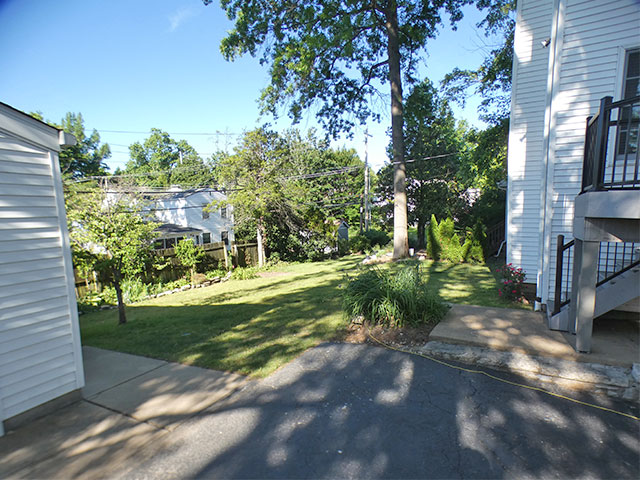
A dog fence around St. Louis often has to pass more than your dog’s test. These came up on the jobs above.
For most dogs, a 4-foot aluminum fence with nothing to climb and a gap your dog cannot fit through. Small dogs need pickets about 1 5/8 inches apart. A dog that barks at people walking by does better behind solid vinyl privacy panels.
The Eureka dog fence above is Elite aluminum. We are also a listed installer for Catalyst, the fence brand of Barrette Outdoor Living. Neither brand needs paint, and the aluminum is powder coated so it does not rust. The warranty on the fence itself comes from each maker.
A fence with tight picket spacing. For two small dogs in Kirkwood, we closed the gap to 1 5/8 inches. That kept the dogs in without a solid fence.
A 4-foot fence holds most dogs. All five dog fences on this page are 4 to 4 1/2 feet tall. A dog that jumps well needs 5 to 6 feet.
The five dog fences on this page took 1 or 2 days each, for 38 to 160 linear feet. A city post hole inspection can add a wait before the fence goes up.
A permanent yard fence needs posts set in the ground. Where a post has to sit on concrete, we can bolt it down instead of digging. We did that on a Kirkwood sidewalk and a Brentwood patio in May 2026. Fences with no posts at all are portable pens, not yard fences.
Fence only the part of the yard your dog uses. And if your dog is too big to fit through a standard gap, skip the tighter dog picket style. In Eureka, a mid-size dog meant the owner did not need to pay for it. For current prices, see our vinyl fence cost guide.
Big enough for your dog to run. The jobs above run from 38 to 160 linear feet. Kirkwood needed 38 feet for a small dog area, and Imperial needed 160 feet around a back yard. Fence the space your dog uses.
Yes, if you can set posts straight and level and keep the bottom tight to the ground. We sell fence materials for do-it-yourself jobs through our fence supply store.
None of the fences on this page need painting or staining. Wash them with a hose when they get dirty. Once a year, check the gate latch and hinges, and tighten them if the gate starts to drag.
A tie-out, a trolley line or a portable pen can work for short times while you are outside. None of them hold a determined dog the way a real fence does.
Read what homeowners say about their fences.
We are a listed Catalyst installer. Catalyst is the fence brand of Barrette Outdoor Living, and you can look us up on its public installer directory.
Our installation work carries a one-year guarantee, and the fence materials come with the maker’s own warranty. At our showroom in Arnold you can see the panels, gates and picket gaps in person.
Book a free on-site estimate for your dog fence, or call 636-464-1144.
Still comparing fence types? Download this free guide:


A privacy fence in the St. Louis area is normally 6 feet tall, and most municipalities let you build to 6 feet without a variance. Go taller and you are usually asking permission. That is the short answer, and that one rule settles more designs than any style choice does.

The main types of fences are vinyl, aluminum, ornamental steel, and wood, and each one trades off cost, upkeep, and security differently. For most St. Louis yards, vinyl or aluminum wins on cost over time, and steel wins on raw security. Wood costs less to buy but needs yearly upkeep and rarely reaches its full 20-year lifespan. Vinyl, aluminum, and ornamental steel need almost none.
We install vinyl, aluminum, and ornamental steel. The sections below weigh real trade-offs rather than push you toward one material. See our vinyl, aluminum, and steel pages for the real jobs and specs behind each material. Or call 636-464-1144 and ask what a straight-across price looks like for your yard.
| Material | Cost per Foot, Installed | Typical Lifespan | Maintenance | Privacy |
|---|---|---|---|---|
| Wood | Lower to buy, more over time | Up to 20 years, with yearly care | Yearly cleaning and staining | Yes, solid boards |
| Vinyl | $45 to $75 | 20 to 30 years | Occasional rinse | Yes, solid panel |
| Aluminum | $20 to $45 | Lifetime limited warranty | Occasional rinse | No, open picket |
| Ornamental Steel | Above aluminum | 20 years to lifetime, by grade | Occasional rinse | No, open picket |
| Chain Link | Lowest to buy | Years, rusts at cut ends | Minimal | No, unless slatted |
Wood is the fence most people picture first, and it has a real natural look nothing else fully matches. A well-built wood fence can last up to 20 years, but that number assumes yearly cleaning and re-staining. Skip a season or two and rot, warping, and insect damage show up fast.
We do not install wood fencing. If low upkeep matters more to you than a stainable look, wood is not the right choice. That is true no matter who installs it. Want the wood look without the yearly maintenance? Our composite fencing mimics wood grain and stone texture, with no rot risk.
Vinyl is solid PVC, so it blocks sightlines completely and needs almost no upkeep beyond an occasional rinse. We were at the Emht property in Imperial on 29 July 2026. The job: a 160-foot run of white vinyl spaced picket fencing. It matched a neighbor’s fence we had put in about 10 years earlier. When we walked the two fence lines side by side, we found no difference in color or straightness. The new panels matched the decade-old ones exactly. That older fence had held up fine for a decade already, still standing and doing its job with no repairs. That is real evidence, not a marketing claim.
Bufftech vinyl is the brand behind the Emht job above. It comes in privacy, semi-privacy, and picket styles. Colors run from white to almond, clay, and a few blended shades. It typically lasts 20 to 30 years and runs $45 to $75 a foot installed in the St. Louis area.
Vinyl is not for you if you want to see through the fence. A solid panel is the whole point of the material. That trade-off stays no matter which style you pick. Full pricing and style options are on our vinyl fence installation page.
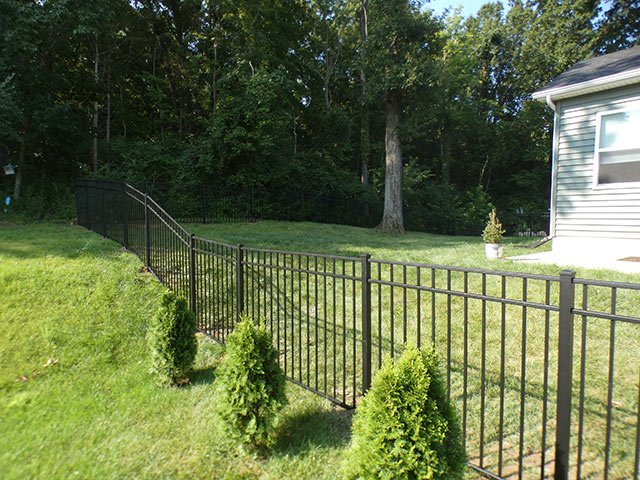
Aluminum is an open picket style. You keep your sightline while still fencing in a yard, pool, or pet area. The Criscione job in Eureka came with one restriction: the homeowners association allowed only a single approved fence style for the whole subdivision. We installed matte black Elite aluminum, and it cleared design review with zero changes requested.
Elite offers this aluminum in four grades — residential, commercial, industrial, and heavy industrial — with the higher grades built to take more force. Picket spacing can also be ordered tighter for small dogs or cats. It runs $20 to $45 a foot installed, usually $25 to $40. The material itself carries a lifetime limited warranty, filed directly with Elite rather than through us.
Aluminum will not give you privacy. A picket can also bend under a hard enough impact, since the material is lightweight. Steel solves both of those problems at a higher price. See our aluminum fence installation page for grade specs and more job photos.
Steel is the strongest of the three materials we install. A welded frame takes more force to bend or breach than aluminum’s bolted-together sections. That is why steel shows up on commercial sites and high-security jobs.
We have not yet installed and photographed a steel job for this site. There is no in-house case study to link here yet. The specs below are Ameristar’s own published numbers, not something we measured ourselves. Ameristar’s Montage line uses pre-galvanized steel with an E-coat finish. The industrial-grade version carries a 20-year manufacturer warranty, and the residential line carries a lifetime limited warranty.
Steel is priced above aluminum once you match height and style, and the added weight can slow installation down on a tricky site. If your only goal is a decorative touch around a flower bed, that extra strength buys you nothing you need. Save the higher cost for a spot that actually calls for it. Full grade and finish specs are on our steel fence installation page.
Chain link is steel wire woven into a diamond pattern and stretched between posts. It is the cheapest fence to buy, it is see-through, and it holds up for years with almost no care. That combination is why it shows up around dog runs, ballfields, and plain property lines.
We do not install chain link. The cut ends of the galvanized wire rust over time. The open diamond pattern also gives you zero privacy unless you thread slats through it, and most homeowners end up disliking that look within a year. If you want that same open, budget-friendly sightline without the rust risk, see how chain link stacks up against aluminum before you decide.
Search around and you will also find other names on fence-type lists: split rail, bamboo, and electric or invisible fencing. Split rail and bamboo mark a property line without giving privacy or security. We do not install either.
Invisible or electric fencing is not really a fence at all. It is a pet-containment system, and it will not stop a person from entering your yard or keep a deer out of your garden. If keeping a pet in the yard is the actual goal, compare invisible fencing against a regular fence first.
One common courtesy question we get: which side of the fence should face your neighbor? Most installers, us included, turn the finished side toward the neighboring yard as standard practice. Nothing legally requires it in most St. Louis municipalities, but it is the polite default.
Aluminum usually wins on cost per foot, running $20 to $45 a foot installed. Wood can cost less to buy, but yearly staining and earlier replacement often erase that savings within a decade.
Vinyl, aluminum, and ornamental steel are all close to tied here. None of them need more than a quick hose-down now and then. Wood is the clear outlier, needing yearly cleaning and staining to reach its full lifespan.
Ornamental steel is the strongest of the four, followed by aluminum. Vinyl holds up well against weather and rot. It is softer than either metal, though, and can crack under a hard direct impact.
Composite costs more up front than wood, and color options are more limited than vinyl. It also cannot fully replicate the exact grain pattern of real wood, though it comes close enough for most homeowners.
Vinyl wins on color range and price. Composite wins if you specifically want a wood-grain or stone look without wood’s maintenance. Neither one rots, and both beat wood on long-term cost.
Every vinyl, aluminum, and steel job on this page is handled start to finish by our own crews, not a subcontractor. That’s true anywhere in St. Louis or the Metro East. We back the labor with a one-year workmanship guarantee, on top of whatever warranty the manufacturer carries. We’re a listed Catalyst installer. You can check that for yourself at catalystfence.com’s own installer search before deciding who fences your yard.
Here’s what actually happens after you reach out:
Our Arnold showroom keeps samples of vinyl, aluminum, and steel. Stop by to see the color and weight in person before deciding. Local homeowners have written up their own experience working with us — read it on our reviews page.

Vinyl, aluminum, and ornamental steel fences all clean the same basic way: warm water, a mild soap, and a soft cloth or a garden hose. None of them need the yearly power-washing and re-staining a wood fence does. The exact method changes by material, though. A couple of common household cleaners will damage the wrong one, so use the section below that matches what you own.
We install vinyl, aluminum, and ornamental steel fencing across St. Louis, and every one of them is built to need almost no upkeep. In our experience walking these yards afterward, we often find the owners who rinse twice a year never call us about anything worse than pollen fill. “Almost none” still means an occasional rinse, so here is exactly how to do it right for each material.
Vinyl is the easiest of the three to clean, and most of the time a garden hose is all you need. For everyday dirt and winter mud splash, spray the fence down from top to bottom, working both sides of the panel.
What to use: warm water, a few drops of Dawn dish soap, and a soft cloth or sponge.
For algae or green staining on the shaded side of a panel, mix one part white vinegar with four parts water. Spray it on and let it sit five minutes. Scrub lightly with a soft brush, then rinse. Never mix vinegar with bleach or a chlorine-based cleaner. The combination produces chlorine gas, and that gas is dangerous to breathe. Use vinegar alone, and rinse it fully before trying anything else.
Pressure washing vinyl is generally safe at a moderate setting, 1,500 to 2,000 PSI, held at least a foot from the panel. Get closer or go higher and you risk driving water into the seams. A magic eraser works on stubborn scuff marks. It can dull a glossy finish with repeated use, so save it for spot treatment, not the whole fence.
If you’re shopping for a new fence instead of maintaining one, our vinyl fence installation page covers colors, styles, and what a new one runs.
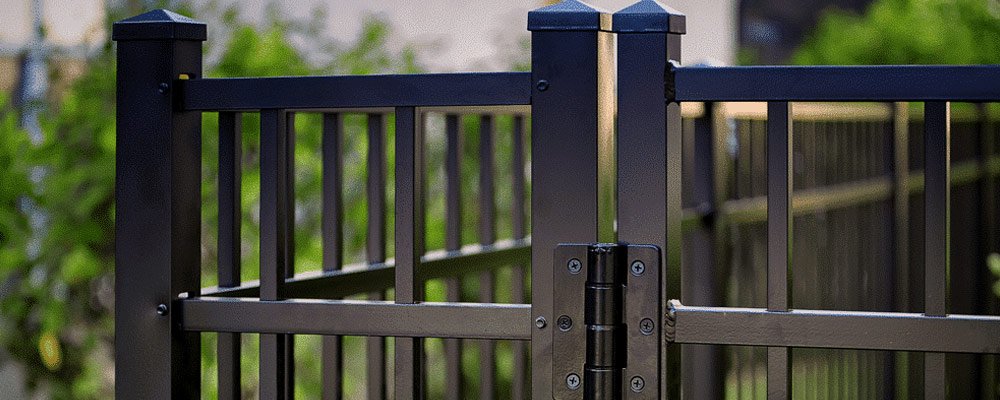
Aluminum needs the least attention of any material on this page. A soft, dry or slightly damp cloth wiped along the rails and pickets a few times a year handles ordinary dust and pollen. For anything sticky or caked-on, warm water with a drop of dish soap is enough.
Do not use vinegar or any acidic cleaner on aluminum. Vinegar is fine on vinyl and steel. Aluminum’s powder-coat finish is thinner, though, and acid strips it. That exposes bare metal underneath to corrosion. This is the one material here where the vinyl-safe method will actively damage the fence.
Aluminum also handles pressure washing at a low setting. It rarely needs it, though. A garden hose rinses off pollen and dust just as well, with no risk of forcing water behind the powder coat at a seam.
Thinking about switching to aluminum? Our aluminum fence installation page has the grades we carry and photos from real yards.
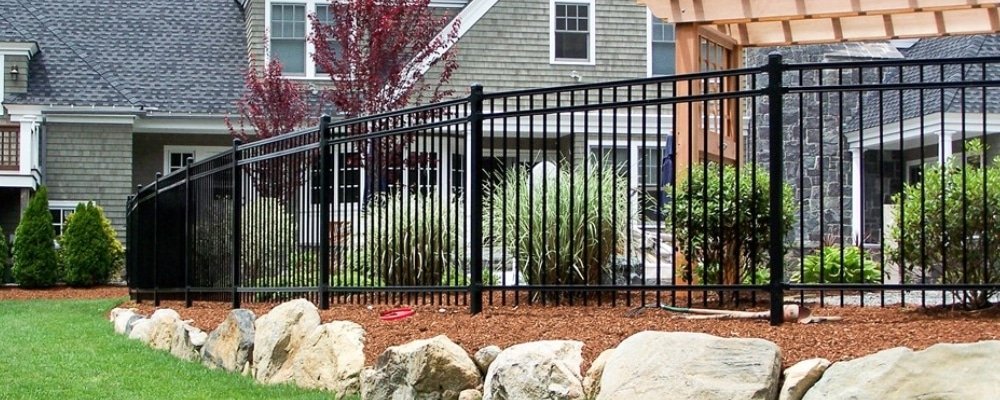
Steel takes a bit more effort than aluminum. The ornamental detail work – scrolls, finials, tighter picket spacing – collects more grime in the joints. Wash it by hand rather than with a pressure washer. A pressure washer can chip the surface coating at close range, and once that coating breaks, the exposed steel underneath starts to rust.
What to use: warm water with a squirt of dish detergent, a soft cloth for the flat rails, and a soft-bristle brush for the decorative joints. An old toothbrush works fine for the scrollwork. Work top to bottom, so you are not re-dirtying a section you already cleaned. Diluted vinegar is safe on steel too, the same as vinyl, for algae or hard-water spotting. Just avoid it on any section with visible paint wear. It can dull a painted finish over time.
Ready to price out steel instead? Head to our steel fence installation page for the Ameristar lineup and finish options.

This composite fencing is a polyethylene shell reinforced with galvanized steel. It cleans closer to the steel method than the vinyl one. Wipe it down with a soft cloth and warm water for routine dust. For algae or built-up grime in the textured grain pattern, mix one part vinegar to four parts water, spray it on, and wipe it off.
Rinse the vinegar solution off completely with plain water afterward. Left to sit, the acid can react with the steel reinforcement over years of repeated exposure. Rinsing every time you clean avoids that entirely.
Yes. A few drops of Dawn in warm water is one of the safest, most common ways to clean vinyl. It cuts through dirt without leaving residue and will not damage the surface.
Mixing them is not dangerous. The soap’s alkalinity cancels out the vinegar’s acidity, though, so the combination cleans worse than either one alone. Use dish soap for everyday grime. Use vinegar separately for algae or mineral staining.
Never mix vinegar with bleach or any chlorine-based cleaner. The combination releases chlorine gas, which is dangerous to breathe. Use one or the other, never both, and rinse fully between products if you switch.
Yes, at a moderate setting of 1,500 to 2,000 PSI held at least a foot away from the panel. Higher pressure or a closer distance can force water into the seams or etch the surface.
Mix one part white vinegar with four parts water. Spray it on, let it sit five minutes, then scrub with a soft brush and rinse. That removes algae from vinyl, steel, and composite. Skip vinegar on aluminum. Use plain soap and water instead, since vinegar’s acidity damages aluminum’s powder coat.
If your current fence needs more than a rinse to look decent again, that is usually a wood fence problem, not a maintenance-free one. Wood needs yearly cleaning and re-staining to reach its full lifespan. Vinyl, aluminum, and steel need only what is on this page, a few times a year at most.
This page is not for a cracked panel, a leaning post, or a section already stripped down to bare metal. That needs replacing, not a cleaner, and it is outside what this guide covers. For the ordinary rinse-and-wipe kind of upkeep above, that is the whole job.
Call 636-464-1144 and we’ll walk your yard and price out whichever material fits. Look us up first if you want: catalystfence.com’s own installer search lists us, since we’re a Catalyst-listed installer. St. Louis homeowners who’ve already had us out have posted their own notes on our reviews page.

Do you live in a part of the country that has a colder climate than others? If so, you’re no stranger to the snow, sleet, hail, and plummeting temperatures that can characterize any season but grow exponentially more drastic in the wintertime.

An above ground pool fence is a barrier at least 48 inches tall that keeps children and pets away from the water. St. Louis County’s guide asks for a pool permit above 24 inches of water. It wants the barrier 48 inches high with no opening that passes a 4-inch ball, and it lets a 48-inch pool wall count as the barrier when the ladder is fenced.
This guide covers which permits apply, when the pool wall counts as the barrier, a five-question check for your pool and the gate numbers an inspector reads. Once you know what your pool needs, we can measure the yard and put a written price on pool fence installation in St. Louis.

Vinyl is the better fence for most St. Louis yards, as long as you plan to stay a few years and never want to stain anything. Wood is the better fence if you want the lowest price today, real grain, or the freedom to paint it any color you like. The rest of this page is how to tell which of those you are.

One common theme in house hunting is that moment when you finally find that perfect home only to discover it is missing that ever important fence. And when it comes to the topic of how to fence a yard – whatever the reason, we are here to help.

Most residential yards take 100 to 260 feet of fence. Walk the line you want to enclose and measure it in feet. That total is your linear footage, and it is the number every quote starts from. At Maintenance-Free Outdoor Solutions we price from that line, not from the lot size. The five jobs documented below ran from 38 feet around a small dog run to 260 feet around a whole yard.
Three things change it once you have it. Gates replace a section of fence and cost more than the fence they replace, so count them separately. Corners each need their own post, so a yard with several turns uses more posts than a straight run of the same length. Slope means the fence is either stepped down in sections or raked to follow the grade, and both use more material than flat ground.
For scale, these are real St. Louis yards and what they actually took. Five jobs we completed and documented. 38 feet for a small dog run in Kirkwood. 100 feet around a patio in Brentwood. 122 feet for pet containment in Eureka. 171 feet around a pool in Barnhart. 260 feet with four gates in St. Louis. Most residential jobs land between 100 and 260 feet.
A shortcut before you measure anything: your plat or property survey already has the boundary dimensions on it. Starting there is faster than a tape measure, and it shows you where the line actually is.
Fifteen minutes with a tape measure and your plat map gets you a number you can order from. Building it yourself? Get your materials from our fence supply store. Rather we handled it? Send us your measurements and we will price the job.

A pool fence in the St. Louis area has to stand at least 48 inches tall and sit no more than 2 inches off the ground. The pickets have to be close enough to block a 4 inch sphere. That is the short answer, and those three numbers decide whether your fence passes inspection. Everything else, the material, the color, the style, is your choice.
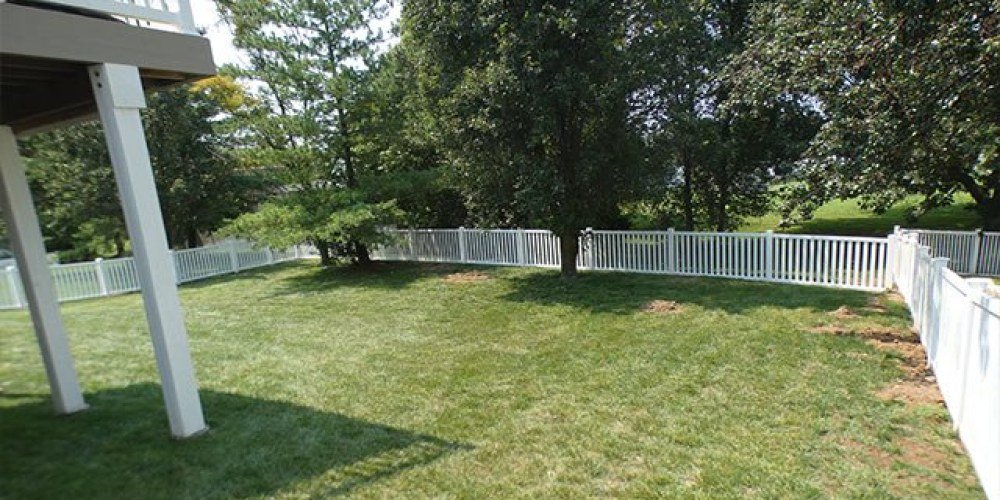
If you are comparing fence materials for a St. Louis yard, lifespan usually matters more than brochure claims. When homeowners ask me how long vinyl fences last, I tell them the answer depends less on the panel surface and more on posts, drainage, and seasonal soil movement.
This guide explains the real lifespan range, how St. Louis weather affects durability, and what shortens service life faster than most people expect.
A vinyl fence in St. Louis typically lasts 20 to 30 years, with 50+ years possible when installation, drainage, and material quality are all strong.
Vinyl fencing is a synthetic fence system made from PVC (polyvinyl chloride) designed to resist moisture, rot, and insect damage while requiring minimal maintenance.
It is commonly used for privacy, decorative, and perimeter fencing due to its durability, weather resistance, and long-term cost efficiency.
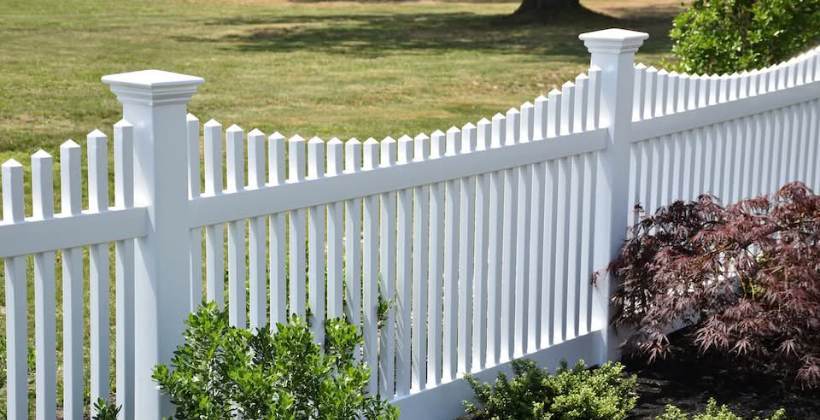
Vinyl fences typically last 20 to 30 years, with some reaching 50 years or more under ideal conditions, but that range depends heavily on several factors like installation quality and the environment.
In St. Louis, the lifespan of a vinyl fence is mainly determined by material quality, installation quality, and site conditions, with most early failures tied to posts, footings, and gates rather than the vinyl itself. In practice, structural performance matters far more than surface appearance.
When I evaluate lifespan, I focus on:
Real-world evidence backs this up. On the Emht job in Imperial, 29 July 2026, we installed 160 linear feet of white vinyl spaced picket fence to match a neighbor’s fence we had installed about 10 years earlier. That older fence was still standing and functional after a decade – the exact style was discontinued, but the posts and structure had held up, which is the kind of long-run proof a brochure can’t give you.
| Factor | Impact on Lifespan | Why It Matters |
|---|---|---|
| Post depth & footing | Very High | Controls structural stability |
| Drainage | Very High | Prevents soil weakening and leaning |
| Vinyl quality | Medium | Affects cracking and fading |
| Installation spacing | High | Allows for expansion/contraction |
| Sun & wind exposure | Medium | Adds stress over time |
Higher-quality vinyl fencing resists fading, cracking, and brittleness through thicker walls and UV inhibitors, which is especially important in varied climates where lower-grade materials can fail faster under seasonal stress.
Cold weather exposes quality gaps fast. Synthetic fencing has been used since the 1980s and is known for low maintenance and weather resistance, but cheap formulations can become brittle during winter snaps, which means a bump from lawn equipment or wind-blown debris does more damage.
I have found that proper vinyl fence installation, especially post depth, footings, spacing, and gate framing, has the biggest impact on how long a vinyl fence lasts. Most failures start below ground, not in the panels, making structural setup far more important than surface materials.
Common installation issues that reduce lifespan:
Vinyl naturally expands and contracts, so proper installation allows movement while keeping the structure rigid where it matters most.
Soil drainage, sun exposure, and wind loads directly impact how long a vinyl fence lasts. Even high-quality materials can fail early if the site conditions create ongoing stress at the posts or across the panels.
I treat site exposure as a structural factor, not a cosmetic one. Poor drainage weakens soil and increases leaning risk, while full sun accelerates expansion and material fatigue. Open, windy areas add stress, especially on privacy fences, which makes proper layout and reinforcement critical from the start.

The local St. Louis climate creates repeated stress cycles: over 40 freeze-thaw cycles per year, about 41 to 45 inches of annual precipitation, and temperature swings from around 20°F in winter to above 90°F in summer. Those numbers matter because they explain why settling is often the real lifespan limit in this market.

Vinyl fencing typically lasts longer than wood in St. Louis because it resists moisture, rot, and insect damage, while wood depends on consistent maintenance to reach its full lifespan. In this climate, humidity, rainfall, and shade often accelerate wood deterioration more than vinyl wear.
| Feature | Vinyl Fence | Wood Fence |
|---|---|---|
| Lifespan | 20–30+ years | 10–20 years (varies) |
| Maintenance | Low | High |
| Moisture resistance | Excellent | Poor |
| Rot risk | None | High |
| Cost over time | Lower long-term | Higher due to upkeep |
For St. Louis homeowners, moisture and humidity make that distinction practical rather than theoretical. If you are deciding between wood and vinyl, the tradeoff is often lower upkeep and more predictable lifespan versus lower upfront cost and more maintenance variability.
I describe vinyl as low chore, not zero attention. Cleaning, hardware checks, and drainage awareness extend service life without turning the fence into a weekend project.
That framing matches the broader maintenance-free focus that many homeowners want from affordable vinyl fences. The biggest differentiator with maintenance-free outdoor products is reduced upkeep, not immunity from weather, hardware wear, or standing water.
I recommend mild soap, water, and a soft brush for routine cleaning, with targeted mildew treatment where needed. Rinse thoroughly so residue does not attract dirt or leave streaking on lighter colors.
I avoid harsh solvents and aggressive pressure washing. Those methods can etch the surface, loosen components, or force water into joints where it does not help anything.

I check hinges, latch alignment, and gate swing clearance after winter because freeze-thaw movement often shows up there first. Before winter, I clear drainage paths so water does not collect and freeze around posts.
If you have a pool fence, this check matters even more because self-closing gates and latching hardware are safety components, not convenience features. A fence can look fine and still fail where it matters most.
I have seen the same vinyl product age in three different ways depending on drainage, wind, and grade. That is why “maintenance-free” focus works as a material strategy, but site conditions still decide how long the structure stays straight and functional.
These examples are useful because they turn abstract lifespan talk into decision-making. The biggest differentiator in fence performance is often exposure and installation detail, not the brochure label on the panel.
I expect vinyl to hold its appearance well in damp shade because it avoids rot, but I watch the posts closely if soil stays saturated. In these yards, drainage planning usually matters more than panel quality alone.
Algae or mildew on the surface is usually a cleaning issue, not a failure issue. A grade that sheds water away from posts protects lifespan more than frequent washing does.
I treat an open, windy lot as a privacy fence stress test. Wind load increases pressure on rails, brackets, and gate posts, so reinforcement and footing strength become more important than the panel face.
Occasional panel rattle can be an early clue. It may signal loose brackets, thermal movement problems, or a structure that is starting to flex more than it should.
I pay attention to runoff and stress concentration on sloped sites. Stepped and racked layouts can both work, but each creates different pressure points and gap patterns that affect long-term stability.
Erosion control matters here more than many homeowners expect. If runoff keeps washing soil away from a few key posts, the fence can age unevenly and fail section by section.
On the Weis job in Fenton, 13 August 2026, the yard had a real slope where a double drive gate needed to sit. Our salesman measured the degree of the slope on site, and our shop built the two gate sections with a 7-inch drop so they would follow the grade and still swing correctly. A gate that does not account for slope is one of the fastest ways a fence starts failing early.
You should repair a vinyl fence when the posts are stable and the issue is isolated, but replacement is usually the better option when posts or footings are failing across multiple sections.
In most cases, structural movement, not panel damage, drives the replacement decision. Compatibility also affects the decision. Older profiles, caps, and colors can be harder to match, which means a structurally minor repair may still look patchy even when it functions well.
| Situation | Best Option | Why It Matters |
|---|---|---|
| Isolated panel damage | Repair | Structure is still sound |
| Single loose or leaning post | Repair | Can often be reset or reinforced |
| Multiple leaning or shifting posts | Replace | Indicates widespread structural failure |
| Gate sagging or misaligned | Repair | Typically hardware or post adjustment |
| Faded, brittle, or aging material | Replace | Material breakdown affects multiple areas |
| Outdated style or poor install | Replace | Hard to match and fix long-term issues |
I would set expectations this way: most vinyl fences last 20 to 30 years, longer when material quality, footing work, and drainage are all strong. In St. Louis, freeze-thaw cycles, poor drainage, and weak installation shorten lifespan faster than normal surface aging.
Your inspection priorities should be posts first, gates second, drainage third, and panels after that. Vinyl is low-maintenance fencing, not zero-attention fencing, especially after winter and heavy rain.
If you’re ready to get started with a new fence, reach out to us today for a free estimate, or call 636-464-1144 directly.
I usually tell homeowners to expect about 20 to 30 years in normal residential use. Longer life is possible when the vinyl is high quality and the posts and footings are installed correctly.
Early failure usually starts with post movement, poor drainage, underbuilt gate corners, or low-grade vinyl that becomes brittle. The pickets are rarely the first thing to fail.
Quality vinyl is designed for weather swings, but lower-grade material can become more brittle during cold snaps. That makes impact damage and hairline cracking more likely in winter.
For many St. Louis yards, vinyl has the edge because it will not rot or need repainting. Wood can still perform well, but its lifespan depends more on consistent sealing and board replacement, especially in damp or shaded areas.
If the posts are plumb and firm, repair often makes sense for panels, caps, or hardware. If multiple posts lean or shift seasonally, replacement or resetting posts is usually the lasting fix.
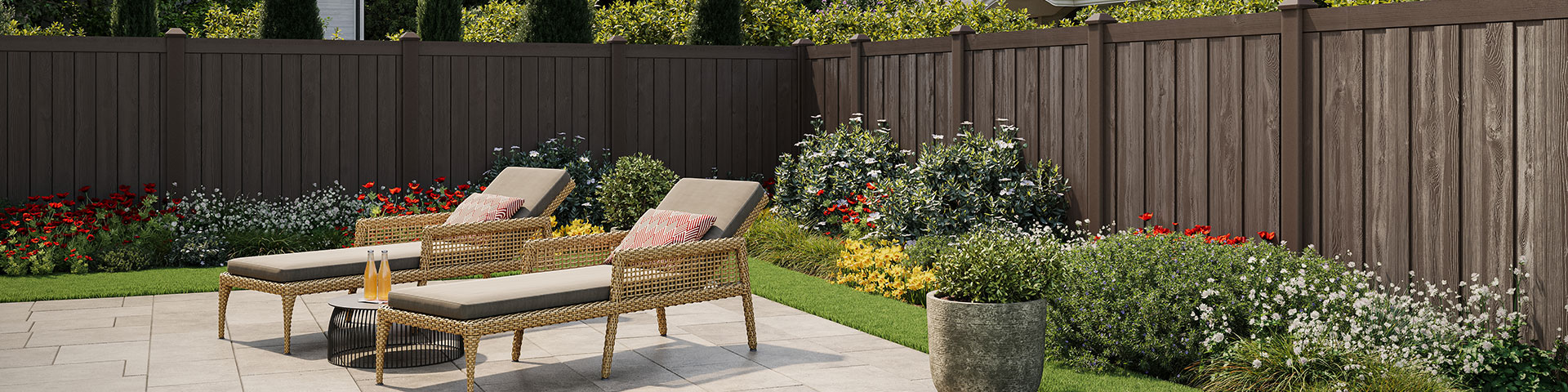
The common fence materials are vinyl, aluminum, ornamental steel, composite, wood and chain link. No single material wins every test. Vinyl and composite give you solid privacy with no painting. Aluminum and ornamental steel keep your view open. Aluminum does not rust, and steel lasts as long as its coating stays whole. Wood needs staining or sealing on a schedule, and chain link rusts where its zinc coating wears through.
Maintenance-Free Outdoor Solutions installs four of the six: vinyl, aluminum, ornamental steel and composite. Wood and chain link are the two we leave out, so this guide covers them only to help you compare. Vinyl and aluminum both come in spaced picket styles, which our picket fence installers build across St. Louis.

Vinyl fencing needs almost no upkeep, lasts for years, and comes in more styles than you might expect. The trade is a higher price up front, between $45 and $75 per foot installed, and the color you pick is the color you keep. Those are the real tradeoffs. Everything else is a variation on one of those two points.
We install vinyl fencing across St. Louis, and we recommend it over wood for most yards. For a head-to-head look, start with the vinyl vs wood fence guide. For the price side, see the plastic vs wood fence comparison. This page sticks to vinyl itself: seven real advantages, and seven honest tradeoffs with how we handle each one.
| Pros | Cons |
|---|---|
| Solid privacy, no splinters | Color is set at install |
| No painting, staining, or sealing | Higher upfront cost ($45-$75/ft) |
| Real style options | Hard impacts can damage a panel |
| A hose handles most cleaning | Repairs go through your installer |
| Won’t rot from moisture | Styles come from the manufacturer’s range |
| No termite risk | Not all vinyl is the same |
| Quick installation | Best installed by a professional |
A vinyl privacy fence gives you a solid, uninterrupted panel. The surface is smooth, so there are no splinters for kids or pets to find.
On the Bryant job in Wildwood’s Ashford Oaks neighborhood, 31 August 2026, we swapped a 4-foot privacy fence for a 6-foot one. The homeowner had recently added a pool and wanted screening from the road. It took our crew two working days for 104 linear feet, with city approval handled first since the fence line ran along a main street.
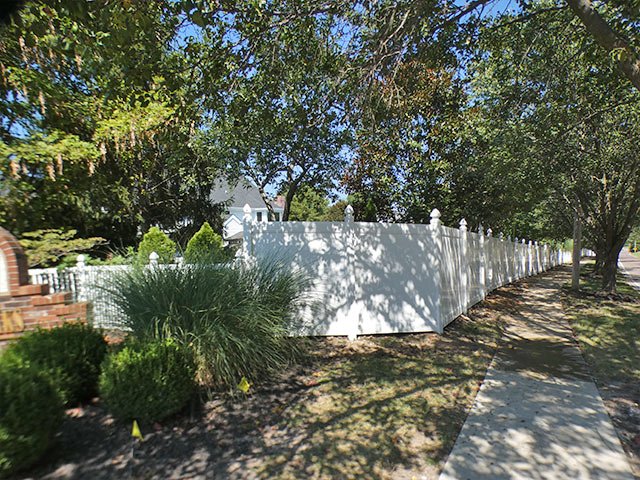
The color is part of the material, so vinyl never needs painting, staining, or sealing. Once it’s up, finish stops being a chore. For upkeep, you’ll rarely do more than rinse it with a hose.
Vinyl comes in more than the plain white privacy panel people picture. Colors like almond and clay, lattice tops, and picket styles are all standard options from the manufacturers we carry, CertainTeed and Bufftech. The photo below is a real New Lexington fence we installed in almond, with a lattice top over solid panels.
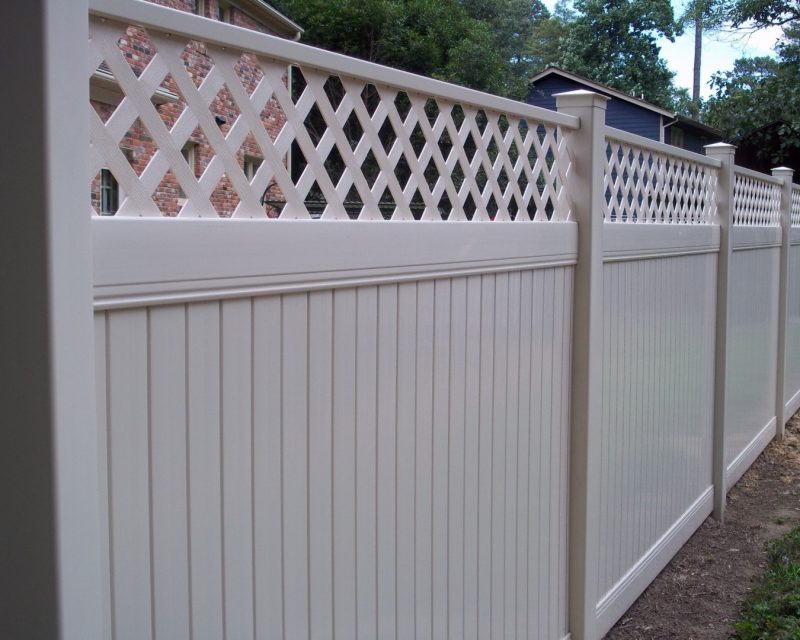
A shady spot can grow a little mold, mildew, or algae, and it wipes right off. Rinse with a hose, wipe with warm water and dish soap, and you’re done. See the full cleaning guide for the exact steps by material.
Vinyl doesn’t absorb water, so moisture can’t rot it. That matters most at the base of the fence, where a yard stays wet the longest. For a closer look at how long vinyl holds up in St. Louis weather specifically, see the vinyl fence lifespan guide.
Vinyl gives termites nothing to eat. Missouri has a real subterranean termite problem, so that is a worry you can cross off.
Vinyl panels are pre-manufactured and interlock during installation, so a fence goes up fast. Typical installs take one to three days, depending on the project. The speed starts with a good foundation. A post that’s set right keeps the whole fence straight for years.
Every fence material has tradeoffs. Here are vinyl’s, and how we handle each one.
Vinyl’s color is built into the material, so there is no paint to peel and nothing to repaint. The tradeoff is that you can’t switch colors later. So we help you pick once and pick well. On the Bryant job, our salesman took a sample of the style to the estimate, so the homeowner saw it before deciding.
Installed vinyl generally lands between $45 and $75 a foot. That’s an investment up front, and it pays you back in years of no painting, staining, or sealing. If the upfront number is the hurdle, the fence financing page walks you through the options. For the full price breakdown, see the vinyl fence cost guide.
Quality vinyl is designed for St. Louis weather swings. Like any fence, though, a hard, direct hit can damage a panel. A fallen branch or a car backing into it are the usual causes. Heavier, professional-grade vinyl stands up to that better than thin kit vinyl.
If a panel is ever damaged, it’s a phone call, not a weekend project. A clean color match is easiest with the company that knows exactly which product it installed. That’s why our workmanship guarantee runs one full year, and the vinyl itself carries the manufacturer’s warranty.
Vinyl comes in set styles, heights, and colors, and the range covers most yards. It includes privacy, semi-privacy, picket, and split rail fencing. Tell us what your yard needs, and we’ll show you what the range can do.
Vinyl fencing sold in kit form at Lowe’s or Home Depot is a lighter, thinner product built for DIY installation. It can work fine for a small project. It isn’t the heavier, commercial-grade vinyl a professional installer uses, so a big-box price isn’t a fair comparison to an installer’s quote. Before you compare, check three things:
This is the flip side of the speed advantage above. Vinyl holds up for years when it goes in right. A post set too shallow, or not packed in tight, is the top reason a fence leans. That’s an installation issue, not a material one, and it’s why the crew you hire matters.
Vinyl has three tradeoffs. The price is higher up front, the color is set once it’s installed, and the styles come from the manufacturer’s range. Most homeowners find the savings on upkeep make up for them over time.
Most problems trace back to installation, not the material. Posts set too shallow or not packed in tight can lean over time. A hard, direct hit can also damage a panel. A professional crew avoids the first, and the installer handles the second.
For most homeowners planning to stay in the house for several years, yes. Vinyl never needs painting, staining, or sealing, so the higher installation cost is usually offset by the upkeep you never pay for.
You can. It’s a lighter-gauge product built for DIY installation, not the heavier commercial-grade vinyl a professional installer uses. It can work for a small project, but its price isn’t a fair comparison to a professional quote, since the material itself is different.
Not under normal conditions. Quality vinyl is designed for St. Louis weather swings. Like any fence, a hard, direct hit, such as a fallen tree branch, can damage a panel. A heavier, professional-grade panel holds up better than thin kit vinyl.
We recommend vinyl over wood for most St. Louis yards. It lasts, keeps its look, and skips the yearly upkeep. Vinyl is not for someone who plans to change the fence color every few years.
We guarantee our workmanship for one year, and we can usually get someone out for an estimate within a week. For a real price on your yard instead of a national average, call 636-464-1144. Want to check us out first? The Catalyst installer directory lists Maintenance-Free Outdoor Solutions as a Catalyst installer. You can read what homeowners have said on the reviews page.

Vinyl costs more on the day it goes in and less by about year 10. Installed vinyl runs $45 to $75 a foot around St. Louis, and most jobs land between $55 and $65. That is the short answer. Wood starts lower and then asks for money every two or three years, which is the half of the sum most calculators leave out.
Vinyl, PVC and plastic fencing are three names for the same product, so whichever word you searched, these are the figures that apply. What the material actually is, rather than what it costs, is covered on our plastic fencing page.

Are you the owner or manager of a restaurant or bar? If so, you know how important the right atmosphere is for making your customers feel at ease. This goes not only for the inside of your establishment, but for the outside as well. This is where a restaurant patio fence or outdoor cafe fence comes in.
