
 Skip to main content

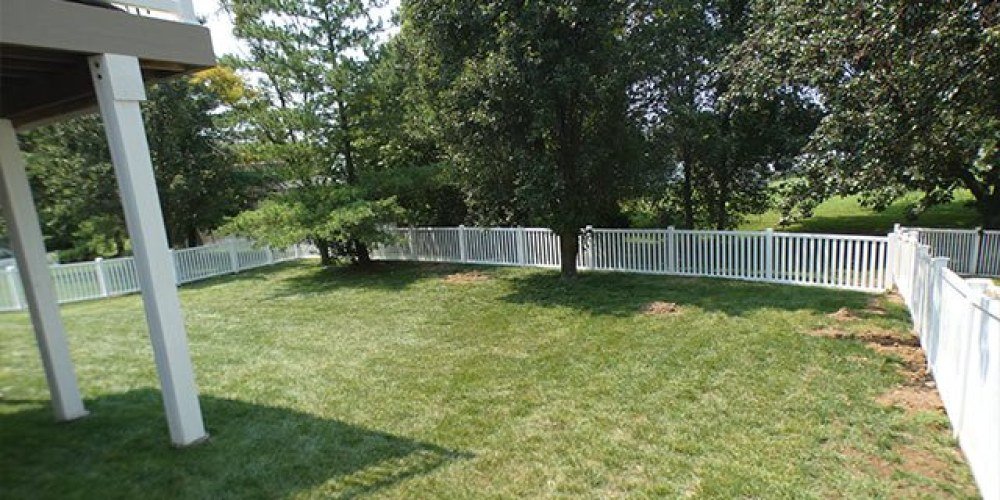
A permanent pool fence in St. Louis costs about $25 to $40 a foot installed in aluminum, or about $40 to $50 a foot in 4 foot vinyl picket, based on our own installed prices. For a 150 foot pool enclosure, that comes to about $3,750 to $6,000 in aluminum before gates. Removable mesh runs lower and glass far higher, as the HomeGuide figures further down show.
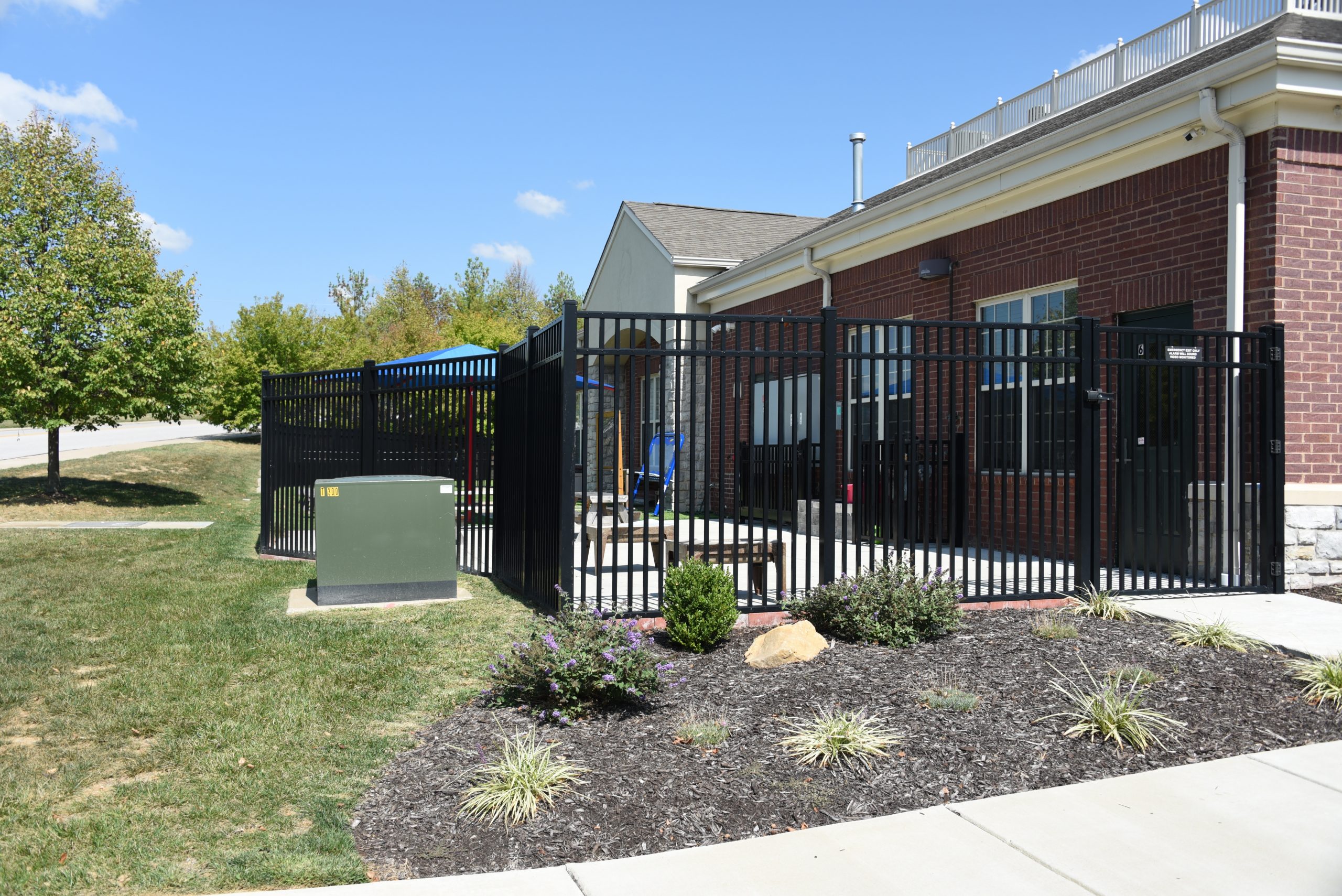
Commercial security fencing is a fence, gates and locks that make it slow and obvious to enter your property without permission. No fence stops a determined person. Its real job is to buy time for your cameras, your lights and a call to the police.
The right fence depends on what you are guarding and who worries you. Open aluminum or ornamental steel suits most schools, offices and apartment sites, and solid vinyl screens a restaurant lot. This guide adds a site checker and the gate rules that buyers often miss.
The sections below cover what a fence does, which fence fits each threat, gate rules, crash ratings and a checker for your site. When you are ready for a price, our commercial fence company in St. Louis will walk your site with you.

The best dog fence for a yard has nothing to climb, no gap at the ground, and pickets too close to squeeze through. Most fences for dogs only need to be 4 feet tall. Small dogs also need tight pickets, about 1 5/8 inches apart. Strong jumpers need 5 to 6 feet. I pick the gap first, because a tall fence does nothing if your dog can walk between the pickets.
Want the height and gap set for your dog? Read about our dog fence installation. Or call 636-464-1144, and we will measure your yard at a free, no-obligation estimate.
Choose in this order:
| Your dog | What to build |
|---|---|
| Small, squeezes through | 4 feet tall. Pickets about 1 5/8 inches apart. Aluminum with tight dog pickets. |
| Medium or large | 4 to 4 1/2 feet tall. Pickets 3 11/16 to 3 15/16 inches apart. Standard aluminum or vinyl picket. |
| Jumps | 5 to 6 feet tall, standard gap. No rail low enough to push off. |
| Digs | 4 feet tall, standard gap. Bottom rail kept tight to the ground, even on a slope. |
| Barks at people walking by | 5 to 6 feet tall, no gap. Solid vinyl privacy panels that block the view. |
| Chews | 4 feet tall, standard gap. Aluminum or vinyl, with nothing soft to chew. |
The gaps in this table come from real jobs, listed below. Standard picket gaps ran from 3 11/16 to 3 15/16 inches, because each fence style is a little different.
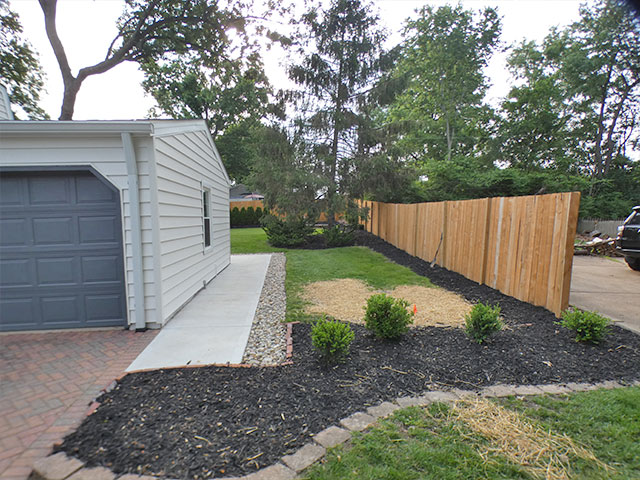
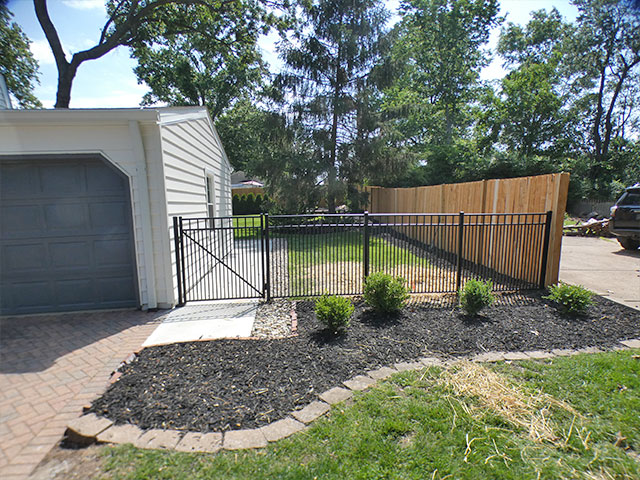
Test the gap against your smallest dog before you buy. Hold the fence sample next to it. If its head fits through the gap, choose a tighter gap. In Imperial, the homeowner ran this test first. Then we built 160 feet of white vinyl picket for their dogs.
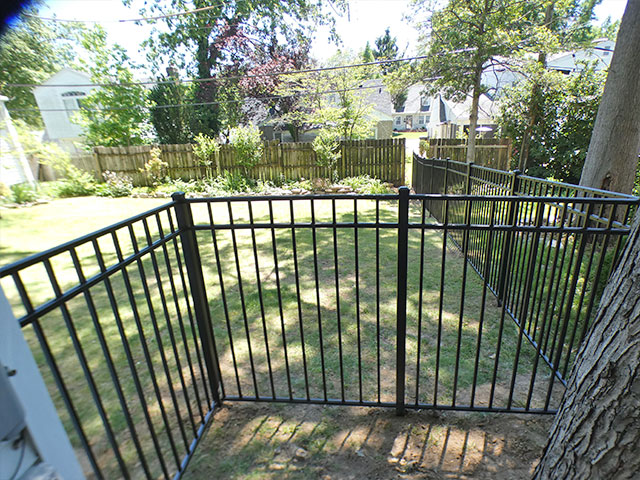
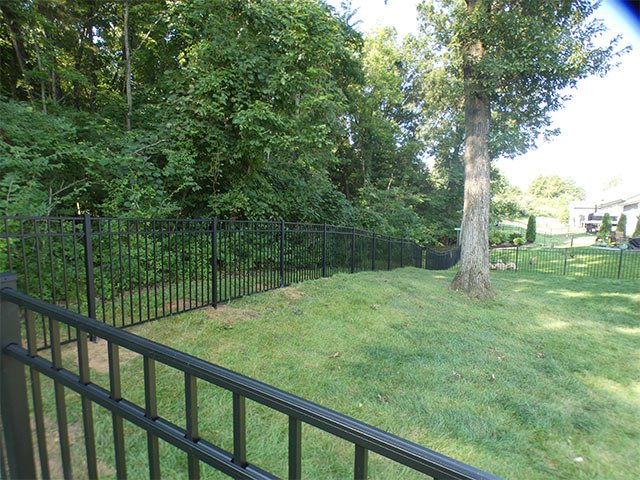
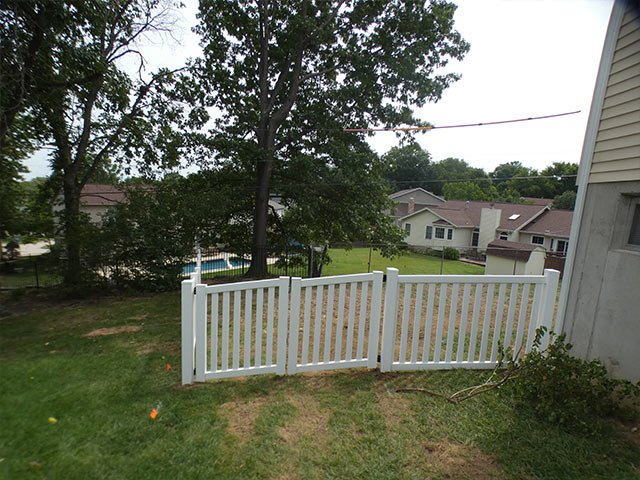
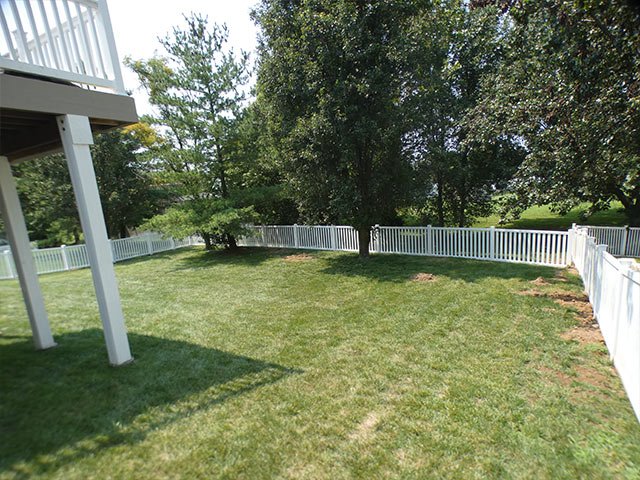
Click a town to see that job’s before and after photos.
All five fences were 4 to 4 1/2 feet tall. The height was never the hard part. The gap, the ground and the gates were.

Before you choose, watch your dog from inside the house for a few days. Dogs often behave differently when they know you are watching. How your dog tries to leave tells you which fence you need.
Why a dog wants out matters too. A bored or lonely dog keeps testing the fence. A dog that sees other dogs or people passing by may try to chase them. A fence keeps your dog in, but it will not fix boredom. If boredom is the reason, you do not need a taller fence first. You need more time and exercise with your dog.
Two gate habits I would build in from day one. Where the ground allows, swing the gate in toward the yard, so a dog that jumps on it pushes it shut. And use a latch your dog cannot work open with its nose.
Every material below is maintenance-free. None of them rot, and none need painting.
One thing we do not do: we do not install buried electric fences. A buried wire and a collar will not stop a dog that decides the chase is worth it. It also will not keep other animals out. If you are still weighing one, our invisible fence cost guide sets its price next to a real fence.
You do not have to fence your whole property. Most dog owners pick one of these four layouts.
You can also fence your dog out of a space instead, like a garden or a pool area. To work out the length for any layout, see how much fence you need. For national price ranges by material, HomeGuide publishes a fence installation cost guide.
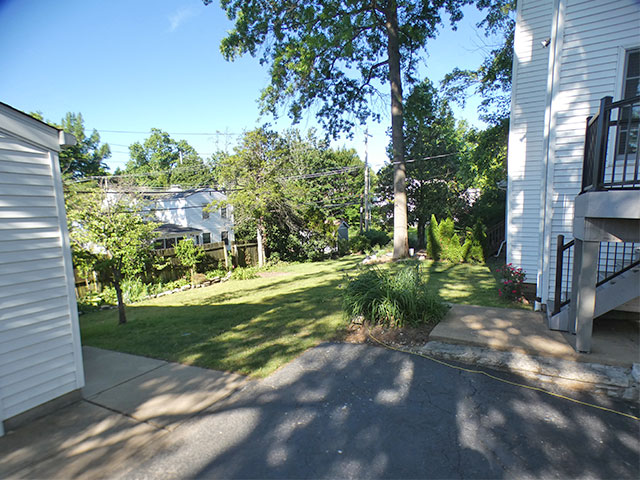
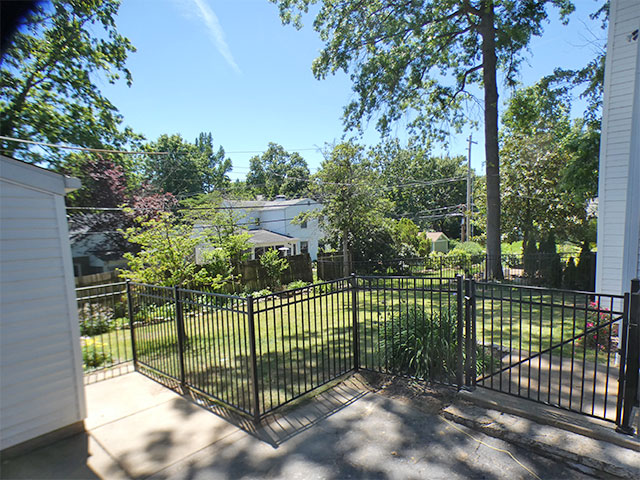
A dog fence around St. Louis often has to pass more than your dog’s test. These came up on the jobs above.
For most dogs, a 4-foot aluminum fence with nothing to climb and a gap your dog cannot fit through. Small dogs need pickets about 1 5/8 inches apart. A dog that barks at people walking by does better behind solid vinyl privacy panels.
The Eureka dog fence above is Elite aluminum. We are also a listed installer for Catalyst, the fence brand of Barrette Outdoor Living. Neither brand needs paint, and the aluminum is powder coated so it does not rust. The warranty on the fence itself comes from each maker.
A fence with tight picket spacing. For two small dogs in Kirkwood, we closed the gap to 1 5/8 inches. That kept the dogs in without a solid fence.
A 4-foot fence holds most dogs. All five dog fences on this page are 4 to 4 1/2 feet tall. A dog that jumps well needs 5 to 6 feet.
The five dog fences on this page took 1 or 2 days each, for 38 to 160 linear feet. A city post hole inspection can add a wait before the fence goes up.
A permanent yard fence needs posts set in the ground. Where a post has to sit on concrete, we can bolt it down instead of digging. We did that on a Kirkwood sidewalk and a Brentwood patio in May 2026. Fences with no posts at all are portable pens, not yard fences.
Fence only the part of the yard your dog uses. And if your dog is too big to fit through a standard gap, skip the tighter dog picket style. In Eureka, a mid-size dog meant the owner did not need to pay for it. For current prices, see our vinyl fence cost guide.
Big enough for your dog to run. The jobs above run from 38 to 160 linear feet. Kirkwood needed 38 feet for a small dog area, and Imperial needed 160 feet around a back yard. Fence the space your dog uses.
Yes, if you can set posts straight and level and keep the bottom tight to the ground. We sell fence materials for do-it-yourself jobs through our fence supply store.
None of the fences on this page need painting or staining. Wash them with a hose when they get dirty. Once a year, check the gate latch and hinges, and tighten them if the gate starts to drag.
A tie-out, a trolley line or a portable pen can work for short times while you are outside. None of them hold a determined dog the way a real fence does.
Read what homeowners say about their fences.
We are a listed Catalyst installer. Catalyst is the fence brand of Barrette Outdoor Living, and you can look us up on its public installer directory.
Our installation work carries a one-year guarantee, and the fence materials come with the maker’s own warranty. At our showroom in Arnold you can see the panels, gates and picket gaps in person.
Book a free on-site estimate for your dog fence, or call 636-464-1144.
Still comparing fence types? Download this free guide:


A privacy fence in the St. Louis area is normally 6 feet tall, and most municipalities let you build to 6 feet without a variance. Go taller and you are usually asking permission. That is the short answer, and that one rule settles more designs than any style choice does.

An above ground pool fence is a barrier at least 48 inches tall that keeps children and pets away from the water. St. Louis County’s guide asks for a pool permit above 24 inches of water. It wants the barrier 48 inches high with no opening that passes a 4-inch ball, and it lets a 48-inch pool wall count as the barrier when the ladder is fenced.
This guide covers which permits apply, when the pool wall counts as the barrier, a five-question check for your pool and the gate numbers an inspector reads. Once you know what your pool needs, we can measure the yard and put a written price on pool fence installation in St. Louis.

Most residential yards take 100 to 260 feet of fence. Walk the line you want to enclose and measure it in feet. That total is your linear footage, and it is the number every quote starts from. At Maintenance-Free Outdoor Solutions we price from that line, not from the lot size. The five jobs documented below ran from 38 feet around a small dog run to 260 feet around a whole yard.
Three things change it once you have it. Gates replace a section of fence and cost more than the fence they replace, so count them separately. Corners each need their own post, so a yard with several turns uses more posts than a straight run of the same length. Slope means the fence is either stepped down in sections or raked to follow the grade, and both use more material than flat ground.
For scale, these are real St. Louis yards and what they actually took. Five jobs we completed and documented. 38 feet for a small dog run in Kirkwood. 100 feet around a patio in Brentwood. 122 feet for pet containment in Eureka. 171 feet around a pool in Barnhart. 260 feet with four gates in St. Louis. Most residential jobs land between 100 and 260 feet.
A shortcut before you measure anything: your plat or property survey already has the boundary dimensions on it. Starting there is faster than a tape measure, and it shows you where the line actually is.
Fifteen minutes with a tape measure and your plat map gets you a number you can order from. Building it yourself? Get your materials from our fence supply store. Rather we handled it? Send us your measurements and we will price the job.

A pool fence in the St. Louis area has to stand at least 48 inches tall and sit no more than 2 inches off the ground. The pickets have to be close enough to block a 4 inch sphere. That is the short answer, and those three numbers decide whether your fence passes inspection. Everything else, the material, the color, the style, is your choice.
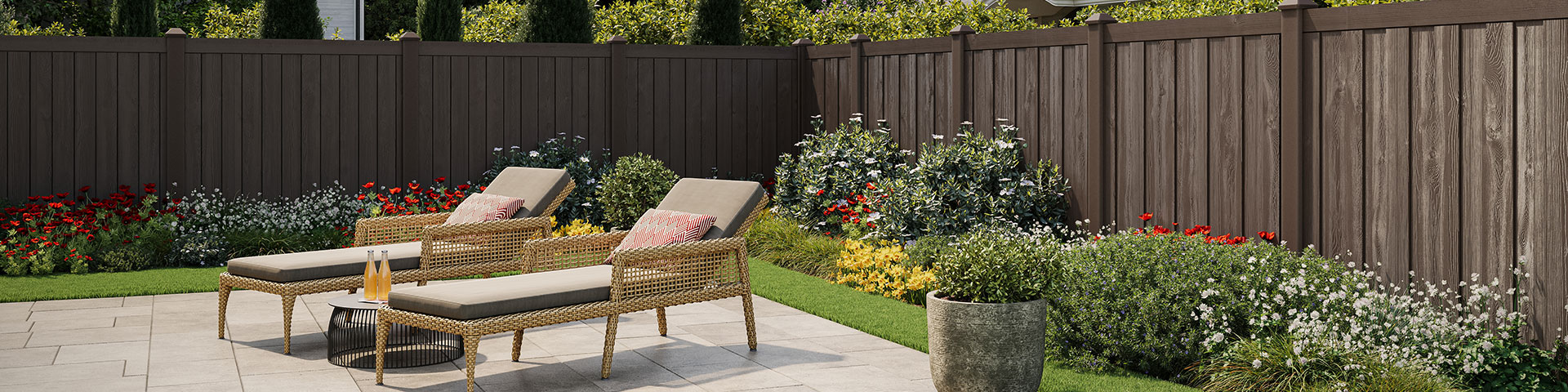
The common fence materials are vinyl, aluminum, ornamental steel, composite, wood and chain link. No single material wins every test. Vinyl and composite give you solid privacy with no painting. Aluminum and ornamental steel keep your view open. Aluminum does not rust, and steel lasts as long as its coating stays whole. Wood needs staining or sealing on a schedule, and chain link rusts where its zinc coating wears through.
Maintenance-Free Outdoor Solutions installs four of the six: vinyl, aluminum, ornamental steel and composite. Wood and chain link are the two we leave out, so this guide covers them only to help you compare. Vinyl and aluminum both come in spaced picket styles, which our picket fence installers build across St. Louis.

The best restaurant patio fence depends on the side. Use aluminum where guests should see the street, and solid vinyl where you need privacy from a parking lot or a neighbor. A patio fence also marks where dining ends and keeps guests apart from the sidewalk.
Your first question is whether the patio sits on the public sidewalk or on your own property. In the City of St. Louis, outdoor seating in the public right-of-way needs a Sidewalk Café Encroachment Permit, and that shapes which fence you can use.
Want a crew to build it? See commercial fence installation in St. Louis. Or jump to which fence goes where, the permit, heights and styles, permanent or portable, what to have ready or gates.

To choose a commercial fence, decide what the fence must do first, then match the material to that job. Aluminum suits most offices, schools and apartment sites. Steel is the strongest pick, and vinyl screens what you do not want seen.
The sections below cover materials by site, a budget with sources, permits and fire access and how to compare bids. A commercial fence company in St. Louis can price your site once you know what you want.
If your worry is break-ins, read our guide to commercial security fencing first.
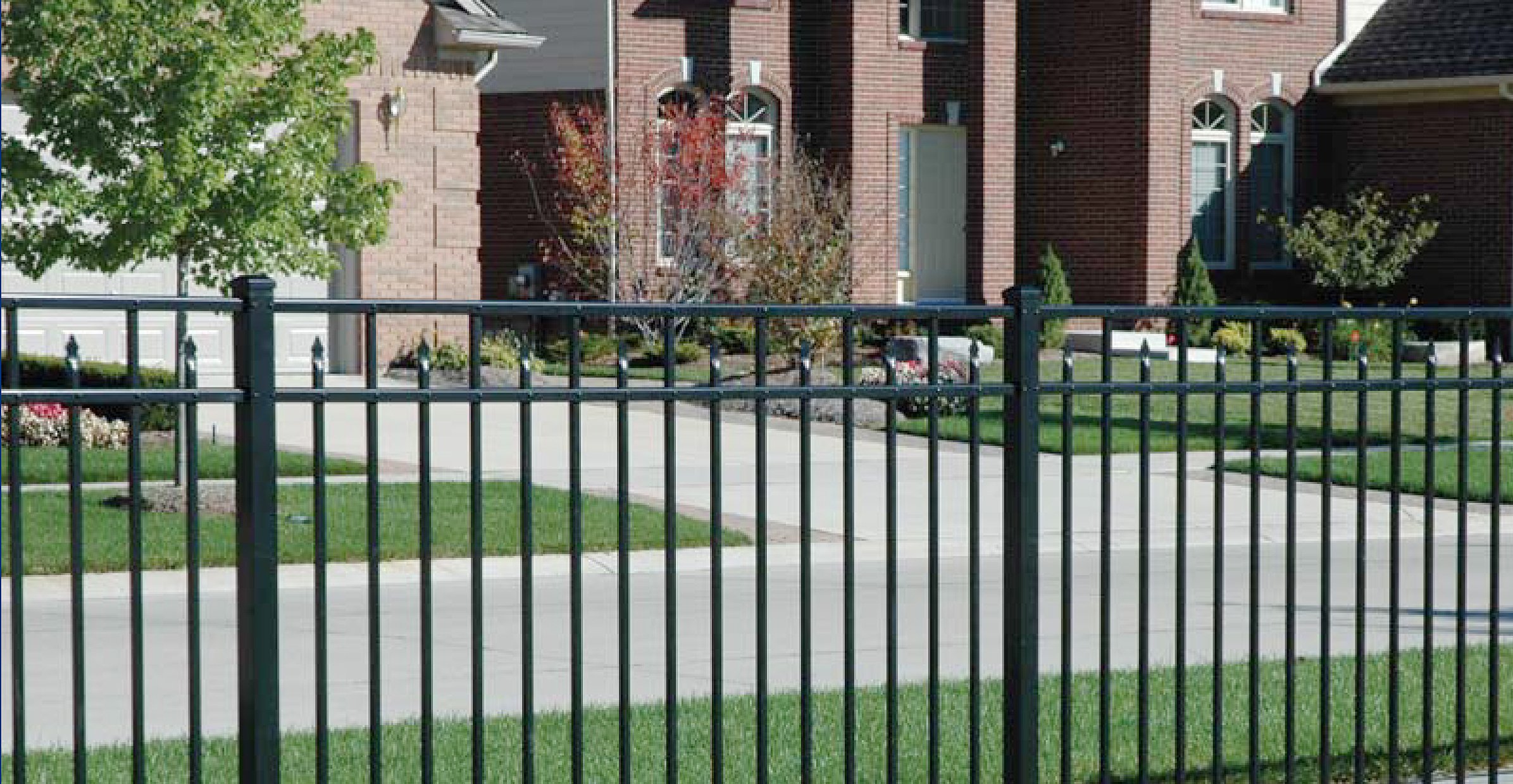
Aluminum fence cost in St. Louis averages $5,086, according to Angi, and most homeowners pay $3,184 to $7,211. On a per-foot basis, Yelp’s analysis of 534 quotes puts an installed 4-foot fence at $15 to $45 per linear foot. Your own total depends on the footage, the height, the gates, any old fence to remove and the ground.
You can work out your own yard with the cost calculator, see how the math works on a 150-foot yard, or read about five completed projects to see what shapes a real price. When you are ready for a firm number, our aluminum fence installation in St. Louis team will measure your yard and quote it.

An affordable vinyl fence is a vinyl fence you keep low-cost by choosing five things well: height, style, total footage, gates and how much work the site needs. Color and who does the labor matter too. This guide shows how each one moves a quote, with three real St. Louis area jobs.
Want a crew to build it? See vinyl fence installation in St. Louis. Or jump to the five choices, styles, what to check, building it yourself or the three jobs.
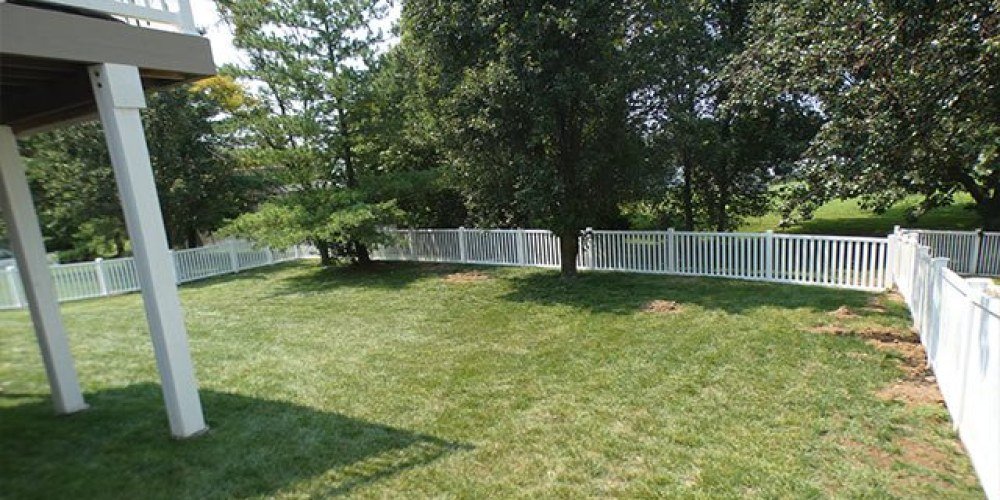
A maintenance-free fence is a fence made of vinyl, aluminum, ornamental steel or composite, materials that never need painting, staining or sealing. It is not a fence that never needs a hose, so the honest name for it is a low-maintenance fence.
The sections below show what each material is made of, the small chore each one still asks for and where a maintenance-free fence can disappoint. When you want one installed, a residential fence company in St. Louis can price it for you, and we have served the area since 1994, as the BBB business profile shows.
We are also a listed Catalyst installer, and Catalyst makes the vinyl and composite styles we sell.
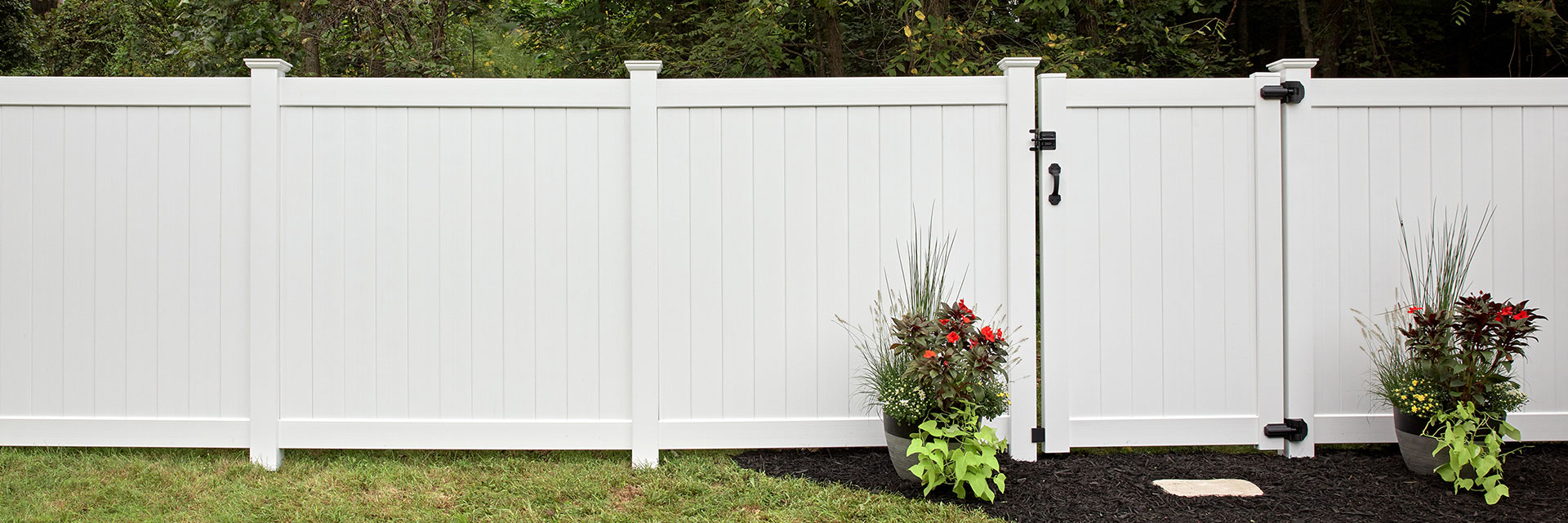
HOA fence approval in St. Louis County often means getting written permission from your subdivision trustees before you order a fence or dig a post hole. The short answer: get their approval first, because it is separate from any city permit. Ask for the trustees’ answer in writing before you spend money on materials.
Building without it puts you in a dispute with your own association. Jump straight to the packet checklist, the letter to copy, the height checker or the date planner. If you are still choosing a fence, start with our residential fence installation in St. Louis page.
A land survey for fence installation is a licensed surveyor’s measurement of where your property lines run, marked on the ground so the fence goes on your side of them. Angi’s St. Louis figures run from about $500 for a small lot to $3,200 for a fence-land survey, and a recent survey you already own can sometimes do the job.
This guide covers whether you need a survey, how to find one you may already have, what a survey costs and how to hire a surveyor. Once your line is marked, we will measure your yard and give you a written price for fence installation in St. Louis.

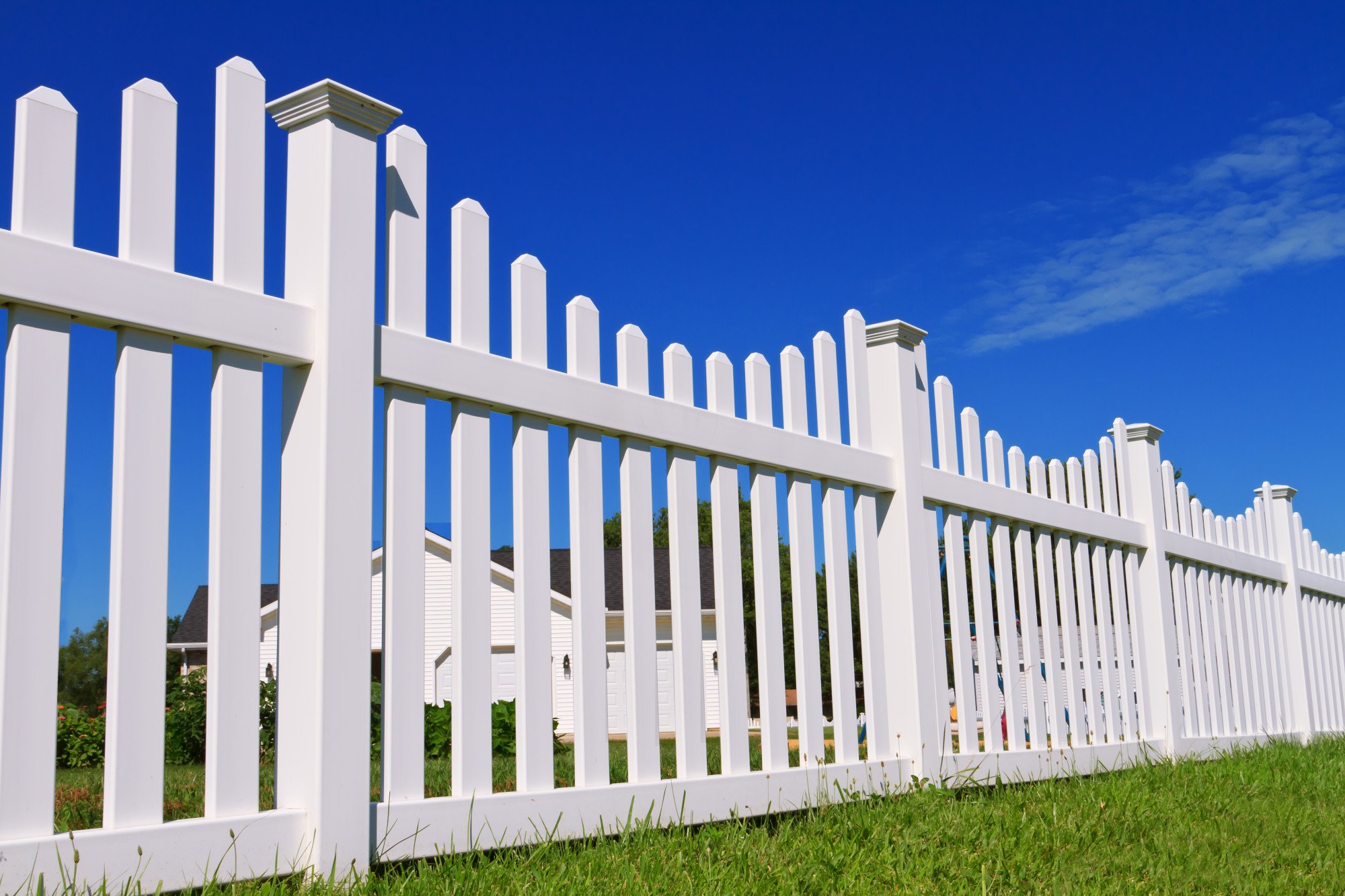
A white picket fence in vinyl keeps the classic look and needs no painting. Pick the height and the picket top by the job: a front yard border, a pool, a dog run or a garden path. You can choose from eight vinyl picket styles, and the table below shows which heights each one comes in.
Wikipedia describes the picket fence as an American symbol of suburban family life. If you want that look without repainting it every few years, read on. Want a crew to build it? See vinyl fence installers in St. Louis. Or jump to ideas by job, heights and styles, vinyl or wood, what to have ready or questions.

A backyard man cave is a private outdoor hangout for games, grilling and time with friends. Skip the shed for a minute. Four parts decide whether the space works: the fence, the deck, the railing and the lights, and each one is a material you buy once and then leave alone.
You can have us install the fence and the railing, and you can buy decking and lighting from us. To get the fence line priced, talk to a residential fence company in St. Louis. Below are fence heights, the deck floor, lighting and a tap-to-plan tool.
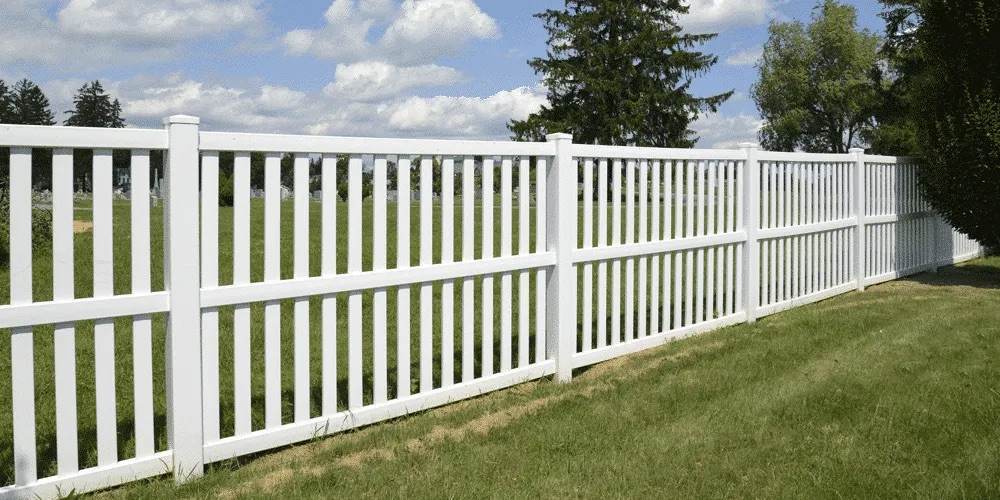
A vinyl fence costs more up front than a wood fence and less over 20 years, because nothing about it ever needs painting. That is the short answer. This guide covers the styles, what each one costs in St. Louis, how long it lasts here, and when vinyl is the wrong choice.
Want it measured for your yard? See how our vinyl fence installation works, or call Maintenance-Free Outdoor Solutions at 636-464-1144 for a free on-site estimate. The vinyl we install is the Catalyst range from Barrette Outdoor Living, sold for years as Bufftech by CertainTeed, and we are listed on their installer directory.
Maintenance-Free Outdoor Solutions has been installing fences in St. Louis since 1994, which you can check on our BBB business profile. I have spent those years helping owners pick a fence that still makes sense in twenty years. Most people come to me after warped wood, endless staining, an HOA letter, or a fence that did not survive a few Midwest winters.
In this region, the “right” fence isn’t just about look. Between freeze-thaw cycles, heavy storms, and strict neighborhood guidelines, long-term performance matters just as much as curb appeal. Vinyl fencing often enters the conversation when owners want fewer maintenance headaches and more predictable wear.
Vinyl fencing is a long-term fencing solution that performs well in St. Louis weather, requires minimal upkeep, and keeps the same look for decades. While it usually costs more upfront than wood, many owners choose it for how long it lasts and what it saves later.
Choose in this order:
One of the reasons owners are drawn to vinyl fence styles is the flexibility they offer when it comes to look. Today’s vinyl fencing suits a brick house in the city and a new build in St. Louis suburbs with strict HOA guidelines.
It comes in several colors, and in woodgrain finishes that look like stained wood with none of the work.
The styles run from plain straight-top panels to scalloped and lattice tops, so the fence can match the house without costing you strength.
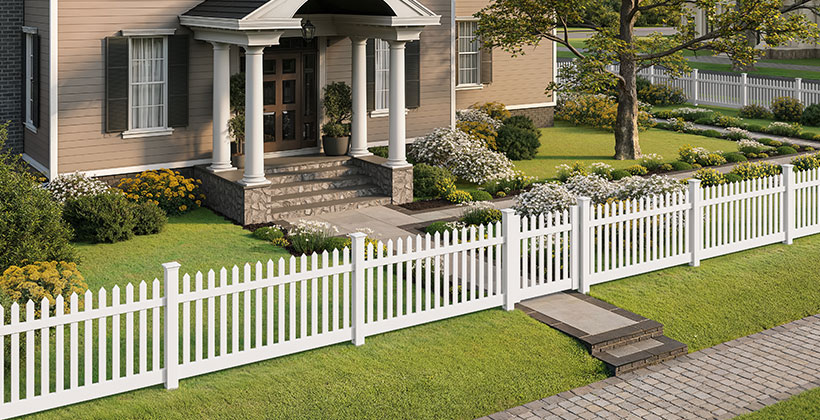
Which style makes sense depends on how you use the yard. Privacy panels are usually 6 feet tall and 6 feet wide. Spaced picket usually runs 4 feet. A vinyl privacy fence is one of the most common choices in St. Louis because it creates a clean, enclosed space using solid privacy panels that block sightlines from neighbors, streets, or alleyways.
For front yards and decorative boundaries, picket fences remain a timeless option. Vinyl picket styles work especially well for owners who want definition without closing off their property.
On larger lots or rural edges, ranch rail vinyl fencing provides structure without visual heaviness. For safety-focused installations, a vinyl pool fence is built to meet pool code, and it still lets you watch the water.

Before any fence goes in the ground, fence height and placement are two of the most important details to get right. Local codes and HOA rules set most of this. So does how close the fence sits to the line. Getting this wrong can lead to fines, forced changes, or disputes that could have been avoided.
Most cities and HOAs set height limits for front, side and back yards. Some also want the fence set back from the line.
Confirm the survey and the local rules first. It is cheaper than moving a fence later, and it keeps the neighbors out of it.
Why Calling 811 Before You Dig Matters
Before any vinyl fence installation begins, you should contact 811 before you dig. Fence posts require digging, and buried utility lines may be much closer to the surface than owners expect. Hitting a gas, electric, water, cable, or communication line can lead to dangerous injuries, service outages, expensive repairs, project delays, and possible fines. Call 811 before any digging. They mark the buried lines, it is free, and it is the law.
In other words, calling 811 is not just a smart precaution. It is one of the most important first steps in planning a fence project safely
The numbers a fence company will ask you for:
St. Louis weather is hard on fences, plain and simple. Between freezing winters, heavy spring rains, summer heat, and strong storm systems, materials are constantly expanding, contracting, and taking abuse. From what I’ve seen on installs across the metro area, vinyl handles those conditions better than most.
Because vinyl doesn’t absorb moisture, it isn’t vulnerable to rot, swelling, or splitting during freeze-thaw cycles. It also holds up well in high winds and seasonal storms when properly installed.
That stability is why a vinyl fence still looks square years later.
One of the questions I hear most often is how much work a vinyl fence really requires after it’s installed. Compared to wood or metal options, vinyl has very simple upkeep. There’s no need for painting, staining, or sealing, just occasional cleaning to remove dirt or pollen.
Another major advantage is that vinyl isn’t affected by insect damage. Termites, carpenter ants, and other pests that commonly cause problems for wood fences simply aren’t an issue with vinyl.
For anyone who wants a fence that stays solid without constant upkeep, that difference is the whole argument.
While vinyl fencing offers strong long-term performance, it’s not without limitations. Most complaints come down to price, thin panels or a rushed install, not the vinyl itself.
Vinyl costs more than wood on day one and less over twenty years, because it never needs paint or stain. Height, style, gate count and ground conditions all move the number, so there is no single price.
We price from the line you walk, not from the lot size. See what a vinyl fence costs in St. Louis, or ask for a free on-site estimate.
Wood reacts to Missouri weather. It takes on water, dries out, and moves with every season, so it needs staining and board replacement. Vinyl does not. The table shows where each one lands.
Vinyl vs Wood Fencing in Missouri Climate
| Feature | Vinyl Fencing | Wood Fencing |
|---|---|---|
| Climate response | Stays stable through humidity and temperature swings. | Expands, contracts, and absorbs moisture more easily. |
| Maintenance needs | Typically needs occasional cleaning. | Often needs staining/sealing and periodic repairs. |
| Insect resistance | Not affected by termites or carpenter ants. | Can be vulnerable to insect damage over time. |
| Appearance over time | Maintains a consistent look with minimal change. | Can warp, fade, crack, or rot depending on upkeep and exposure. |
| Long-term ownership | More predictable performance with fewer upkeep demands. | Ongoing maintenance is usually required to keep it looking and performing well. |
Mobile tip: Swipe left/right to view the full table.
Neither rusts. The choice is what you want to see. Vinyl closes the yard in, aluminum leaves the view open and meets pool code. The table lays them side by side.
Vinyl vs Aluminum Fencing: Choosing the Right Fit
| Feature | Vinyl Fencing | Aluminum Fencing |
|---|---|---|
| Privacy | Privacy styles available for full yard enclosure. | Open design; provides visibility rather than privacy. |
| Appearance | Solid, uniform panels and consistent lines. | Decorative, lightweight look with open pickets. |
| Noise reduction | Can reduce some outside noise due to solid panels. | Minimal noise buffering because it’s open. |
| Best use cases | Backyards, pets, families, privacy-focused spaces. | Front yards, decorative boundaries, visibility-focused areas. |
| Visual consistency | Enclosed look that helps define the space. | Open look that preserves sightlines and views. |
Mobile tip: Swipe left/right to view the full table.
Posts go 30 to 36 inches deep here, set in concrete over a gravel base, because that is what the local frost line asks for. Gates need a bigger hole than the rest of the run, because they swing.
The rest is layout, slope and panels. Our install guide walks through all six steps and has a calculator for the panel count.
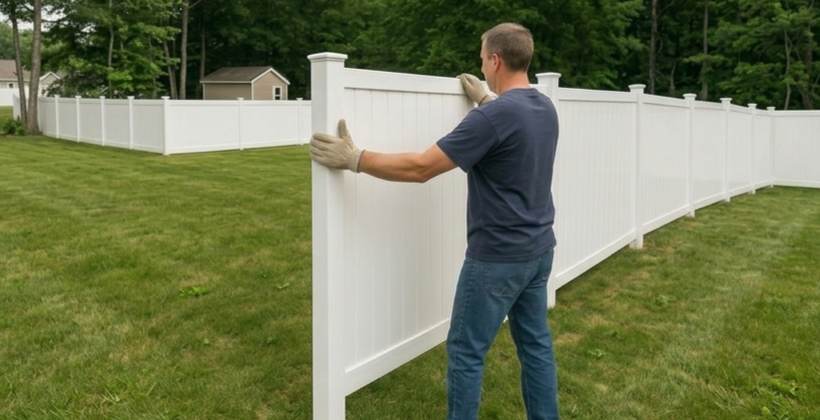
Even the best materials can fall short if the work isn’t done right. I’ve seen fences made from high-quality products fail simply because corners were cut during installation. A fence built with high-quality vinyl still depends on precise post depth, correct spacing, and clean connections to perform as intended.
Set right, the fence stays straight through wind and temperature swings for years. Just as important, correct installation protects manufacturer warranties.
Craftsmanship is what turns good materials into a fence that truly lasts.
Technically, yes. But I rarely recommend it.
Vinyl fencing is manufactured with color mixed all the way through the material, not just on the surface. That’s exactly why it never needs painting in the first place. If you paint over it, you’re adding a maintenance task back onto a product that was designed to eliminate one.
Standard latex or oil-based paints don’t bond well to PVC’s slick surface. Most DIY paint jobs start peeling, chipping, or flaking within a season or two, especially through a St. Louis summer of direct sun and humidity.
If you are set on changing the color, use a paint made to bond to vinyl or PVC siding. Test it on a hidden section first.
In most cases, though, it’s more cost-effective and longer-lasting to replace the panels with vinyl fencing manufactured in the color you actually want. Bufftech and CertainTeed both offer several standard colors we can match to your existing posts.
Vinyl repair means replacing the damaged piece, not patching it. PVC does not fill the way wood does.
Our systems use separate rails and pickets that snap or screw into the posts, so one damaged picket is one picket, not a whole panel. Write down the maker and the style when the fence goes in. An exact match is easy to order in five years. Guessing at a color is not.
If more than two sections are damaged, or a post has shifted, get someone out to look at the posts before you order parts.
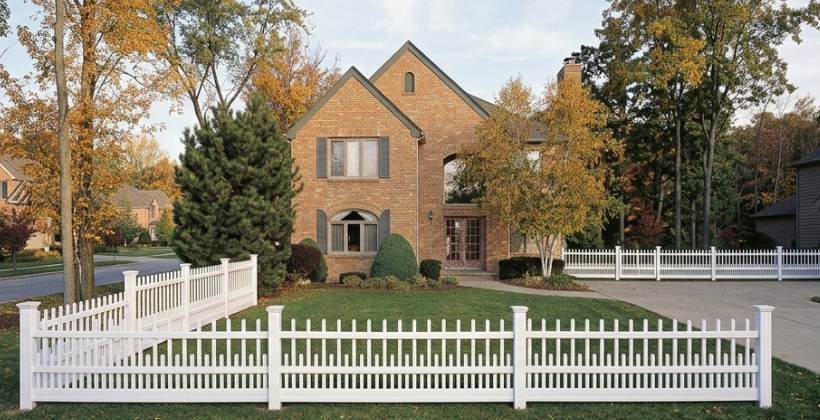
Vinyl fencing is a popular choice for owners who want a long-term solution with little ongoing work and a look that stays the same. It suits people who want a fence that lasts and behaves predictably, and who would rather not spend weekends on it.
Vinyl is not for you in four cases.
If your job is one of those, we say so on the estimate rather than selling you vinyl. Read what owners say about working with us.
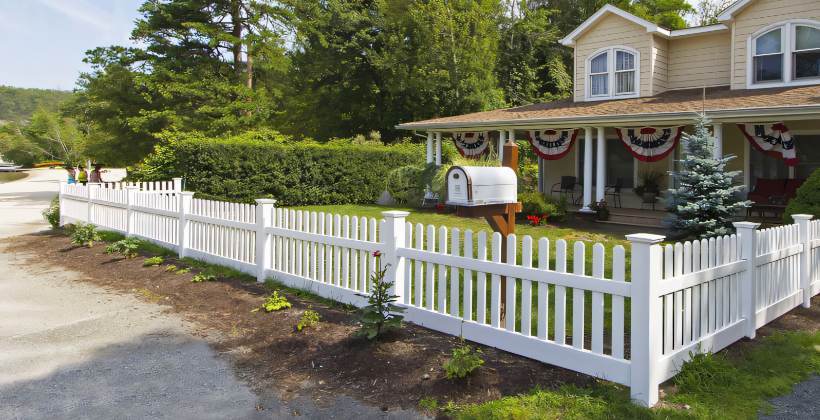
Six vinyl fences we installed around St. Louis. Each one has its own page with photographs and the numbers.
Two things show up on nearly every St. Louis job. Your city or subdivision may have to approve the height or the style before anything is ordered, and the ground decides the schedule. Rock, roots and slope cost more time than extra footage.
Many vinyl fencing products come with a lifetime warranty, but it’s important to understand what that actually covers. A warranty covers defects in the material. It does not cover a bad install, misuse or ground movement.
From my experience, a warranty is only as valuable as the quality of the product and the way it’s installed. When owners choose reputable manufacturers and professional installation, that warranty becomes meaningful long-term protection rather than just marketing language. Knowing what’s covered, and what isn’t, helps set realistic expectations and avoids surprises years down the road.
With quality panels and posts set to depth, a vinyl fence lasts decades with very little change in how it looks.
Good vinyl is made with UV inhibitors, so it holds its color far better than wood that has to be stained.
In many St. Louis suburbs vinyl is approved, because the look stays the same. Check your own rules first, and expect the height and style to need approval.
Yes. It holds up through freeze-thaw, humidity and storms when the posts are set to depth in concrete.
No. Wash it with a hose once or twice a year. There is no painting, staining or board replacement.

Dogs were meant to run free — but whether you live in the suburbs, the city or the secluded countryside, keeping your pets safe with reliable fencing is an important concern. We’ve been installing dog-friendly fences in the greater St. Louis area for 20+ years.
Read More
