Skip to main content


Vinyl is the better fence for most St. Louis yards, as long as you plan to stay a few years and never want to stain anything. Wood is the better fence if you want the lowest price today, real grain, or the freedom to paint it any color you like. The rest of this page is how to tell which of those you are.
A word on who is telling you this. We install vinyl, aluminum and composite, and we have done it around St. Louis since 1994, a start date you can confirm on our BBB profile. We are also a listed installer in the Catalyst Fence directory. We do not install wood. That is exactly why this page says plainly where wood wins.
If you already know you want vinyl, here is how our vinyl fence jobs run. Or ring 636-464-1144 to book a free estimate.
The Short Answer, by Situation
Most people are not really asking which material is better. They are asking which one fits their yard and their plans. Here is how that usually sorts out.
- Staying 5 years or more: vinyl. Wood asks for stain every 2 to 3 years, and vinyl asks for a hose.
- Selling within 2 years: you do not need vinyl. Buy wood, or the cheapest fence you can live with, because the upkeep savings never reach you.
- You want real grain and nothing else: wood, though woodgrain vinyl is worth seeing first.
- Dogs and kids near a busy street: vinyl picket. It stays straight, and there are no splinters or loose boards to chew.
- A long, rural boundary: vinyl split rail. Rail fences are where wood rots fastest, at the post line.
Where Vinyl Wins
For most yards, these three are the whole decision.
No Stain, No Sealer, No Sanding
Wood is on a cycle, and the cycle does not stop. It needs a fresh coat of stain or sealer every 2 to 3 years, because in St. Louis the freeze-thaw cycle and the summer UV keep working on it between coats. Boards cup, split and rot at the base, and those get swapped out as they go.
Vinyl is off that cycle. A hose once or twice a year handles it. Nothing to sand, nothing to seal.
If you want to know how long each one lasts, our guide to vinyl lifespan goes through it in detail.
Privacy That Stays Solid
Both can give you a solid wall of privacy on the day they go up. The difference shows up a few summers later.
Wood boards shrink as they dry, and gaps open between them. You notice it first where the sun hits hardest. A warped board can pull away and leave a slot you can see straight through.
Vinyl privacy panels lock together, so there is nothing to open up, and the back looks the same as the front. You are not stuck staring at the ugly side of your own fence.
A comparison page like this one will not tell you what your own ground allows. A slope, an easement, or a neighbor who shares the line gets settled on site, not here.
For the looks you can choose from, see our privacy fence ideas, and for the installed side, our privacy fence page.
A Fence That Helps When You Sell
The owners of the Sumner property in Barnhart swapped their wood split rail for 4 foot vinyl in June 2026, to update how the place looked before a possible sale. A buyer walking that yard sees a fence that needs nothing from them.
The Downsides of Vinyl, Named by the Company That Installs It
Vinyl downsides are what people search for most on this subject, so here they are from the people who sell vinyl for a living.
- Styles get discontinued. A panel you buy today may not be made in 10 years. We have met it on jobs in Imperial and Arnold, both covered below. Wood can always be matched closely enough.
- You cannot fix a single board. If a picket cracks, you replace the picket or the panel. With wood, you nail on a new board for a few dollars.
- It is not made to be painted. Pick the color carefully, because that is the color you keep.
- A hard knock in deep cold can crack it. Vinyl turns stiffer as it gets colder. A mower or a thrown rock in January does more harm than the same hit in July.
- It costs more on day one. The savings come from the upkeep you skip, not the price you pay.
- Cheap vinyl looks cheap. This one is real enough to get its own section.
If I were buying for my own yard, number one is the one I would ask about first. Ask the installer how long the style has been in the line, and buy a spare panel if the fence is long.
How to Tell Good Vinyl From Cheap Vinyl
Some vinyl does. The difference is in which vinyl you buy, not in vinyl itself. The tells are easy to spot once you know them.
- A high shine. Better panels have a flatter, lower-gloss finish, or a woodgrain texture pressed in.
- Plain square rails on a tall panel. A more finished rail shape reads as a better fence from across the yard.
- A hollow sound when you knock on it. Thin walls sound thin.
- Gaps and seams you can see light through. Good privacy panels lock together.
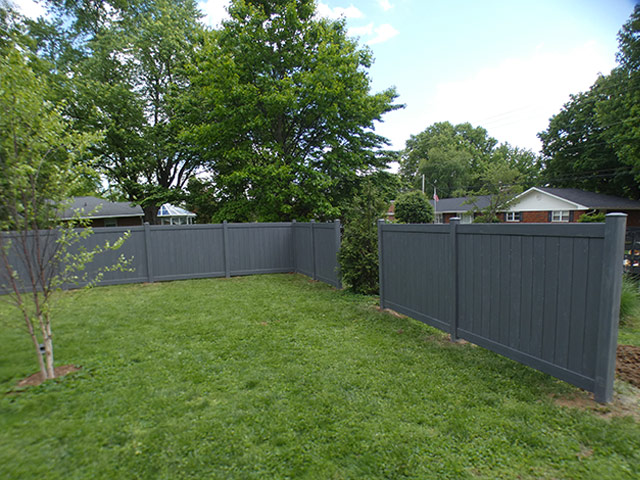
Two of our own jobs show the difference. On the Bryant fence in Wildwood, the homeowner was shown our Supreme style against a basic square-rail panel and chose Supreme for its more finished top rail, on a 104 linear foot run at 6 foot in August 2026. On the Harvengt yard in Collinsville, a 6 foot woodgrain panel in a mixed Arctic Blend finish gave the look of stained wood with nothing to stain. You can see the full range on our vinyl fence styles page.
Where Wood Still Makes Sense
To be fair to wood, there are two narrow cases where it is the right call.
- You need the lowest price this month. Wood usually starts lower on the day it goes in. That lead shrinks with every coat of stain, and the price section below shows where it runs out.
- Only real grain will do. If that is you, see woodgrain vinyl in person first, like the Harvengt fence above. It carries the texture and the stained look with nothing to stain.
Outside those two cases, vinyl is the better fence. Since we do not install wood, the fair test is a wood quote from a wood contractor set next to a vinyl quote from us. The older pros and cons of wood fencing post covers wood in more depth.
Three Jobs That Show the Difference
Each of these answers a question people ask when they are deciding between the two.
- Is it worth replacing a wood fence that still stands? The owner of the Sumner property in Barnhart thought so. An old wood split rail fence had chicken wire run along all of it, and a sale was coming. We replaced it with 531 linear feet of 4 foot white vinyl split rail, 4 gates, in 5 days during June 2026. The Rogers job in St. Louis city made the same call that month, swapping an aging wood privacy fence for 6 foot white vinyl on the same line.
- Can vinyl handle dogs and kids by a busy road? At the Weis corner lot in Fenton, a 4 foot Norwalk picket with 3 inch pickets and 3 15/16 inch spacing kept both in without boxing the yard in. The run was 131 linear feet with 3 gates, including a double drive gate built with a 7 inch drop, done in 2 days in August 2026.
- What happens when a style is discontinued? At the Emht house in Imperial, the new fence was meant to match a neighbor’s 10 year old fence whose style is no longer made. It turned out the neighbor’s style had been discontinued, so a sample panel let the owner compare the closest current style side by side. It came to 160 linear feet of 4 foot spaced picket with 1 gate, in 2 days during July 2026.
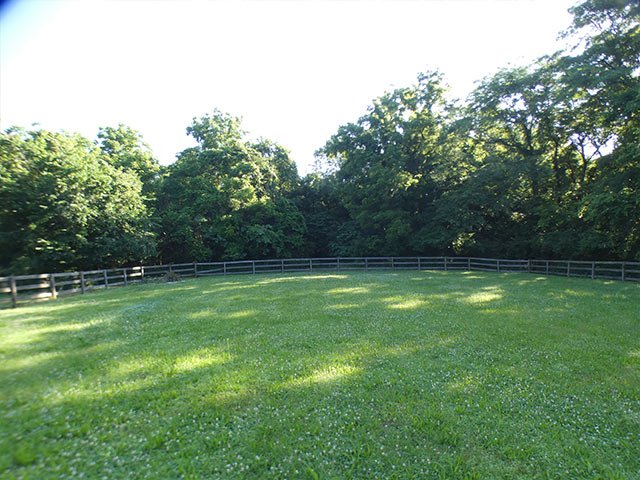
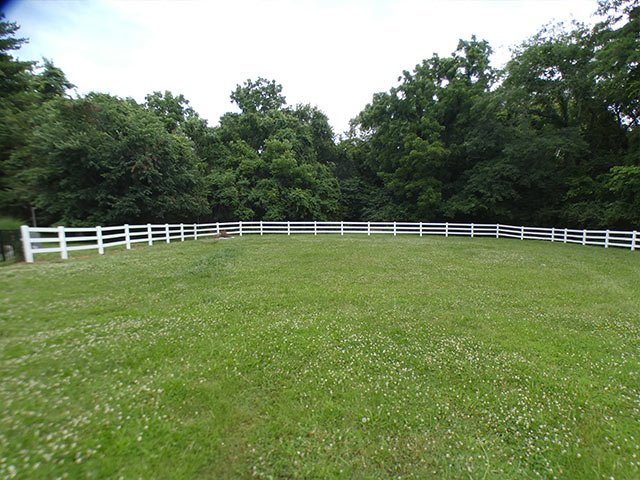
Both photos show the Sumner job above, before and after, on the same 531 foot line in Barnhart.
The Emht job is the downside from the list above, in real life. It happened again on the Morris yard in Arnold, where the first phase of fence had been discontinued before the 232 linear foot second phase went in, in May 2026.
What About Price?
Vinyl runs $45 to $75 a foot installed around St. Louis, and wood starts lower. Whether vinyl pays for itself depends on how long you stay, and that sum has its own page: vinyl fence vs wood fence cost, with local prices and a 20 year worked example.
Frequently Asked Questions
Is vinyl fencing better than wood?
For most yards, yes, if you plan to stay 5 years or more. Vinyl skips the staining that wood needs every 2 to 3 years and stays straight. Wood is better for the lowest price today, real grain, or a fence you want to paint.
What are the downsides of vinyl fencing?
There are five real ones. Styles can be discontinued, single boards cannot be patched, and it is not made to be painted. A hard hit in deep cold can crack it, and it costs more on day one.
Do vinyl fences look cheap?
Cheap ones do. Look for a low-gloss or woodgrain finish, a finished rail shape rather than a plain square rail, and panels that lock together with no light through the seams.
Should I get a vinyl or wood fence?
Pick vinyl if you are staying put and never want to stain. Pick wood if you are selling soon, want the lowest price now, or want a natural grain you can paint. Your plans decide it more than the material does.
Which gives more privacy, vinyl or wood?
Both are solid on day one. Vinyl stays solid, because its panels lock together and do not shrink. Wood boards shrink and warp over the years, and gaps open that you can see through.
Does vinyl outlast wood?
Yes, as a rule, because vinyl does not rot, split or get eaten by insects. Wood rots first at the base of the posts, where the ground stays wet.
How to Decide
Start with how long you are staying. Past 5 years, vinyl’s upkeep savings reach you. Under 2, they do not.
Then decide how you feel about the look. If only real grain will do, get a wood quote. If you want the look of wood without the chores, ask to see woodgrain vinyl in person.
Whichever way you lean, get both prices for your own yard before you choose. For the vinyl half, we measure the line on site, hold a real panel against your house so you see the true color, and write the price up before we leave. Homeowners around St. Louis and the Metro East have left their own accounts of that visit on our reviews page.
Our workmanship is guaranteed for a year after the install, and the vinyl is covered by its manufacturer’s warranty. Most estimate visits happen within 1 to 4 days of the call. Stop by our showroom in Arnold to see the panels in person.
To book the free estimate, call 636-464-1144.