Skip to main content

Plastic fencing is any fence made from plastic instead of wood or metal, and it comes in two very different kinds: rigid vinyl panels made of PVC, built as a permanent fence, and flexible plastic mesh sold in rolls for gardens and short-term use. Vinyl is the kind that lasts 20 to 30 years as a yard fence. Around St. Louis it runs about $45 to $75 a foot installed.
Maintenance-Free Outdoor Solutions installs the rigid kind across the St. Louis area and the Metro East. The Better Business Bureau shows the business starting in 1994, and Barrette Outdoor Living includes us in its Catalyst installer finder. If rolled mesh is what you need, a garden center or hardware store is the place to look.
If rigid vinyl is what you are after, see how our vinyl fence installation works. Dial 636-464-1144, or come handle a real panel at the Arnold showroom.
The Two Kinds of Plastic Fencing
“`
## Before/after image pairs
| Rigid vinyl panels | Plastic mesh in rolls | |
|---|---|---|
| Made from | PVC (polyvinyl chloride) | Polyethylene or polypropylene |
| Used for | Privacy, picket, split rail and pool fences | Garden borders, construction zones, snow fence, short-term pens |
| Put up with | Posts set in concrete | Stakes and zip ties |
| Life as a yard fence | 20 to 30 years | Made to come down |
Most of what shows up in a search is the second kind, sold by the roll. The bright orange barrier around a building site is mesh too. Nylon netting and clear acrylic panels get lumped in under the same name, and neither one is a yard fence we install.
The rest of this page is about the first kind, because that is the one people put around a yard and expect to last.
What Vinyl Fencing Is Made Of
Vinyl fencing is PVC, formed into hollow posts, rails and pickets. Vinyl and PVC mean the same thing on a fence. You will also see it sold as plastic or synthetic fencing.
Plain PVC breaks down in sunlight and turns yellow, because UV light attacks the plastic. So fence-grade vinyl has titanium dioxide mixed in. That is the white powder that blocks the sun, and it is why a good white fence stays white.
A gate is the heaviest thing on a vinyl fence. The panels do not hold it up. The gate posts do, so they go deeper and wider than the posts along the rest of the line.
Is Plastic Fencing Any Good?
Rigid vinyl is a good fence. Plastic mesh is only good for short jobs.
- Rigid vinyl, yes. It never needs stain or paint, it does not rot at the base, and a hose cleans it. Our guide to how long a vinyl fence lasts puts it at 20 to 30 years in normal use.
- Plastic mesh, for the job it was made for. It marks a garden bed or a work zone for a season. It will not hold a dog that pushes on it, and it gives no privacy.
Vinyl has real downsides too, and you should hear them before you buy.
- A hard hit in deep winter can crack it. Cold makes PVC stiffer, so a mower or a ladder that bounces off in July can split a board in January.
- Styles do get discontinued. At a home in Arnold this year, the first phase of a fence had gone out of production before the second phase went in, so the new section had to be a close match rather than an exact one.
- Vinyl is not made to take paint. The color runs all the way through, so pick it at the start. White, almond, clay, gray and blended colors are the usual choices.
- Vinyl costs more on day one than a cheap fence. The savings come later, in years of no upkeep.
What a Plastic Fence Costs Installed
Rigid vinyl costs $45 to $75 a foot with installation in the St. Louis area, depending on the style, going by our own published prices.
| Style | Height or build | Per foot, installed |
|---|---|---|
| Privacy | 6 feet | $55 to $65 |
| Semi-private | 6 feet | $50 to $60 |
| Picket | 3 to 4 feet | $40 to $50 |
| Ranch rail | 2 to 4 rails | $25 to $40 |
A typical yard falls at $55 to $65 a foot. In 6 foot privacy, 100 feet comes to $5,500 to $6,500 and 200 feet to $11,000 to $13,000. A walk gate adds $300 to $1,200. Each style is broken down further on the vinyl fence cost page. If you are weighing vinyl against wood on price over the years, see vinyl fence vs wood fence cost.
Building it yourself? Vinyl panels, posts and gate hardware are sold over the counter at the fence supply store.
Three Yards Where Plastic Replaced Wood
A tight city lot
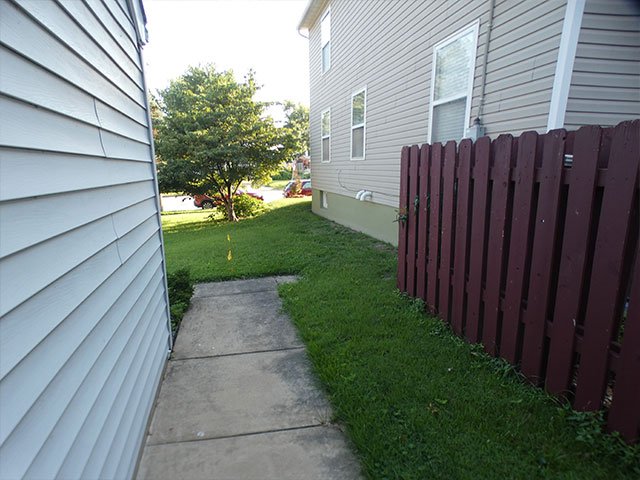
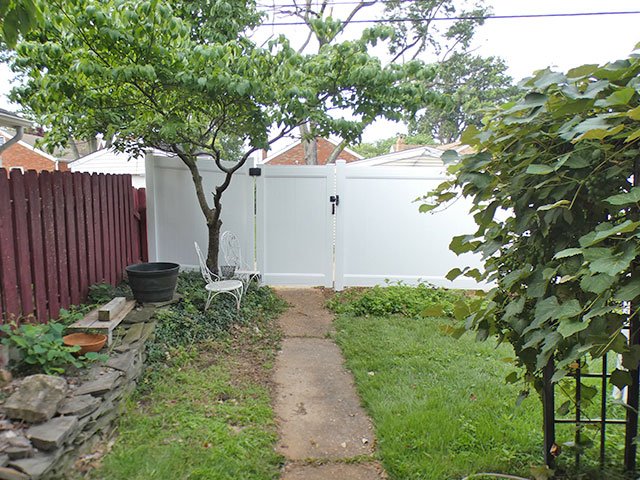
At the Rogers home in St. Louis City, a repeat customer wanted an aging wood privacy fence gone. The old concrete footings came out, the city permits and a hole inspection were handled, and a white vinyl privacy fence, 6 feet tall and 61 linear feet long, went in on the same line, with 2 gates, over 2 days in June 2026. The landscaping on that narrow lot came through untouched.
A long rail fence
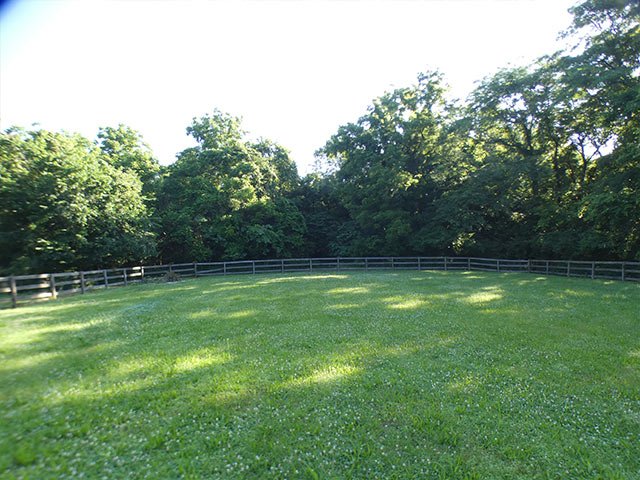
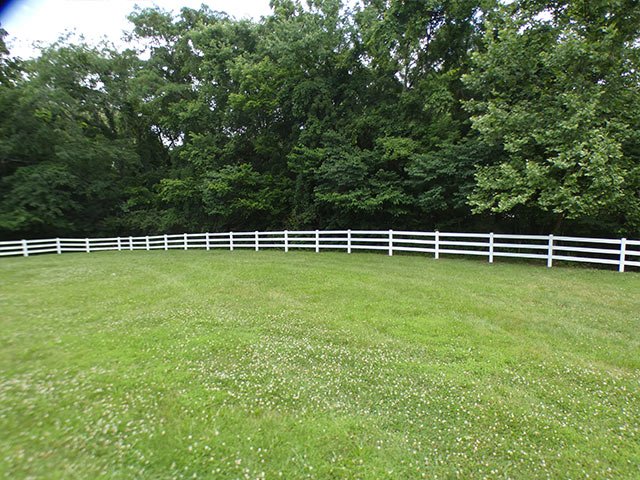
The Sumner property in Barnhart had wood split rail with chicken wire attached along the whole line. We found the old concrete pods would cost more to dig out than to work around, so some new sections sit slightly offset. The replacement is 531 linear feet of white 3-rail vinyl with 4 self-closing gates, put in over 5 days in June 2026.
The owners were updating the place ahead of a possible sale. With the new fence in, they started thinking about staying a while longer.
Plastic that looks like wood
In Collinsville, Illinois, the Harvengt home needed patio privacy that could stand up to wind. The owner chose a woodgrain vinyl in a variegated finish called Arctic Blend. Rather than one straight run, the 84 linear feet of 6 foot fence were split into three sections with the existing shrubs left between them, and the work took 1 day in May 2026.
Frequently Asked Questions
What is plastic fencing called?
The rigid kind is usually called vinyl fencing or PVC fencing, and sometimes synthetic fencing. The flexible kind sold in rolls is called plastic mesh, netting or safety fence.
Are plastic fence panels any good?
Rigid vinyl panels from a fence maker are, and they last 20 to 30 years. Thin decorative panels and mesh sold for gardens are not built to be a yard fence.
Is vinyl fencing the same as PVC fencing?
Yes. Vinyl fencing is made of PVC, which is polyvinyl chloride. The two names describe the same fence.
How long does a plastic fence last?
A rigid vinyl fence lasts 20 to 30 years in normal use, and longer when the posts are set well and water drains away from them. Mesh is meant to come down after a season or a project.
How much does plastic fencing cost?
Around St. Louis, rigid vinyl costs $45 to $75 a foot with installation, and the typical yard comes in at $55 to $65. A 6 foot privacy style is $55 to $65 a foot, and a picket fence is $40 to $50.
What are the downsides of vinyl fencing?
Vinyl has four downsides. Deep cold makes it brittle enough to split if something hits it hard, styles get discontinued, it does not take paint, and it costs more on day one. On the plus side, it never needs stain and it does not rot.
Choosing a Plastic Fence
If you only need to fence a garden or a job site for a season, you do not need vinyl. Roll out mesh and save the money. Rigid vinyl is not for a fence you plan to take down next year.
For a fence that stays up for decades, work through it in this order:
- Decide what the fence has to do. Solid privacy fence panels for a patio, a 4 foot picket fence for a dog that is not a jumper, or a 3-rail ranch rail for a big open property.
- Check your height rule with your city before you pick a style.
- See the colors in daylight, held up next to your own house. The vinyl fence styles page shows the shapes first.
- Get the line measured, with slopes and old footings noted, so the price covers them.
My advice is to spend the most time on the first step, because the style follows from it.
The estimate visit usually comes 1 to 4 days after you call, and we walk the line, measure it, and bring a sample panel. The install work carries a one-year workmanship guarantee, and the vinyl carries its maker’s warranty. You can read what past customers said on the reviews page.
The visit is free and comes with no obligation. Call 636-464-1144 or book it through the online form. The steps of a job are on our vinyl fence installation page.