... Skip to main content

FREE* Gate With Purchase of White Vinyl Privacy Fence [Get Deal]

Find our content useful?

Expert Advice on fence installation, fencing products, maintenance tips and more

Fencing Steel

Four backyard fence styles side by side: natural wood privacy fence, white vinyl privacy fence, black aluminum fence around a pool, and black ornamental steel picket fence

Wood, Vinyl, Aluminum, Steel? Comparing the Top Types of Fences for Your Backyard

Fencing Compared, Fencing Steel, Fencing Aluminum, Fencing Vinyl, Maintenance-Free | No Comments

The main types of fences are vinyl, aluminum, ornamental steel, and wood, and each one trades off cost, upkeep, and security differently. For most St. Louis yards, vinyl or aluminum wins on cost over time, and steel wins on raw security. Wood costs less to buy but needs yearly upkeep and rarely reaches its full 20-year lifespan. Vinyl, aluminum, and ornamental steel need almost none.

We install vinyl, aluminum, and ornamental steel. The sections below weigh real trade-offs rather than push you toward one material. See our vinyl, aluminum, and steel pages for the real jobs and specs behind each material. Or call 636-464-1144 and ask what a straight-across price looks like for your yard.

Fence Types at a Glance
Material Cost per Foot, Installed Typical Lifespan Maintenance Privacy
Wood Lower to buy, more over time Up to 20 years, with yearly care Yearly cleaning and staining Yes, solid boards
Vinyl $45 to $75 20 to 30 years Occasional rinse Yes, solid panel
Aluminum $20 to $45 Lifetime limited warranty Occasional rinse No, open picket
Ornamental Steel Above aluminum 20 years to lifetime, by grade Occasional rinse No, open picket
Chain Link Lowest to buy Years, rusts at cut ends Minimal No, unless slatted

Wood Fences

Wood is the fence most people picture first, and it has a real natural look nothing else fully matches. A well-built wood fence can last up to 20 years, but that number assumes yearly cleaning and re-staining. Skip a season or two and rot, warping, and insect damage show up fast. The U.S. Forest Service’s Wood Handbook notes that wood in contact with the ground has less decay resistance.

We do not install wood fencing. If low upkeep matters more to you than a stainable look, wood is not the right choice. That is true no matter who installs it. Want the wood look without the yearly maintenance? Our composite fencing mimics wood grain and stone texture, with no rot risk.

Vinyl Fences
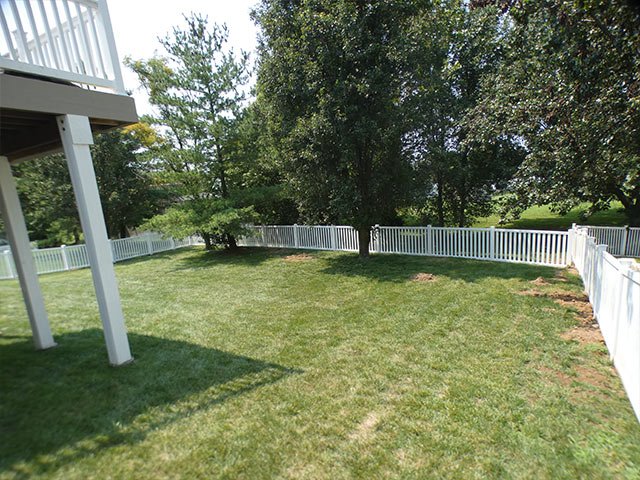
White vinyl spaced picket fence installed for the Emht job in Imperial, MO

Vinyl is solid PVC, so it blocks sightlines completely and needs almost no upkeep beyond an occasional rinse. We were at the Emht property in Imperial on 29 July 2026. The job: a 160-foot run of white vinyl spaced picket fencing. It matched a neighbor’s fence we had put in about 10 years earlier. When we walked the two fence lines side by side, we found no difference in color or straightness. The new panels matched the decade-old ones exactly. That older fence had held up fine for a decade already, still standing and doing its job with no repairs. That is real evidence, not a marketing claim.

Bufftech vinyl is the brand behind the Emht job above. It comes in privacy, semi-privacy, and picket styles. Colors run from white to almond, clay, and a few blended shades. It typically lasts 20 to 30 years and runs $45 to $75 a foot installed in the St. Louis area.

Vinyl is not for you if you want to see through the fence. A solid panel is the whole point of the material. That trade-off stays no matter which style you pick. Full pricing and style options are on our vinyl fence installation page. To see every style, visit our vinyl fence styles page.

Aluminum Fences
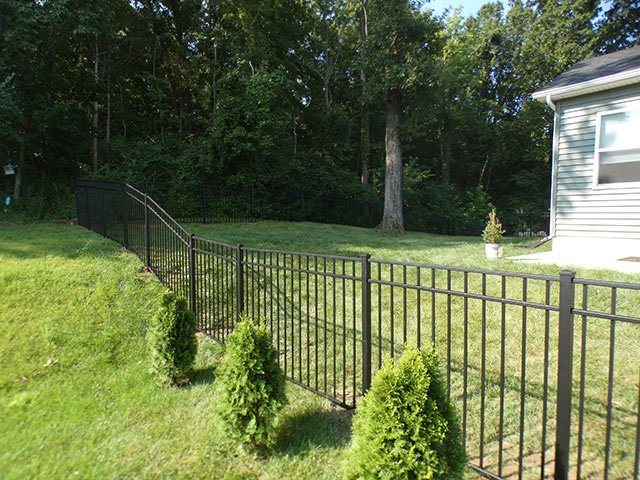
Matte black Elite aluminum fence installed for the Criscione job in Eureka, MO

Aluminum is an open picket style. You keep your sightline while still fencing in a yard, pool, or pet area. The Criscione job in Eureka came with one restriction: the homeowners association allowed only a single approved fence style for the whole subdivision. We installed matte black Elite aluminum, and it cleared design review with zero changes requested.

Elite offers this aluminum in four grades — residential, commercial, industrial, and heavy industrial — with the higher grades built to take more force. Picket spacing can also be ordered tighter for small dogs or cats. It runs $20 to $45 a foot installed, usually $25 to $40. The material itself carries a lifetime limited warranty, filed directly with Elite rather than through us.

Aluminum will not give you privacy. A picket can also bend under a hard enough impact, since the material is lightweight. Steel solves both of those problems at a higher price. See our aluminum fence installation page for grade specs and more job photos.

Ornamental Steel Fences

Steel is the strongest of the three materials we install. A welded frame takes more force to bend or breach than aluminum’s bolted-together sections. That is why steel shows up on commercial sites and high-security jobs.

We have not yet installed and photographed a steel job for this site. There is no in-house case study to link here yet. The specs below are Ameristar’s own published numbers, not something we measured ourselves. Ameristar’s Montage line uses pre-galvanized steel with an E-coat finish. The industrial-grade version carries a 20-year manufacturer warranty, and the residential line carries a lifetime limited warranty.

Steel is priced above aluminum once you match height and style, and the added weight can slow installation down on a tricky site. If your only goal is a decorative touch around a flower bed, that extra strength buys you nothing you need. Save the higher cost for a spot that actually calls for it. Full grade and finish specs are on our steel fence installation page.

Chain link is steel wire woven into a diamond pattern and stretched between posts. It is the cheapest fence to buy, it is see-through, and it holds up for years with almost no care. That combination is why it shows up around dog runs, ballfields, and plain property lines.

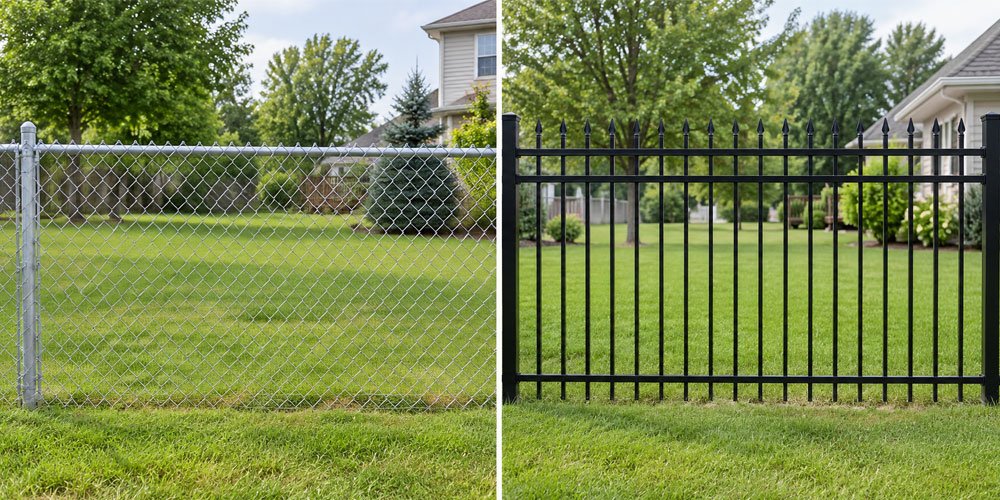
We do not install chain link. The cut ends of the galvanized wire rust over time. The open diamond pattern also gives you zero privacy unless you thread slats through it, and most homeowners end up disliking that look within a year. If you want that same open, budget-friendly sightline without the rust risk, see how chain link stacks up against aluminum before you decide.

Other Types You Might See Listed

Search around and you will also find other names on fence-type lists: split rail, bamboo, and electric or invisible fencing. Split rail and bamboo mark a property line without giving privacy or security. We do not install either.

Invisible or electric fencing is not really a fence at all. It is a pet-containment system, and it will not stop a person from entering your yard or keep a deer out of your garden. If keeping a pet in the yard is the actual goal, compare invisible fencing against a regular fence first.

Which Fence Type Actually Fits Your Yard

  • Want privacy? Vinyl. Nothing else on this list blocks a sightline completely.
  • Want to keep your view? Aluminum. Open pickets, and it clears most HOA style rules.
  • Want maximum security? Steel. Heavier, stronger, and harder to breach.
  • Want the lowest cost per foot? Aluminum, usually $20 to $45 a foot, beats vinyl and steel on price.
  • Want a natural wood look with none of the upkeep? Look at composite fencing instead of real wood.

One common courtesy question we get: which side of the fence should face your neighbor? Most installers, us included, turn the finished side toward the neighboring yard as standard practice. Nothing legally requires it in most St. Louis municipalities, but it is the polite default.

Frequently Asked Questions

What is the most cost-effective type of fence for a backyard?

Aluminum usually wins on cost per foot, running $20 to $45 a foot installed. Wood can cost less to buy, but yearly staining and earlier replacement often erase that savings within a decade.

Which fence type requires the least maintenance?

Vinyl, aluminum, and ornamental steel are all close to tied here. None of them need more than a quick hose-down now and then. Wood is the clear outlier, needing yearly cleaning and staining to reach its full lifespan.

What type of fencing is most durable?

Ornamental steel is the strongest of the four, followed by aluminum. Vinyl holds up well against weather and rot. It is softer than either metal, though, and can crack under a hard direct impact.

What are the downsides of composite fencing?

Composite costs more up front than wood, and color options are more limited than vinyl. It also cannot fully replicate the exact grain pattern of real wood, though it comes close enough for most homeowners.

Which is better, composite or vinyl fencing?

Vinyl wins on color range and price. Composite wins if you specifically want a wood-grain or stone look without wood’s maintenance. Neither one rots, and both beat wood on long-term cost.

Getting a Price for Your Yard

Every vinyl, aluminum, and steel job on this page is handled start to finish by our own crews, not a subcontractor. That’s true anywhere in St. Louis or the Metro East. We back the labor with a one-year workmanship guarantee, on top of whatever warranty the manufacturer carries. We’re a listed Catalyst installer. You can check that for yourself at catalystfence.com’s own installer search before deciding who fences your yard. For a national starting point on cost, HomeGuide publishes a fence installation cost guide.

Here’s what actually happens after you reach out:

  1. First, call 636-464-1144 or request an estimate online.
  2. Then we walk the yard with you and measure each run you want fenced.
  3. After that, you get one written price with each material broken out separately, not guessed at or bundled together.
  4. Finally, you decide on your own timeline. Nobody is pressuring you to sign the day we measure.

Our Arnold showroom keeps samples of vinyl, aluminum, and steel. Stop by to see the color and weight in person before deciding. Local homeowners have written up their own experience working with us — read it on our reviews page.

Gloved hand rinsing a white vinyl privacy fence with a garden hose in a sunny backyard

Cleaning Fences: The How To Cleaning Guide for Maintenance Free Fences

Fencing How To, Fencing Stone, Fencing Steel, Fencing Aluminum, Fencing Vinyl, Maintenance-Free | No Comments

Vinyl, aluminum, and ornamental steel fences all clean the same basic way: warm water, a mild soap, and a soft cloth or a garden hose. None of them need the yearly power-washing and re-staining a wood fence does. The exact method changes by material, though. A couple of common household cleaners will damage the wrong one, so use the section below that matches what you own.

We install vinyl, aluminum, and ornamental steel fencing across St. Louis, and every one of them is built to need almost no upkeep. In our experience walking these yards afterward, we often find the owners who rinse twice a year never call us about anything worse than pollen fill. “Almost none” still means an occasional rinse, so here is exactly how to do it right for each material.

How to Clean a Vinyl Fence

White vinyl spaced picket fence, a low-maintenance style installed for the Emht job in Imperial, MO

Vinyl is the easiest of the three to clean, and most of the time a garden hose is all you need. For everyday dirt and winter mud splash, spray the fence down from top to bottom, working both sides of the panel.

What to use: warm water, a few drops of Dawn dish soap, and a soft cloth or sponge.

  1. First, hose the panel down to knock off loose dirt before you scrub anything.
  2. Then mix a few drops of Dawn into a bucket of warm water and wipe the panel down with a soft cloth or sponge.
  3. After that, rinse it clean with the hose so no soap film is left to attract more dust.

For algae or green staining on the shaded side of a panel, mix one part white vinegar with four parts water. Spray it on and let it sit five minutes. Scrub lightly with a soft brush, then rinse. Never mix vinegar with bleach or a chlorine-based cleaner. The combination produces chlorine gas, and that gas is dangerous to breathe. Poison Control explains why mixing bleach with an acid releases chlorine gas, and the CDC says never to mix bleach with any other cleaner. Use vinegar alone, and rinse it fully before trying anything else.

Pressure washing vinyl is generally safe at a moderate setting, 1,500 to 2,000 PSI, held at least a foot from the panel. Get closer or go higher and you risk driving water into the seams. A magic eraser works on stubborn scuff marks. It can dull a glossy finish with repeated use, so save it for spot treatment, not the whole fence.

If you’re shopping for a new fence instead of maintaining one, our vinyl fence installation page covers colors, styles, and what a new one runs.

How to Clean an Aluminum Fence

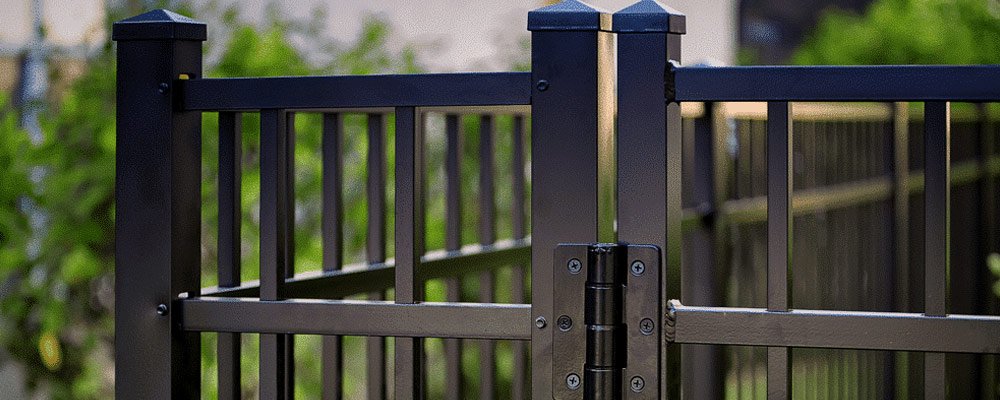
Close-up of a black aluminum picket fence rail and post

Aluminum needs the least attention of any material on this page. A soft, dry or slightly damp cloth wiped along the rails and pickets a few times a year handles ordinary dust and pollen. For anything sticky or caked-on, warm water with a drop of dish soap is enough.

Do not use vinegar or any acidic cleaner on aluminum. Vinegar is fine on vinyl and steel. Aluminum’s powder-coat finish is thinner, though, and acid strips it. That exposes bare metal underneath to corrosion. This is the one material here where the vinyl-safe method will actively damage the fence.

Aluminum also handles pressure washing at a low setting. It rarely needs it, though. A garden hose rinses off pollen and dust just as well, with no risk of forcing water behind the powder coat at a seam.

Thinking about switching to aluminum? Our aluminum fence installation page has the grades we carry and photos from real yards.

How to Clean an Ornamental Steel Fence

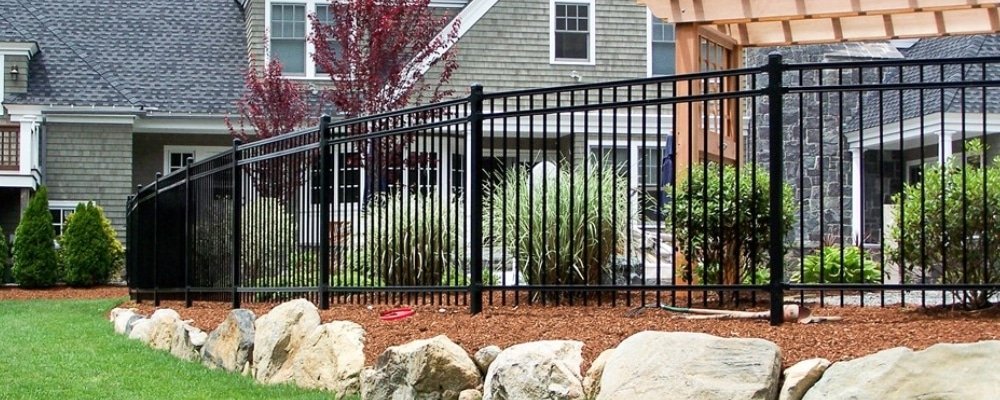
Black ornamental steel picket fence with pointed pickets in a landscaped backyard

Steel takes a bit more effort than aluminum. The ornamental detail work – scrolls, finials, tighter picket spacing – collects more grime in the joints. Wash it by hand rather than with a pressure washer. A pressure washer can chip the surface coating at close range, and once that coating breaks, the exposed steel underneath starts to rust.

What to use: warm water with a squirt of dish detergent, a soft cloth for the flat rails, and a soft-bristle brush for the decorative joints. An old toothbrush works fine for the scrollwork. Work top to bottom, so you are not re-dirtying a section you already cleaned. Diluted vinegar is safe on steel too, the same as vinyl, for algae or hard-water spotting. Just avoid it on any section with visible paint wear. It can dull a painted finish over time.

Ready to price out steel instead? Head to our steel fence installation page for the Ameristar lineup and finish options.

How to Clean a Composite Fence

Dark brown wood-grain composite privacy fence panel in a backyard

This composite fencing is a polyethylene shell reinforced with galvanized steel. It cleans closer to the steel method than the vinyl one. Wipe it down with a soft cloth and warm water for routine dust. For algae or built-up grime in the textured grain pattern, mix one part vinegar to four parts water, spray it on, and wipe it off.

Rinse the vinegar solution off completely with plain water afterward. Left to sit, the acid can react with the steel reinforcement over years of repeated exposure. Rinsing every time you clean avoids that entirely.

Frequently Asked Questions

Can I use Dawn dish soap on a vinyl fence?

Yes. A few drops of Dawn in warm water is one of the safest, most common ways to clean vinyl. It cuts through dirt without leaving residue and will not damage the surface.

What happens if you mix vinegar and dish soap?

Mixing them is not dangerous. The soap’s alkalinity cancels out the vinegar’s acidity, though, so the combination cleans worse than either one alone. Use dish soap for everyday grime. Use vinegar separately for algae or mineral staining.

What should you never mix with vinegar when cleaning a fence?

Never mix vinegar with bleach or any chlorine-based cleaner. The combination releases chlorine gas, which is dangerous to breathe. Use one or the other, never both, and rinse fully between products if you switch.

Is it safe to pressure wash a vinyl fence?

Yes, at a moderate setting of 1,500 to 2,000 PSI held at least a foot away from the panel. Higher pressure or a closer distance can force water into the seams or etch the surface.

How do you remove green algae from a fence?

Mix one part white vinegar with four parts water. Spray it on, let it sit five minutes, then scrub with a soft brush and rinse. That removes algae from vinyl, steel, and composite. Skip vinegar on aluminum. Use plain soap and water instead, since vinegar’s acidity damages aluminum’s powder coat.

Still Deciding on a Fence?

If your current fence needs more than a rinse to look decent again, that is usually a wood fence problem, not a maintenance-free one. Wood needs yearly cleaning and re-staining to reach its full lifespan. Vinyl, aluminum, and steel need only what is on this page, a few times a year at most. To see how long each lasts, read our guide to how long a vinyl fence lasts, or compare vinyl and aluminum fencing.

This page is not for a cracked panel, a leaning post, or a section already stripped down to bare metal. That needs replacing, not a cleaner, and it is outside what this guide covers. For the ordinary rinse-and-wipe kind of upkeep above, that is the whole job.

Call 636-464-1144 and we’ll walk your yard and price out whichever material fits. Look us up first if you want: catalystfence.com’s own installer search lists us, since we’re a Catalyst-listed installer. St. Louis homeowners who’ve already had us out have posted their own notes on our reviews page.

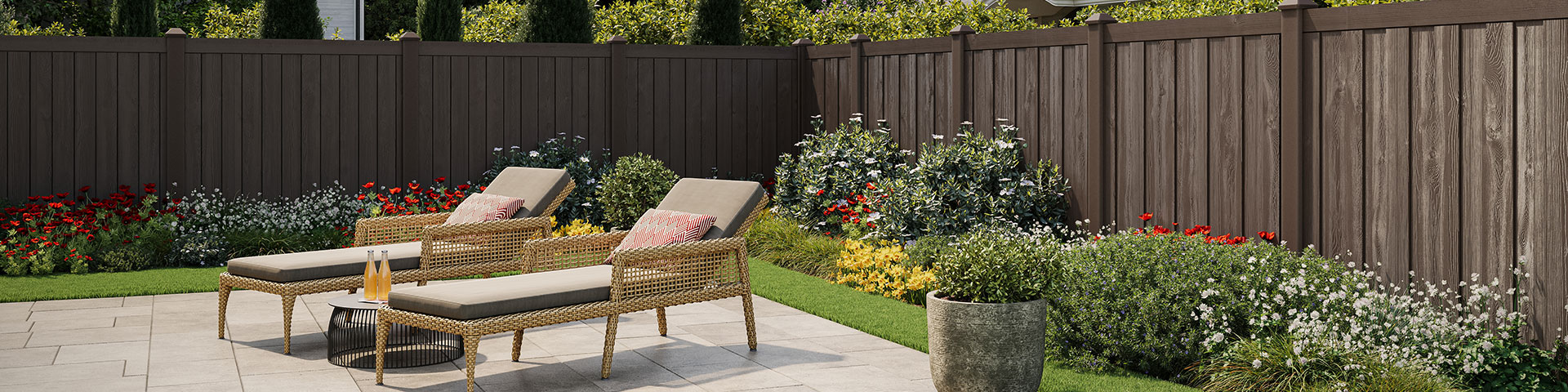
Woodgrain molded composite fence behind two lounge chairs in a landscaped garden

Fence Materials Compared: Vinyl, Aluminum, Steel and More

Fencing Compared, Fencing Steel, Fencing Aluminum, Fencing Vinyl, Fencing resources, Maintenance-Free | No Comments

The common fence materials are vinyl, aluminum, ornamental steel, composite, wood and chain link. No single material wins every test. Vinyl and composite give you solid privacy with no painting. Aluminum and ornamental steel keep your view open. Aluminum does not rust, and steel lasts as long as its coating stays whole. Wood needs staining or sealing on a schedule, and chain link rusts where its zinc coating wears through.

Maintenance-Free Outdoor Solutions installs four of the six: vinyl, aluminum, ornamental steel and composite. Wood and chain link are the two we leave out, so this guide covers them only to help you compare. Vinyl and aluminum both come in spaced picket styles, which our picket fence installers build across St. Louis.

Read More

Maintenance-Free Outdoor Solutions can help you figure out which is the better option for you when it comes to an aluminum vs wood fence

Metal Fence vs Wood Fence: Cost, Downsides and What to Use Instead

Fencing Compared, Fencing Steel, Fencing Aluminum, Maintenance-Free | No Comments

Wood usually costs less to put in, and metal costs less to keep. Installed aluminum runs $20 to $45 a foot around St. Louis, and most jobs land between $25 and $40. Wood needs stain every two or three years, plus new boards as old ones rot. A picket metal fence needs neither. You can see straight through it, though, so it gives you no privacy.

Read More

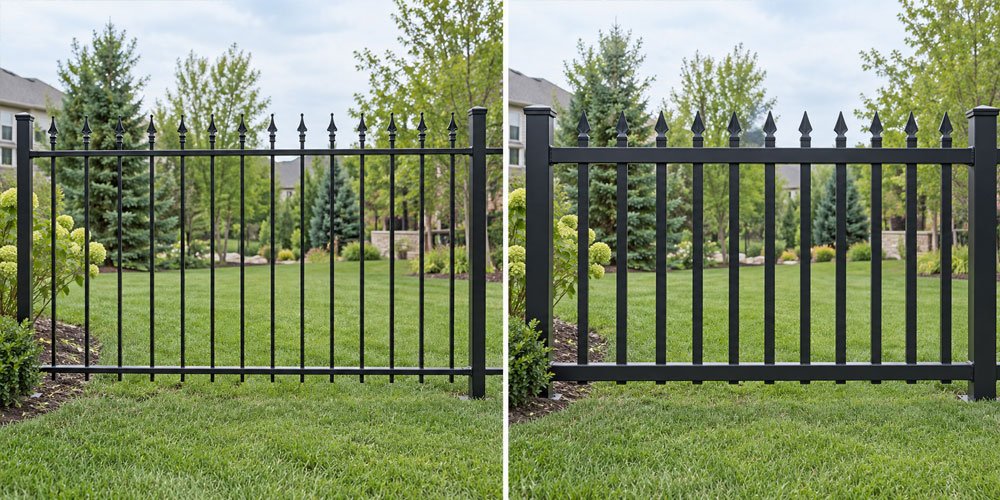
Side-by-side comparison of a black aluminum picket fence and a heavier black ornamental steel fence in similar backyard settings

Aluminum vs. Steel Fence – The Pros & Cons – a Homeowners Guide

Fencing Compared, Fencing Steel, Fencing Aluminum, Maintenance-Free | No Comments

Steel wins on strength, aluminum wins on upkeep and cost. Expect $20 to $45 a foot installed for aluminum in the St. Louis area, with steel usually running 15 to 25% higher for the same height and style. Steel is heavier and welded rather than bolted together, so it takes more force to bend or breach. Aluminum will never rust. Neither one needs paint, and both clear most HOA rules that reject chain link.

We install both, so you get the real trade-off here, not a push toward whichever one we’d rather sell. Check our aluminum fence installation page or our steel fence installation page for what each job involves. Or dial 636-464-1144 for a no-charge price on your yard.

Strength and Security

Aluminum fence sections are built from separate rails, pickets and brackets joined together. Steel sections are welded as one piece. That is why steel takes more force to bend, pry or break through than aluminum of the same style.

Home-grade aluminum rails usually hold up to about 350 lbs of pressure before they give. The steel we install most is Ameristar’s Montage line, built from galvanized steel with a welded frame. Builders reach for it on business and high-security jobs where aluminum would not pass review.

If security is your deciding factor, steel is the stronger choice. If your fence is decorative or for pet containment, aluminum holds up fine for nearly every yard. Steel matters most when you need to stop a determined intruder, not just keep the dog in.

Rust, Finish and How Long Each One Lasts

Aluminum does not rust. It contains no iron, so it cannot oxidize the way steel does. The powder-coat finish is cured on at the plant before the fence ever ships, not touched up on site.

Steel can rust if the coating is ever breached. Ameristar’s Montage line ships with an E-coat, maintenance-free finish over recycled galvanized steel to stop exactly that. Montage II, the heavy-duty version, carries a 20-year warranty from Ameristar. Montage’s home steel fencing carries a lifetime limited warranty from Ameristar, the same tier of backing as Elite’s aluminum.

In practice, both materials outlast the person who bought them when the coating stays intact. You only see a real gap if the coating gets cut through to bare metal for years. That is rare on a home fence. Nobody is grinding on it.

Style and Color Options

Aluminum comes in a wider color range. Elite, the aluminum we install most, ships in seven standard colors plus custom options. That makes it the easier match for an existing house color or an HOA palette.

Steel usually comes in fewer standard colors, most often black or bronze. The finish has to hold up to the E-coat process. If you want your fence to disappear into the yard, black works on both. Need one accent color to match your trim or brick? Aluminum gives you more room to get it right.

Both materials come in picket, flat-top, arched and finial-topped styles, so style alone rarely settles the decision between them.

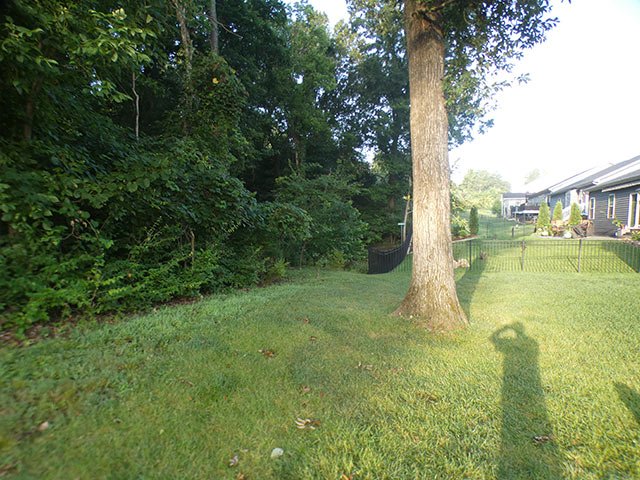
Open sloped wooded backyard in Wildwood, MO before the aluminum fence went in
Before
Matte black aluminum picket fence following the slope of the same wooded backyard in Wildwood, MO
After

On the Criscione job in Eureka, we found the yard sloped enough that a rigid steel panel would have left gaps under the rails at the low end. Aluminum’s raked panels stepped down the grade instead, so the fence line followed the hill rather than fighting it.

Cost

Aluminum sits in the $20 to $45 a foot range for most St. Louis yards, with $25 to $40 covering the majority of jobs. Our aluminum fence cost page breaks that down further by height and gate count. For national price ranges, HomeGuide publishes a guide to aluminum fence cost. If you are weighing the wrought iron look, see wrought iron vs aluminum fence.

Steel costs more than aluminum for the same style and height. A welded frame takes more labor and material to build than a bolted-together aluminum section. The gap is real, but it is not huge on a normal home job. Budget roughly 15 to 25% more for steel than aluminum at the same height and style.

Neither material adds an ongoing maintenance cost the way wood does. The extra you pay for steel up front buys strength, not lower lifetime cost.

What We’ve Actually Installed

The three aluminum case studies below are real, dated jobs from 2026. We do not have a published steel case study on this site yet. The strength and warranty numbers above come from Ameristar’s own published specs, not from one of our own installs. Steel installs happen here too, just not written up yet. Ask us for photos when you call if a specific steel job matters to your decision.

  • Voegtli, Kirkwood MO, 15 May 2026. 38 linear feet of aluminum picket, 4 feet tall, matte black, 2 gates, 1 day. Picket gaps closed to 1 and 5/8 inches to contain two small dogs.
  • Criscione, Eureka MO. Matte black Elite aluminum, approved by the subdivision on the first submission.
  • Schwyhart, St. Louis, 21 August 2026. 260 linear feet of black aluminum picket, 6 feet tall, 4 gates, 3 days. Height set to keep deer out of the flower beds.

Frequently Asked Questions

Which is better, a steel fence or an aluminum fence?

Steel is stronger and better for security or high-impact areas. Aluminum costs less, comes in more colors, and needs zero maintenance either way. Is your yard a normal home yard where nobody is trying to force their way in? Then aluminum is the better value for you. Steel is not for you if all you need is a decorative line around a flower bed or a low-traffic side yard – you would be paying for strength you will never use. Steel earns its extra cost on a business site or a pool fence with a strict code. It also earns it anywhere security is the real goal.

What are the downsides of aluminum fences?

Aluminum is softer than steel, so it takes less force to bend a picket or rail out of shape. It costs more up front than chain link. Standard picket spacing will not hold back a determined cat or a small, thin-bodied dog breed, so order it tighter up front if that matters for your yard.

What are the downsides of steel fencing?

Steel costs more than aluminum for the same style and height. It is heavier too, which can mean more labor if your site is difficult to dig. If the protective coating is ever cut through to bare metal and left unrepaired, that spot can rust.

Do aluminum fences increase property value?

Yes, aluminum fences tend to help rather than hurt. A buyer sees a rust-free, no-maintenance fence as one less thing to budget for. An aging wood or chain link fence reads the opposite way to that same buyer.

How much does a 100 foot aluminum fence cost?

At $25 to $40 a foot installed, 100 feet of aluminum runs roughly $2,500 to $4,000, before gates. Gates are priced separately based on width and hardware.

Which fence requires the least maintenance?

Aluminum and steel are close to tied here. Both need an occasional rinse and nothing else under normal conditions. Aluminum has a slight edge only because there is no coating to ever worry about being breached.

Getting a Price for Your Yard

We handle both materials, wherever your property sits in the St. Louis region, and we are a listed installer on the Catalyst installer directory. Your finished install carries one year of our own workmanship backing on top of whatever the manufacturer promises.

Getting a firm number takes three steps:

  1. You call or request an estimate online.
  2. We measure your yard, usually within 1 to 4 days.
  3. You get a written price for aluminum, steel, or both, so you can compare them side by side before deciding.

Our Arnold showroom keeps samples of both materials if you want to see and touch them before committing. You can also read what past customers say about the crew on our reviews page, and you can confirm our start date on our BBB profile.

Ready for a number? Dial 636-464-1144. There is no charge for the visit or the quote.