 Skip to main content


The best dog fence for a yard has nothing to climb, no gap at the ground, and pickets too close to squeeze through. Most fences for dogs only need to be 4 feet tall. Small dogs also need tight pickets, about 1 5/8 inches apart. Strong jumpers need 5 to 6 feet. I pick the gap first, because a tall fence does nothing if your dog can walk between the pickets.
Want the height and gap set for your dog? Read about our dog fence installation. Or call 636-464-1144, and we will measure your yard at a free, no-obligation estimate.
Match the Fence to Your Dog
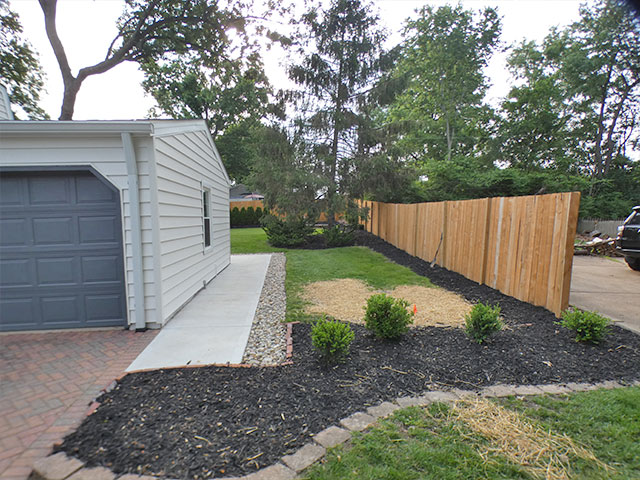
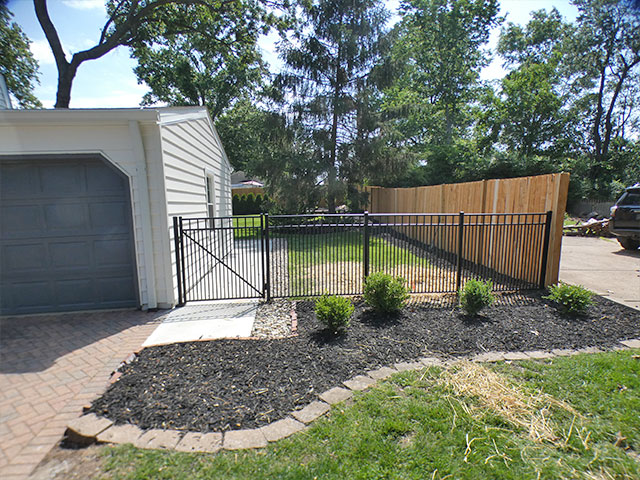
Choose in this order:
- Watch how your dog tries to get out: over, through, under or by the gate.
- Pick the height and the picket gap from the table below.
- Hold the fence sample next to your smallest dog before you order.
| Your dog | What to build |
|---|---|
| Small, squeezes through | 4 feet tall. Pickets about 1 5/8 inches apart. Aluminum with tight dog pickets. |
| Medium or large | 4 to 4 1/2 feet tall. Pickets 3 11/16 to 3 15/16 inches apart. Standard aluminum or vinyl picket. |
| Jumps | 5 to 6 feet tall, standard gap. No rail low enough to push off. |
| Digs | 4 feet tall, standard gap. Bottom rail kept tight to the ground, even on a slope. |
| Barks at people walking by | 5 to 6 feet tall, no gap. Solid vinyl privacy panels that block the view. |
| Chews | 4 feet tall, standard gap. Aluminum or vinyl, with nothing soft to chew. |
The gaps in this table come from real jobs, listed below. Standard picket gaps ran from 3 11/16 to 3 15/16 inches, because each fence style is a little different.
Test the gap against your smallest dog before you buy. Hold the fence sample next to it. If its head fits through the gap, choose a tighter gap. In Imperial, the homeowner ran this test first. Then we built 160 feet of white vinyl picket for their dogs.
Five Dog Fences We Built Around St. Louis
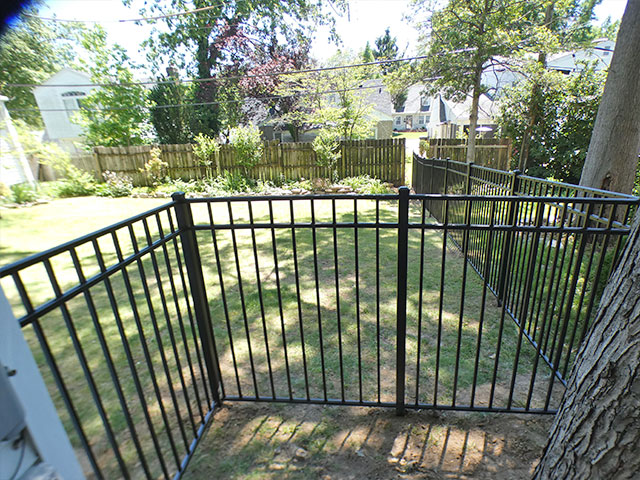
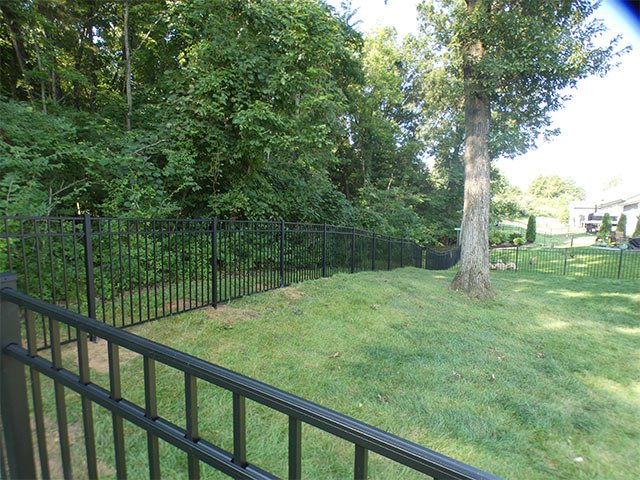
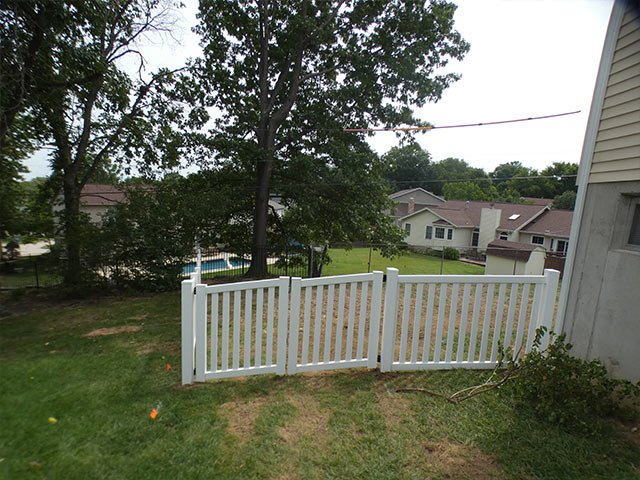
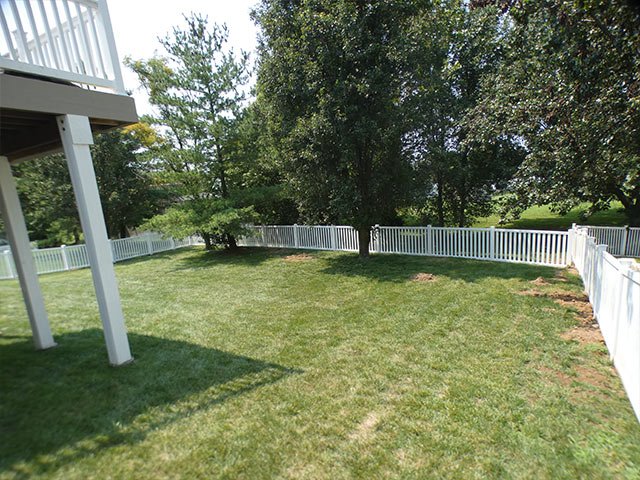
Click a town to see that job’s before and after photos.
- Kirkwood, May 2026. 38 linear feet of 4-foot black aluminum, 2 gates, 1 day. The homeowner has two small dogs. We closed the picket gap to 1 5/8 inches instead of putting up a solid fence. One gate post sits on a concrete sidewalk, so we bolted it to the concrete instead of digging.
- Brentwood, May 2026. 100 linear feet of 4 1/2-foot black aluminum, 1 gate, 1 day. A 3 11/16-inch gap was enough for these dogs and kept the garden in view. Brentwood inspected the post holes before the fence could go up, and it passed.
- Imperial, July 2026. 160 linear feet of 4-foot white vinyl spaced picket, 1 gate, 2 days. The owner checked the sample against the smallest dog first. When the dogs went out, they found no way through.
- Eureka, August 2026. 122 linear feet of 4-foot black Elite aluminum, 1 gate, 2 days, in the Windswept Farms subdivision. The dog was mid-size, so the standard 3 13/16-inch gap was enough. The owner did not have to pay extra for a tighter dog style. A steep hill needed sections that tilt with the slope, so no gap opened under the fence.
- Fenton, August 2026. 131 linear feet of 4-foot white vinyl picket, 3 gates, 2 days, on a corner lot by a busy street. We found tree roots in the digging path, where two large trees had just been removed. The pickets are 3 inches wide with 3 15/16-inch gaps, which works for both dogs and children. The drive gate sits on a slope, so we built it with a 7-inch drop.
All five fences were 4 to 4 1/2 feet tall. The height was never the hard part. The gap, the ground and the gates were.
How Dogs Get Out

Before you choose, watch your dog from inside the house for a few days. Dogs often behave differently when they know you are watching. How your dog tries to leave tells you which fence you need.
- Over. A dog jumps or climbs. Anything it can put a paw on, like a low rail or a crossbar, helps it get over.
- Through. A small dog walks between the pickets.
- Under. A dog digs, or finds a gap where the ground dips. On a slope, a straight fence leaves a gap at every low spot.
- The gate. A clever dog noses open a weak latch, or someone leaves the gate open.
Why a dog wants out matters too. A bored or lonely dog keeps testing the fence. A dog that sees other dogs or people passing by may try to chase them. A fence keeps your dog in, but it will not fix boredom. If boredom is the reason, you do not need a taller fence first. You need more time and exercise with your dog.
Two gate habits I would build in from day one. Where the ground allows, swing the gate in toward the yard, so a dog that jumps on it pushes it shut. And use a latch your dog cannot work open with its nose.
Fence Materials That Hold Up to Dogs
Every material below is maintenance-free. None of them rot, and none need painting.
- Aluminum. My pick for most dogs, and what three of the five jobs above use. It is powder coated, so it does not rust, and you can still see your yard through it. It comes in tight dog picket styles for small dogs, and the Eureka job used Elite aluminum.
- Vinyl picket. A vinyl picket fence has a classic open look and needs no painting. Fenton and Imperial are both white vinyl picket.
- Vinyl privacy. A vinyl privacy fence has solid panels that block the view. This is the fence for a dog that barks at every person and dog walking by. Your dog will still hear and smell them, so it helps but does not cure the barking.
- Ornamental steel. A heavy, strong fence for a large dog that leans on or jumps at the fence.
One thing we do not do: we do not install buried electric fences. A buried wire and a collar will not stop a dog that decides the chase is worth it. It also will not keep other animals out. If you are still weighing one, our invisible fence cost guide sets its price next to a real fence.
Which Part of the Yard to Fence
You do not have to fence your whole property. Most dog owners pick one of these four layouts.
- The back yard only. The most common choice. Your dog gets a safe yard and your front yard stays open.
- The whole property. One fence line around the front and back. Check your city and subdivision rules first, because front yard fences can have height limits.
- Front and back as two fences. Useful when the front has to be shorter or a different style than the back.
- A small dog area. A fenced space inside the yard. The Kirkwood job above used 38 linear feet to close off an area for two small dogs.
You can also fence your dog out of a space instead, like a garden or a pool area. To work out the length for any layout, see how much fence you need. For national price ranges by material, HomeGuide publishes a fence installation cost guide.
What Your City or Subdivision May Ask For
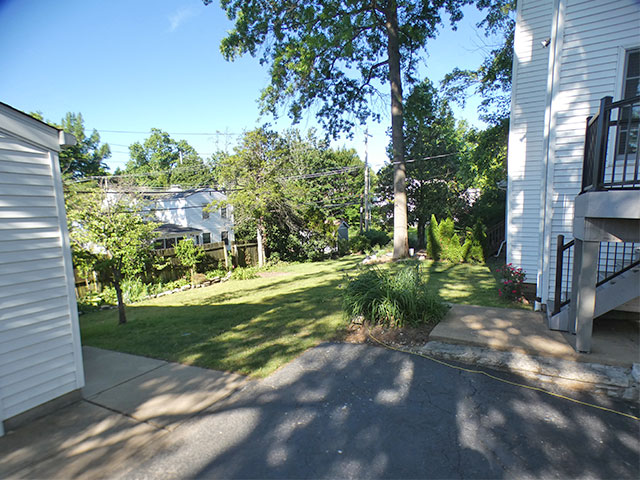
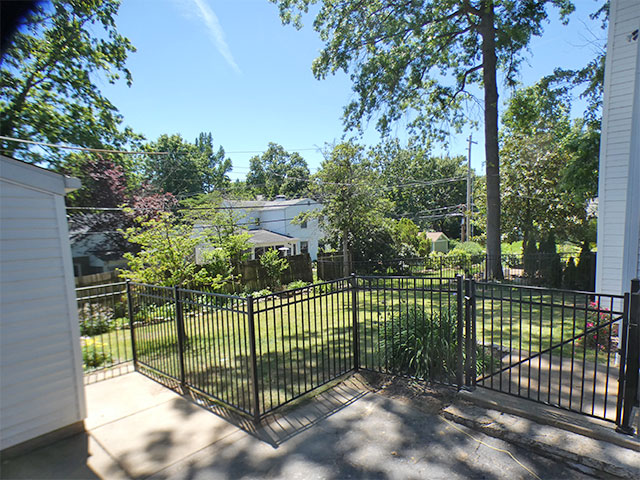
A dog fence around St. Louis often has to pass more than your dog’s test. These came up on the jobs above.
- Post hole inspections. Some cities inspect the holes before the posts are set. Brentwood did on our May 2026 job. Ask your city before work starts, so the schedule does not slip.
- Approved styles. Some subdivisions only allow certain styles and colors. In Windswept Farms, the new fence had to fit the approved style, so we matched the neighbor’s black aluminum.
- What is under the ground. In Imperial, the fence line moved farther inside the yard to stay clear of a neighbor’s sprinkler line. The digging varies too. Kirkwood was rocky, and Imperial had roots and rock. Before any digging, call 811 so the utility lines are marked.
- Slopes. On a hill, ask for sections that tilt with the ground. That is how the Eureka fence stayed tight to the ground, with no gap for the dog to slip under.
Frequently Asked Questions
What is the best fence for dogs?
For most dogs, a 4-foot aluminum fence with nothing to climb and a gap your dog cannot fit through. Small dogs need pickets about 1 5/8 inches apart. A dog that barks at people walking by does better behind solid vinyl privacy panels.
Which fence brands do you install for dogs?
The Eureka dog fence above is Elite aluminum. We are also a listed installer for Catalyst, the fence brand of Barrette Outdoor Living. Neither brand needs paint, and the aluminum is powder coated so it does not rust. The warranty on the fence itself comes from each maker.
What is the best fence for small dogs?
A fence with tight picket spacing. For two small dogs in Kirkwood, we closed the gap to 1 5/8 inches. That kept the dogs in without a solid fence.
How tall should a dog fence be?
A 4-foot fence holds most dogs. All five dog fences on this page are 4 to 4 1/2 feet tall. A dog that jumps well needs 5 to 6 feet.
How long does it take to install a dog fence?
The five dog fences on this page took 1 or 2 days each, for 38 to 160 linear feet. A city post hole inspection can add a wait before the fence goes up.
What is the best dog fence that does not need digging?
A permanent yard fence needs posts set in the ground. Where a post has to sit on concrete, we can bolt it down instead of digging. We did that on a Kirkwood sidewalk and a Brentwood patio in May 2026. Fences with no posts at all are portable pens, not yard fences.
What is the cheapest way to fence a yard for dogs?
Fence only the part of the yard your dog uses. And if your dog is too big to fit through a standard gap, skip the tighter dog picket style. In Eureka, a mid-size dog meant the owner did not need to pay for it. For current prices, see our vinyl fence cost guide.
How big should a fenced area for a dog be?
Big enough for your dog to run. The jobs above run from 38 to 160 linear feet. Kirkwood needed 38 feet for a small dog area, and Imperial needed 160 feet around a back yard. Fence the space your dog uses.
Can I install a dog fence myself?
Yes, if you can set posts straight and level and keep the bottom tight to the ground. We sell fence materials for do-it-yourself jobs through our fence supply store.
How much upkeep do these fences need?
None of the fences on this page need painting or staining. Wash them with a hose when they get dirty. Once a year, check the gate latch and hinges, and tighten them if the gate starts to drag.
How can I keep my dog in the yard without a fence?
A tie-out, a trolley line or a portable pen can work for short times while you are outside. None of them hold a determined dog the way a real fence does.
Getting the Right Fence for Your Dog
- You call and tell us three things. How big your dog is, whether it jumps, digs or squeezes through, and whether it has gotten out before. Those answers set the height and the gap.
- We visit, usually within 1 to 4 days. We measure your yard at a free, no-obligation estimate. In Imperial, we brought a sample panel so the owner could hold it next to the smallest dog.
- We install the fence. Each of the five fences above took 1 or 2 days, for 38 to 160 linear feet. If your city inspects post holes, that comes first.
Read what homeowners say about their fences.
We are a listed Catalyst installer. Catalyst is the fence brand of Barrette Outdoor Living, and you can look us up on its public installer directory.
Our installation work carries a one-year guarantee, and the fence materials come with the maker’s own warranty. At our showroom in Arnold you can see the panels, gates and picket gaps in person.
Book a free on-site estimate for your dog fence, or call 636-464-1144.
Still comparing fence types? Download this free guide:


