
 Skip to main content

A permanent pool fence in St. Louis costs about $25 to $40 a foot installed in aluminum, or about $40 to $50 a foot in 4 foot vinyl picket, based on our own installed prices. For a 150 foot pool enclosure, that comes to about $3,750 to $6,000 in aluminum before gates. Removable mesh runs lower and glass far higher, as the HomeGuide figures further down show.

The best vinyl fence ideas start with the job the fence has to do: full privacy for a backyard, a semi-private style that lets air through, a picket for a front yard, or split rail for open land. Below, you get each idea matched to a style the shop sells today, with its heights, colors and pool code answer.
If you want a crew to build one, start with vinyl fence installation in St. Louis. Or skip ahead to the style picker, privacy styles, front yard picket, colors, height limits or old Bufftech names.

A privacy fence in the St. Louis area is normally 6 feet tall, and most municipalities let you build to 6 feet without a variance. Go taller and you are usually asking permission. That is the short answer, and that one rule settles more designs than any style choice does.

The main types of fences are vinyl, aluminum, ornamental steel, and wood, and each one trades off cost, upkeep, and security differently. For most St. Louis yards, vinyl or aluminum wins on cost over time, and steel wins on raw security. Wood costs less to buy but needs yearly upkeep and rarely reaches its full 20-year lifespan. Vinyl, aluminum, and ornamental steel need almost none.
We install vinyl, aluminum, and ornamental steel. The sections below weigh real trade-offs rather than push you toward one material. See our vinyl, aluminum, and steel pages for the real jobs and specs behind each material. Or call 636-464-1144 and ask what a straight-across price looks like for your yard.
| Material | Cost per Foot, Installed | Typical Lifespan | Maintenance | Privacy |
|---|---|---|---|---|
| Wood | Lower to buy, more over time | Up to 20 years, with yearly care | Yearly cleaning and staining | Yes, solid boards |
| Vinyl | $45 to $75 | 20 to 30 years | Occasional rinse | Yes, solid panel |
| Aluminum | $20 to $45 | Lifetime limited warranty | Occasional rinse | No, open picket |
| Ornamental Steel | Above aluminum | 20 years to lifetime, by grade | Occasional rinse | No, open picket |
| Chain Link | Lowest to buy | Years, rusts at cut ends | Minimal | No, unless slatted |
Wood is the fence most people picture first, and it has a real natural look nothing else fully matches. A well-built wood fence can last up to 20 years, but that number assumes yearly cleaning and re-staining. Skip a season or two and rot, warping, and insect damage show up fast. The U.S. Forest Service’s Wood Handbook notes that wood in contact with the ground has less decay resistance.
We do not install wood fencing. If low upkeep matters more to you than a stainable look, wood is not the right choice. That is true no matter who installs it. Want the wood look without the yearly maintenance? Our composite fencing mimics wood grain and stone texture, with no rot risk.
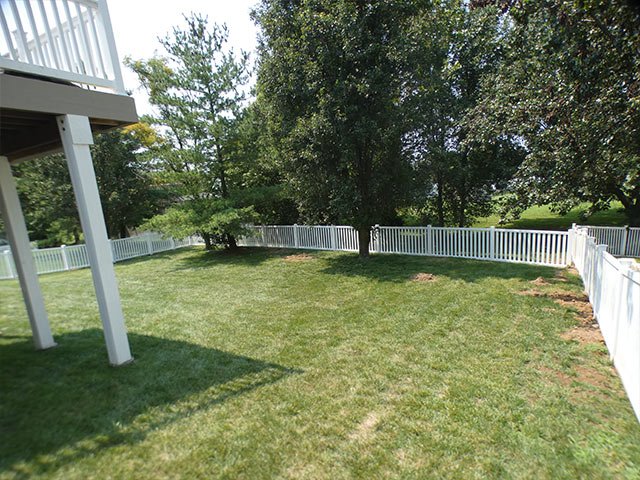
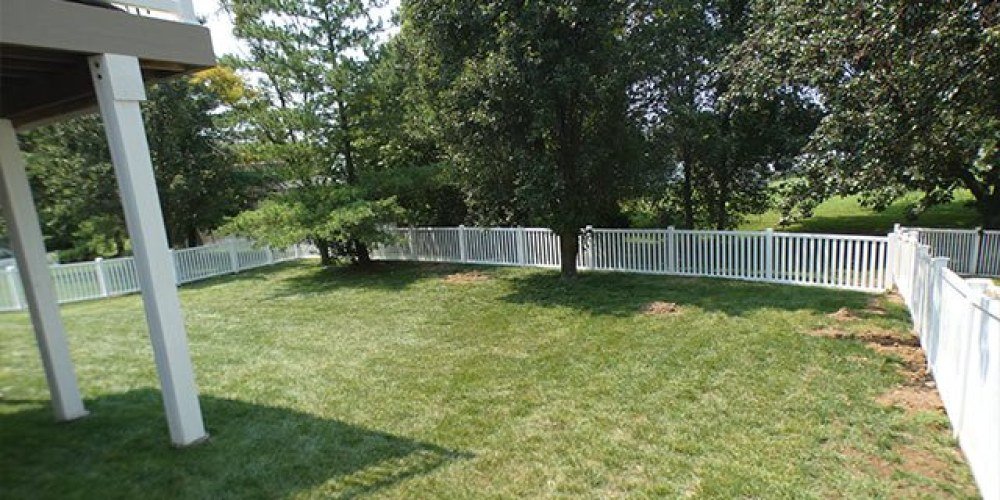
Vinyl is solid PVC, so it blocks sightlines completely and needs almost no upkeep beyond an occasional rinse. We were at the Emht property in Imperial on 29 July 2026. The job: a 160-foot run of white vinyl spaced picket fencing. It matched a neighbor’s fence we had put in about 10 years earlier. When we walked the two fence lines side by side, we found no difference in color or straightness. The new panels matched the decade-old ones exactly. That older fence had held up fine for a decade already, still standing and doing its job with no repairs. That is real evidence, not a marketing claim.
Bufftech vinyl is the brand behind the Emht job above. It comes in privacy, semi-privacy, and picket styles. Colors run from white to almond, clay, and a few blended shades. It typically lasts 20 to 30 years and runs $45 to $75 a foot installed in the St. Louis area.
Vinyl is not for you if you want to see through the fence. A solid panel is the whole point of the material. That trade-off stays no matter which style you pick. Full pricing and style options are on our vinyl fence installation page. To see every style, visit our vinyl fence styles page.
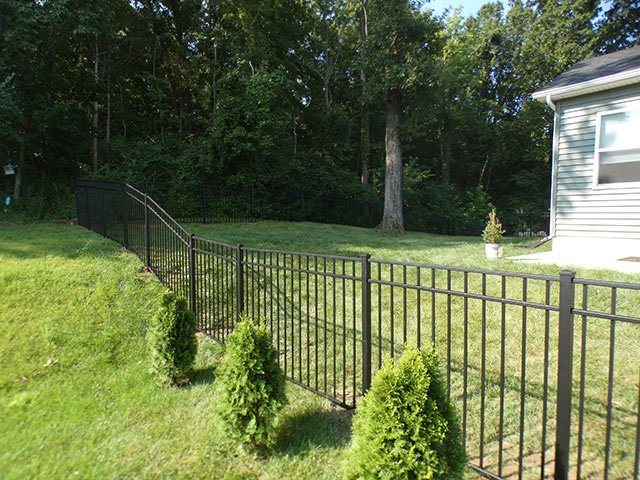
Aluminum is an open picket style. You keep your sightline while still fencing in a yard, pool, or pet area. The Criscione job in Eureka came with one restriction: the homeowners association allowed only a single approved fence style for the whole subdivision. We installed matte black Elite aluminum, and it cleared design review with zero changes requested.
Elite offers this aluminum in four grades — residential, commercial, industrial, and heavy industrial — with the higher grades built to take more force. Picket spacing can also be ordered tighter for small dogs or cats. It runs $20 to $45 a foot installed, usually $25 to $40. The material itself carries a lifetime limited warranty, filed directly with Elite rather than through us.
Aluminum will not give you privacy. A picket can also bend under a hard enough impact, since the material is lightweight. Steel solves both of those problems at a higher price. See our aluminum fence installation page for grade specs and more job photos.
Steel is the strongest of the three materials we install. A welded frame takes more force to bend or breach than aluminum’s bolted-together sections. That is why steel shows up on commercial sites and high-security jobs.
We have not yet installed and photographed a steel job for this site. There is no in-house case study to link here yet. The specs below are Ameristar’s own published numbers, not something we measured ourselves. Ameristar’s Montage line uses pre-galvanized steel with an E-coat finish. The industrial-grade version carries a 20-year manufacturer warranty, and the residential line carries a lifetime limited warranty.
Steel is priced above aluminum once you match height and style, and the added weight can slow installation down on a tricky site. If your only goal is a decorative touch around a flower bed, that extra strength buys you nothing you need. Save the higher cost for a spot that actually calls for it. Full grade and finish specs are on our steel fence installation page.
Chain link is steel wire woven into a diamond pattern and stretched between posts. It is the cheapest fence to buy, it is see-through, and it holds up for years with almost no care. That combination is why it shows up around dog runs, ballfields, and plain property lines.
We do not install chain link. The cut ends of the galvanized wire rust over time. The open diamond pattern also gives you zero privacy unless you thread slats through it, and most homeowners end up disliking that look within a year. If you want that same open, budget-friendly sightline without the rust risk, see how chain link stacks up against aluminum before you decide.
Search around and you will also find other names on fence-type lists: split rail, bamboo, and electric or invisible fencing. Split rail and bamboo mark a property line without giving privacy or security. We do not install either.
Invisible or electric fencing is not really a fence at all. It is a pet-containment system, and it will not stop a person from entering your yard or keep a deer out of your garden. If keeping a pet in the yard is the actual goal, compare invisible fencing against a regular fence first.
One common courtesy question we get: which side of the fence should face your neighbor? Most installers, us included, turn the finished side toward the neighboring yard as standard practice. Nothing legally requires it in most St. Louis municipalities, but it is the polite default.
Aluminum usually wins on cost per foot, running $20 to $45 a foot installed. Wood can cost less to buy, but yearly staining and earlier replacement often erase that savings within a decade.
Vinyl, aluminum, and ornamental steel are all close to tied here. None of them need more than a quick hose-down now and then. Wood is the clear outlier, needing yearly cleaning and staining to reach its full lifespan.
Ornamental steel is the strongest of the four, followed by aluminum. Vinyl holds up well against weather and rot. It is softer than either metal, though, and can crack under a hard direct impact.
Composite costs more up front than wood, and color options are more limited than vinyl. It also cannot fully replicate the exact grain pattern of real wood, though it comes close enough for most homeowners.
Vinyl wins on color range and price. Composite wins if you specifically want a wood-grain or stone look without wood’s maintenance. Neither one rots, and both beat wood on long-term cost.
Every vinyl, aluminum, and steel job on this page is handled start to finish by our own crews, not a subcontractor. That’s true anywhere in St. Louis or the Metro East. We back the labor with a one-year workmanship guarantee, on top of whatever warranty the manufacturer carries. We’re a listed Catalyst installer. You can check that for yourself at catalystfence.com’s own installer search before deciding who fences your yard. For a national starting point on cost, HomeGuide publishes a fence installation cost guide.
Here’s what actually happens after you reach out:
Our Arnold showroom keeps samples of vinyl, aluminum, and steel. Stop by to see the color and weight in person before deciding. Local homeowners have written up their own experience working with us — read it on our reviews page.

Vinyl, aluminum, and ornamental steel fences all clean the same basic way: warm water, a mild soap, and a soft cloth or a garden hose. None of them need the yearly power-washing and re-staining a wood fence does. The exact method changes by material, though. A couple of common household cleaners will damage the wrong one, so use the section below that matches what you own.
We install vinyl, aluminum, and ornamental steel fencing across St. Louis, and every one of them is built to need almost no upkeep. In our experience walking these yards afterward, we often find the owners who rinse twice a year never call us about anything worse than pollen fill. “Almost none” still means an occasional rinse, so here is exactly how to do it right for each material.
Vinyl is the easiest of the three to clean, and most of the time a garden hose is all you need. For everyday dirt and winter mud splash, spray the fence down from top to bottom, working both sides of the panel.
What to use: warm water, a few drops of Dawn dish soap, and a soft cloth or sponge.
For algae or green staining on the shaded side of a panel, mix one part white vinegar with four parts water. Spray it on and let it sit five minutes. Scrub lightly with a soft brush, then rinse. Never mix vinegar with bleach or a chlorine-based cleaner. The combination produces chlorine gas, and that gas is dangerous to breathe. Poison Control explains why mixing bleach with an acid releases chlorine gas, and the CDC says never to mix bleach with any other cleaner. Use vinegar alone, and rinse it fully before trying anything else.
Pressure washing vinyl is generally safe at a moderate setting, 1,500 to 2,000 PSI, held at least a foot from the panel. Get closer or go higher and you risk driving water into the seams. A magic eraser works on stubborn scuff marks. It can dull a glossy finish with repeated use, so save it for spot treatment, not the whole fence.
If you’re shopping for a new fence instead of maintaining one, our vinyl fence installation page covers colors, styles, and what a new one runs.
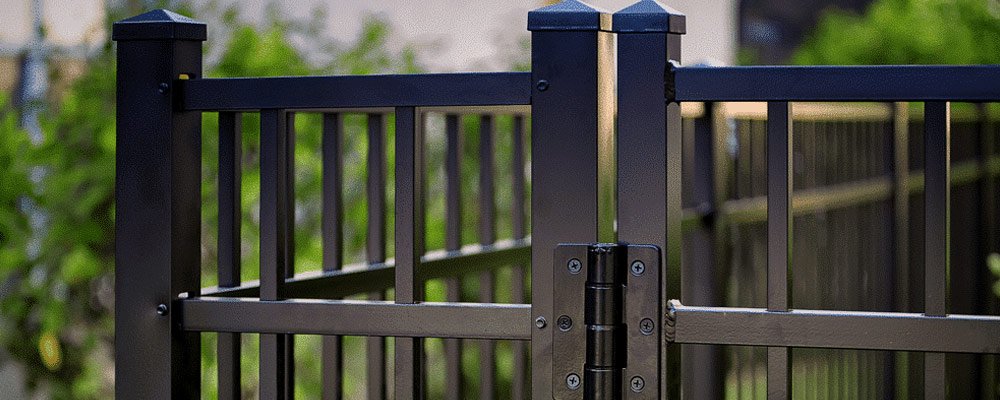
Aluminum needs the least attention of any material on this page. A soft, dry or slightly damp cloth wiped along the rails and pickets a few times a year handles ordinary dust and pollen. For anything sticky or caked-on, warm water with a drop of dish soap is enough.
Do not use vinegar or any acidic cleaner on aluminum. Vinegar is fine on vinyl and steel. Aluminum’s powder-coat finish is thinner, though, and acid strips it. That exposes bare metal underneath to corrosion. This is the one material here where the vinyl-safe method will actively damage the fence.
Aluminum also handles pressure washing at a low setting. It rarely needs it, though. A garden hose rinses off pollen and dust just as well, with no risk of forcing water behind the powder coat at a seam.
Thinking about switching to aluminum? Our aluminum fence installation page has the grades we carry and photos from real yards.
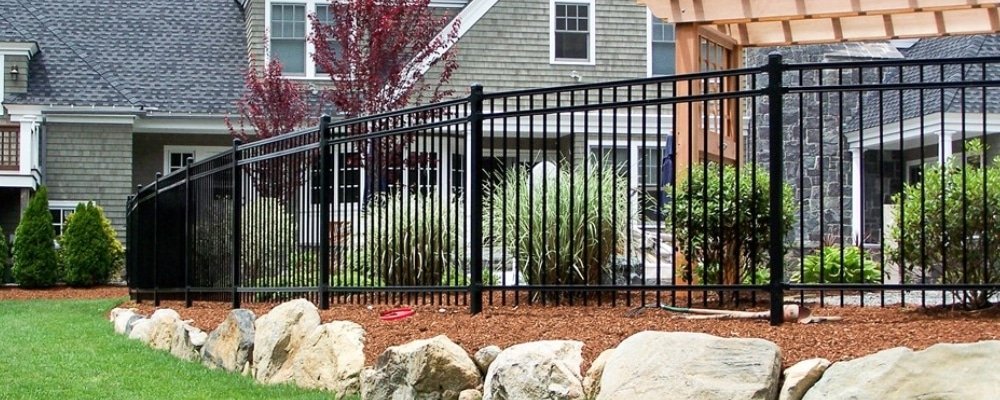
Steel takes a bit more effort than aluminum. The ornamental detail work – scrolls, finials, tighter picket spacing – collects more grime in the joints. Wash it by hand rather than with a pressure washer. A pressure washer can chip the surface coating at close range, and once that coating breaks, the exposed steel underneath starts to rust.
What to use: warm water with a squirt of dish detergent, a soft cloth for the flat rails, and a soft-bristle brush for the decorative joints. An old toothbrush works fine for the scrollwork. Work top to bottom, so you are not re-dirtying a section you already cleaned. Diluted vinegar is safe on steel too, the same as vinyl, for algae or hard-water spotting. Just avoid it on any section with visible paint wear. It can dull a painted finish over time.
Ready to price out steel instead? Head to our steel fence installation page for the Ameristar lineup and finish options.

This composite fencing is a polyethylene shell reinforced with galvanized steel. It cleans closer to the steel method than the vinyl one. Wipe it down with a soft cloth and warm water for routine dust. For algae or built-up grime in the textured grain pattern, mix one part vinegar to four parts water, spray it on, and wipe it off.
Rinse the vinegar solution off completely with plain water afterward. Left to sit, the acid can react with the steel reinforcement over years of repeated exposure. Rinsing every time you clean avoids that entirely.
Yes. A few drops of Dawn in warm water is one of the safest, most common ways to clean vinyl. It cuts through dirt without leaving residue and will not damage the surface.
Mixing them is not dangerous. The soap’s alkalinity cancels out the vinegar’s acidity, though, so the combination cleans worse than either one alone. Use dish soap for everyday grime. Use vinegar separately for algae or mineral staining.
Never mix vinegar with bleach or any chlorine-based cleaner. The combination releases chlorine gas, which is dangerous to breathe. Use one or the other, never both, and rinse fully between products if you switch.
Yes, at a moderate setting of 1,500 to 2,000 PSI held at least a foot away from the panel. Higher pressure or a closer distance can force water into the seams or etch the surface.
Mix one part white vinegar with four parts water. Spray it on, let it sit five minutes, then scrub with a soft brush and rinse. That removes algae from vinyl, steel, and composite. Skip vinegar on aluminum. Use plain soap and water instead, since vinegar’s acidity damages aluminum’s powder coat.
If your current fence needs more than a rinse to look decent again, that is usually a wood fence problem, not a maintenance-free one. Wood needs yearly cleaning and re-staining to reach its full lifespan. Vinyl, aluminum, and steel need only what is on this page, a few times a year at most. To see how long each lasts, read our guide to how long a vinyl fence lasts, or compare vinyl and aluminum fencing.
This page is not for a cracked panel, a leaning post, or a section already stripped down to bare metal. That needs replacing, not a cleaner, and it is outside what this guide covers. For the ordinary rinse-and-wipe kind of upkeep above, that is the whole job.
Call 636-464-1144 and we’ll walk your yard and price out whichever material fits. Look us up first if you want: catalystfence.com’s own installer search lists us, since we’re a Catalyst-listed installer. St. Louis homeowners who’ve already had us out have posted their own notes on our reviews page.

Yes, a vinyl fence can crack in the cold, but cold alone is rarely the cause. A hard hit on frozen plastic, a panel with no room to move, or a post set too shallow for frozen ground does the damage. A fence built to avoid those three is the one you want going into a St. Louis winter.
Below you get the post-depth rule the City of St. Louis publishes, the 2-inch gap Catalyst sets under the bottom rail, and a winter walk-around you can tick off. To have it installed with those details done right, see our vinyl fence installation page. Jump to why vinyl cracks, the frost line, the gap or the winter checklist.

Vinyl is the better fence for most St. Louis yards, as long as you plan to stay a few years and never want to stain anything. Wood is the better fence if you want the lowest price today, real grain, or the freedom to paint it any color you like. The rest of this page is how to tell which of those you are.
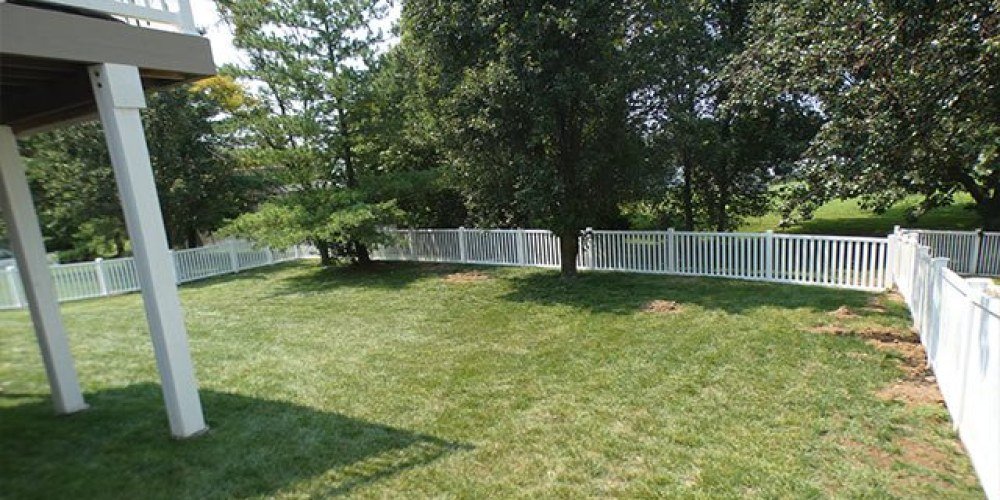
If you are comparing fence materials for a St. Louis yard, lifespan usually matters more than brochure claims. When homeowners ask me how long vinyl fences last, I tell them the answer depends less on the panel surface and more on posts, drainage, and seasonal soil movement.
This guide explains the real lifespan range, how St. Louis weather affects durability, and what shortens service life faster than most people expect.
A vinyl fence in St. Louis typically lasts 20 to 30 years, with 50+ years possible when installation, drainage, and material quality are all strong.
Vinyl fencing is a synthetic fence system made from PVC (polyvinyl chloride) designed to resist moisture, rot, and insect damage while requiring minimal maintenance.
It is commonly used for privacy, decorative, and perimeter fencing due to its durability, weather resistance, and long-term cost efficiency.
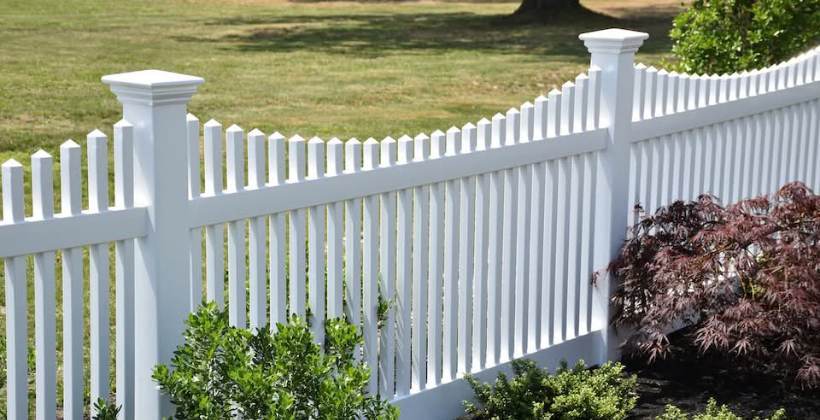
Vinyl fences typically last 20 to 30 years, with some reaching 50 years or more under ideal conditions, but that range depends heavily on several factors like installation quality and the environment.
In St. Louis, the lifespan of a vinyl fence is mainly determined by material quality, installation quality, and site conditions, with most early failures tied to posts, footings, and gates rather than the vinyl itself. In practice, structural performance matters far more than surface appearance.
When I evaluate lifespan, I focus on:
Real-world evidence backs this up. On the Emht job in Imperial, 29 July 2026, we installed 160 linear feet of white vinyl spaced picket fence to match a neighbor’s fence we had installed about 10 years earlier. That older fence was still standing and functional after a decade – the exact style was discontinued, but the posts and structure had held up, which is the kind of long-run proof a brochure can’t give you.
| Factor | Impact on Lifespan | Why It Matters |
|---|---|---|
| Post depth & footing | Very High | Controls structural stability |
| Drainage | Very High | Prevents soil weakening and leaning |
| Vinyl quality | Medium | Affects cracking and fading |
| Installation spacing | High | Allows for expansion/contraction |
| Sun & wind exposure | Medium | Adds stress over time |
Higher-quality vinyl fencing resists fading, cracking, and brittleness through thicker walls and UV inhibitors, which is especially important in varied climates where lower-grade materials can fail faster under seasonal stress.
Cold weather exposes quality gaps fast. Synthetic fencing has been used since the 1980s and is known for low maintenance and weather resistance, but cheap formulations can become brittle during winter snaps, which means a bump from lawn equipment or wind-blown debris does more damage.
I have found that proper vinyl fence installation, especially post depth, footings, spacing, and gate framing, has the biggest impact on how long a vinyl fence lasts. Most failures start below ground, not in the panels, making structural setup far more important than surface materials.
Common installation issues that reduce lifespan:
Vinyl naturally expands and contracts, so proper installation allows movement while keeping the structure rigid where it matters most.
Soil drainage, sun exposure, and wind loads directly impact how long a vinyl fence lasts. Even high-quality materials can fail early if the site conditions create ongoing stress at the posts or across the panels.
I treat site exposure as a structural factor, not a cosmetic one. Poor drainage weakens soil and increases leaning risk, while full sun accelerates expansion and material fatigue. Open, windy areas add stress, especially on privacy fences, which makes proper layout and reinforcement critical from the start.

The local St. Louis climate creates repeated stress cycles: over 40 freeze-thaw cycles per year, about 41 to 45 inches of annual precipitation, and temperature swings from around 20°F in winter to above 90°F in summer. Those numbers matter because they explain why settling is often the real lifespan limit in this market.
Vinyl fencing typically lasts longer than wood in St. Louis because it resists moisture, rot, and insect damage, while wood depends on consistent maintenance to reach its full lifespan. In this climate, humidity, rainfall, and shade often accelerate wood deterioration more than vinyl wear.
| Feature | Vinyl Fence | Wood Fence |
|---|---|---|
| Lifespan | 20–30+ years | 10–20 years (varies) |
| Maintenance | Low | High |
| Moisture resistance | Excellent | Poor |
| Rot risk | None | High |
| Cost over time | Lower long-term | Higher due to upkeep |
For St. Louis homeowners, moisture and humidity make that distinction practical rather than theoretical. If you are deciding between wood and vinyl, the tradeoff is often lower upkeep and more predictable lifespan versus lower upfront cost and more maintenance variability.
I describe vinyl as low chore, not zero attention. Cleaning, hardware checks, and drainage awareness extend service life without turning the fence into a weekend project.
That framing matches the broader maintenance-free focus that many homeowners want from affordable vinyl fences. The biggest differentiator with maintenance-free outdoor products is reduced upkeep, not immunity from weather, hardware wear, or standing water.
I recommend mild soap, water, and a soft brush for routine cleaning, with targeted mildew treatment where needed. Rinse thoroughly so residue does not attract dirt or leave streaking on lighter colors.
I avoid harsh solvents and aggressive pressure washing. Those methods can etch the surface, loosen components, or force water into joints where it does not help anything.

I check hinges, latch alignment, and gate swing clearance after winter because freeze-thaw movement often shows up there first. Before winter, I clear drainage paths so water does not collect and freeze around posts.
If you have a pool fence, this check matters even more because self-closing gates and latching hardware are safety components, not convenience features. A fence can look fine and still fail where it matters most.
I have seen the same vinyl product age in three different ways depending on drainage, wind, and grade. That is why “maintenance-free” focus works as a material strategy, but site conditions still decide how long the structure stays straight and functional.
These examples are useful because they turn abstract lifespan talk into decision-making. The biggest differentiator in fence performance is often exposure and installation detail, not the brochure label on the panel.
I expect vinyl to hold its appearance well in damp shade because it avoids rot, but I watch the posts closely if soil stays saturated. In these yards, drainage planning usually matters more than panel quality alone.
Algae or mildew on the surface is usually a cleaning issue, not a failure issue. A grade that sheds water away from posts protects lifespan more than frequent washing does.
I treat an open, windy lot as a privacy fence stress test. Wind load increases pressure on rails, brackets, and gate posts, so reinforcement and footing strength become more important than the panel face.
Occasional panel rattle can be an early clue. It may signal loose brackets, thermal movement problems, or a structure that is starting to flex more than it should.
I pay attention to runoff and stress concentration on sloped sites. Stepped and racked layouts can both work, but each creates different pressure points and gap patterns that affect long-term stability.
Erosion control matters here more than many homeowners expect. If runoff keeps washing soil away from a few key posts, the fence can age unevenly and fail section by section.
On the Weis job in Fenton, 13 August 2026, the yard had a real slope where a double drive gate needed to sit. Our salesman measured the degree of the slope on site, and our shop built the two gate sections with a 7-inch drop so they would follow the grade and still swing correctly. A gate that does not account for slope is one of the fastest ways a fence starts failing early.
You should repair a vinyl fence when the posts are stable and the issue is isolated, but replacement is usually the better option when posts or footings are failing across multiple sections.
In most cases, structural movement, not panel damage, drives the replacement decision. Compatibility also affects the decision. Older profiles, caps, and colors can be harder to match, which means a structurally minor repair may still look patchy even when it functions well.
| Situation | Best Option | Why It Matters |
|---|---|---|
| Isolated panel damage | Repair | Structure is still sound |
| Single loose or leaning post | Repair | Can often be reset or reinforced |
| Multiple leaning or shifting posts | Replace | Indicates widespread structural failure |
| Gate sagging or misaligned | Repair | Typically hardware or post adjustment |
| Faded, brittle, or aging material | Replace | Material breakdown affects multiple areas |
| Outdated style or poor install | Replace | Hard to match and fix long-term issues |
I would set expectations this way: most vinyl fences last 20 to 30 years, longer when material quality, footing work, and drainage are all strong. In St. Louis, freeze-thaw cycles, poor drainage, and weak installation shorten lifespan faster than normal surface aging.
Your inspection priorities should be posts first, gates second, drainage third, and panels after that. Vinyl is low-maintenance fencing, not zero-attention fencing, especially after winter and heavy rain.
If you’re ready to get started with a new fence, reach out to us today for a free estimate, or call 636-464-1144 directly.
I usually tell homeowners to expect about 20 to 30 years in normal residential use. Longer life is possible when the vinyl is high quality and the posts and footings are installed correctly.
Early failure usually starts with post movement, poor drainage, underbuilt gate corners, or low-grade vinyl that becomes brittle. The pickets are rarely the first thing to fail.
Quality vinyl is designed for weather swings, but lower-grade material can become more brittle during cold snaps. That makes impact damage and hairline cracking more likely in winter.
For many St. Louis yards, vinyl has the edge because it will not rot or need repainting. Wood can still perform well, but its lifespan depends more on consistent sealing and board replacement, especially in damp or shaded areas.
If the posts are plumb and firm, repair often makes sense for panels, caps, or hardware. If multiple posts lean or shift seasonally, replacement or resetting posts is usually the lasting fix.
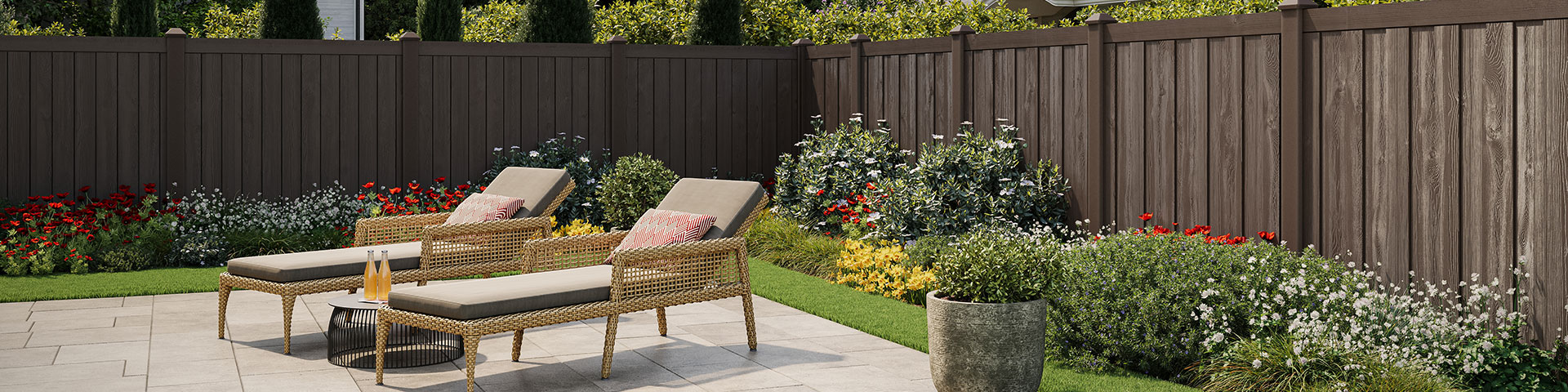
The common fence materials are vinyl, aluminum, ornamental steel, composite, wood and chain link. No single material wins every test. Vinyl and composite give you solid privacy with no painting. Aluminum and ornamental steel keep your view open. Aluminum does not rust, and steel lasts as long as its coating stays whole. Wood needs staining or sealing on a schedule, and chain link rusts where its zinc coating wears through.
Maintenance-Free Outdoor Solutions installs four of the six: vinyl, aluminum, ornamental steel and composite. Wood and chain link are the two we leave out, so this guide covers them only to help you compare. Vinyl and aluminum both come in spaced picket styles, which our picket fence installers build across St. Louis.

Vinyl fencing needs almost no upkeep, lasts for years, and comes in more styles than you might expect. The trade is a higher price up front, between $45 and $75 per foot installed, and the color you pick is the color you keep. Those are the real tradeoffs. Everything else is a variation on one of those two points.
We install vinyl fencing across St. Louis, and we recommend it over wood for most yards. For a head-to-head look, start with the vinyl vs wood fence guide. For the price side, see the plastic vs wood fence comparison. This page sticks to vinyl itself: seven real advantages, and seven honest tradeoffs with how we handle each one.
| Pros | Cons |
|---|---|
| Solid privacy, no splinters | Color is set at install |
| No painting, staining, or sealing | Higher upfront cost ($45-$75/ft) |
| Real style options | Hard impacts can damage a panel |
| A hose handles most cleaning | Repairs go through your installer |
| Won’t rot from moisture | Styles come from the manufacturer’s range |
| No termite risk | Not all vinyl is the same |
| Quick installation | Best installed by a professional |
A vinyl privacy fence gives you a solid, uninterrupted panel. The surface is smooth, so there are no splinters for kids or pets to find.
On the Bryant job in Wildwood’s Ashford Oaks neighborhood, 31 August 2026, we swapped a 4-foot privacy fence for a 6-foot one. The homeowner had recently added a pool and wanted screening from the road. It took our crew two working days for 104 linear feet, with city approval handled first since the fence line ran along a main street.
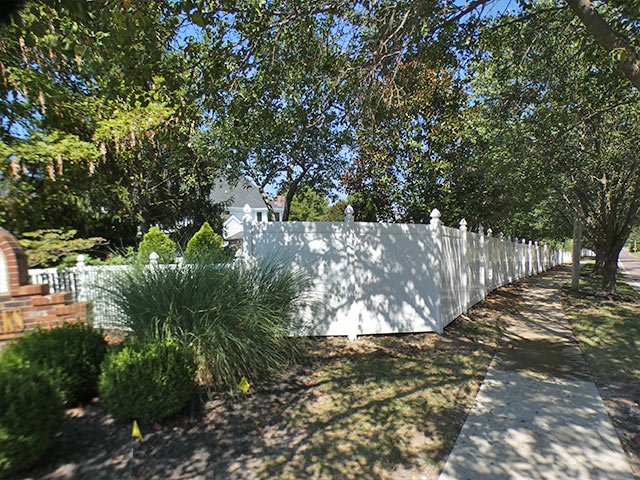
The color is part of the material, so vinyl never needs painting, staining, or sealing. Once it’s up, finish stops being a chore. For upkeep, you’ll rarely do more than rinse it with a hose.
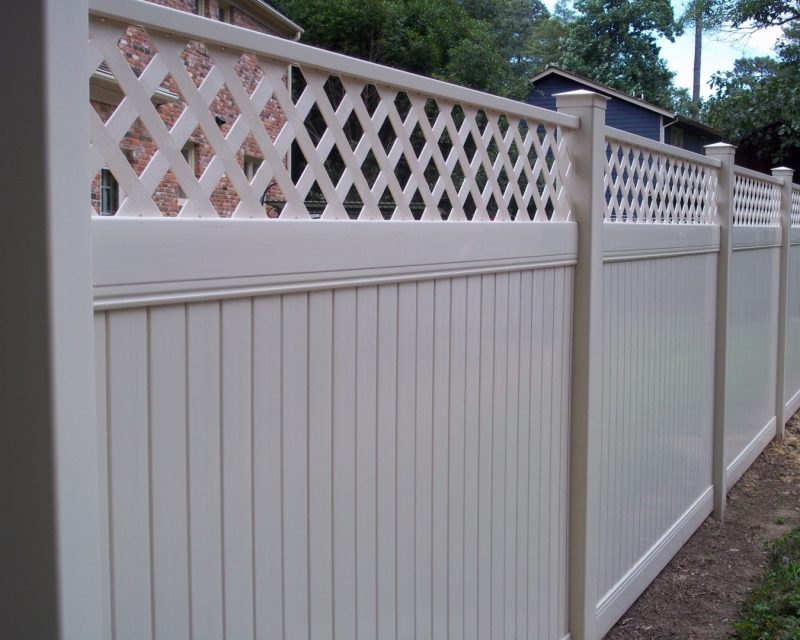
Vinyl comes in more than the plain white privacy panel people picture. Colors like almond and clay, lattice tops, and picket styles are all standard options from the manufacturers we carry, CertainTeed and Bufftech. The photo below is a real New Lexington fence we installed in almond, with a lattice top over solid panels.
A shady spot can grow a little mold, mildew, or algae, and it wipes right off. Rinse with a hose, wipe with warm water and dish soap, and you’re done. See the full cleaning guide for the exact steps by material.
Vinyl doesn’t absorb water, so moisture can’t rot it. That matters most at the base of the fence, where a yard stays wet the longest. For a closer look at how long vinyl holds up in St. Louis weather specifically, see the vinyl fence lifespan guide.
Vinyl gives termites nothing to eat. Missouri has a real subterranean termite problem, so that is a worry you can cross off.
Vinyl panels are pre-manufactured and interlock during installation, so a fence goes up fast. Typical installs take one to three days, depending on the project. The speed starts with a good foundation. A post that’s set right keeps the whole fence straight for years.
Every fence material has tradeoffs. Here are vinyl’s, and how we handle each one.
Vinyl’s color is built into the material, so there is no paint to peel and nothing to repaint. The tradeoff is that you can’t switch colors later. So we help you pick once and pick well. On the Bryant job, our salesman took a sample of the style to the estimate, so the homeowner saw it before deciding.
Installed vinyl generally lands between $45 and $75 a foot. That’s an investment up front, and it pays you back in years of no painting, staining, or sealing. If the upfront number is the hurdle, the fence financing page walks you through the options. For the full price breakdown, see the vinyl fence cost guide. For national price ranges, HomeGuide publishes a vinyl fence cost guide too.
Quality vinyl is designed for St. Louis weather swings. Like any fence, though, a hard, direct hit can damage a panel. A fallen branch or a car backing into it are the usual causes. Heavier, professional-grade vinyl stands up to that better than thin kit vinyl.
If a panel is ever damaged, it’s a phone call, not a weekend project. A clean color match is easiest with the company that knows exactly which product it installed. That’s why our workmanship guarantee runs one full year, and the vinyl itself carries the manufacturer’s warranty.
Vinyl comes in set styles, heights, and colors, and the range covers most yards. It includes privacy, semi-privacy, picket, and split rail fencing. Tell us what your yard needs, and we’ll show you what the range can do.
Vinyl fencing sold in kit form at Lowe’s or Home Depot is a lighter, thinner product built for DIY installation. It can work fine for a small project. It isn’t the heavier, commercial-grade vinyl a professional installer uses, so a big-box price isn’t a fair comparison to an installer’s quote. Before you compare, check three things:
This is the flip side of the speed advantage above. Vinyl holds up for years when it goes in right. A post set too shallow, or not packed in tight, is the top reason a fence leans. That’s an installation issue, not a material one, and it’s why the crew you hire matters.
Vinyl has three tradeoffs. The price is higher up front, the color is set once it’s installed, and the styles come from the manufacturer’s range. Most homeowners find the savings on upkeep make up for them over time.
Most problems trace back to installation, not the material. Posts set too shallow or not packed in tight can lean over time. A hard, direct hit can also damage a panel. A professional crew avoids the first, and the installer handles the second.
For most homeowners planning to stay in the house for several years, yes. Vinyl never needs painting, staining, or sealing, so the higher installation cost is usually offset by the upkeep you never pay for.
You can. It’s a lighter-gauge product built for DIY installation, not the heavier commercial-grade vinyl a professional installer uses. It can work for a small project, but its price isn’t a fair comparison to a professional quote, since the material itself is different.
Not under normal conditions. Quality vinyl is designed for St. Louis weather swings. Like any fence, a hard, direct hit, such as a fallen tree branch, can damage a panel. A heavier, professional-grade panel holds up better than thin kit vinyl.
We recommend vinyl over wood for most St. Louis yards. It lasts, keeps its look, and skips the yearly upkeep. Vinyl is not for someone who plans to change the fence color every few years.
We guarantee our workmanship for one year, and we can usually get someone out for an estimate within a week. For a real price on your yard instead of a national average, call 636-464-1144. Want to check us out first? The Catalyst installer directory lists Maintenance-Free Outdoor Solutions as a Catalyst installer. You can read what homeowners have said on the reviews page.

Vinyl costs more on the day it goes in and less by about year 10. Installed vinyl runs $45 to $75 a foot around St. Louis, and most jobs land between $55 and $65. That is the short answer. Wood starts lower and then asks for money every two or three years, which is the half of the sum most calculators leave out.
Vinyl, PVC and plastic fencing are three names for the same product, so whichever word you searched, these are the figures that apply. What the material actually is, rather than what it costs, is covered on our plastic fencing page.

An affordable vinyl fence is a vinyl fence you keep low-cost by choosing five things well: height, style, total footage, gates and how much work the site needs. Color and who does the labor matter too. This guide shows how each one moves a quote, with three real St. Louis area jobs.
Want a crew to build it? See vinyl fence installation in St. Louis. Or jump to the five choices, styles, what to check, building it yourself or the three jobs.

Plastic fencing is any fence made from plastic instead of wood or metal, and it comes in two very different kinds: rigid vinyl panels made of PVC, built as a permanent fence, and flexible plastic mesh sold in rolls for gardens and short-term use. Vinyl is the kind that lasts 20 to 30 years as a yard fence. Around St. Louis it runs about $45 to $75 a foot installed.

A white picket fence in vinyl keeps the classic look and needs no painting. Pick the height and the picket top by the job: a front yard border, a pool, a dog run or a garden path. You can choose from eight vinyl picket styles, and the table below shows which heights each one comes in.
Wikipedia describes the picket fence as an American symbol of suburban family life. If you want that look without repainting it every few years, read on. Want a crew to build it? See vinyl fence installers in St. Louis. Or jump to ideas by job, heights and styles, vinyl or wood, what to have ready or questions.
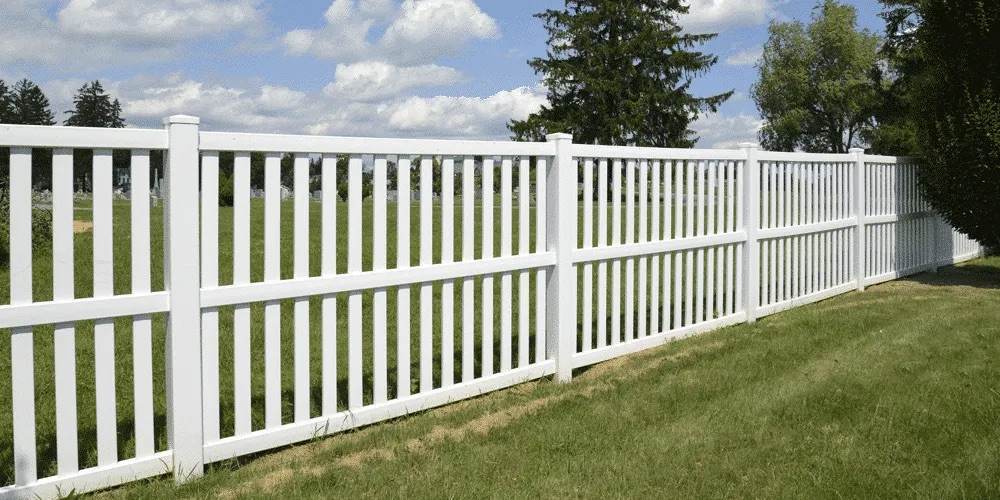
A vinyl fence costs more up front than a wood fence and less over 20 years, because nothing about it ever needs painting. That is the short answer. This guide covers the styles, what each one costs in St. Louis, how long it lasts here, and when vinyl is the wrong choice.
Want it measured for your yard? See how our vinyl fence installation works, or call Maintenance-Free Outdoor Solutions at 636-464-1144 for a free on-site estimate. The vinyl we install is the Catalyst range from Barrette Outdoor Living, sold for years as Bufftech by CertainTeed, and we are listed on their installer directory.
Maintenance-Free Outdoor Solutions has been installing fences in St. Louis since 1994, which you can check on our BBB business profile. I have spent those years helping owners pick a fence that still makes sense in twenty years. Most people come to me after warped wood, endless staining, an HOA letter, or a fence that did not survive a few Midwest winters.
In this region, the “right” fence isn’t just about look. Between freeze-thaw cycles, heavy storms, and strict neighborhood guidelines, long-term performance matters just as much as curb appeal. Vinyl fencing often enters the conversation when owners want fewer maintenance headaches and more predictable wear.
Vinyl fencing is a long-term fencing solution that performs well in St. Louis weather, requires minimal upkeep, and keeps the same look for decades. While it usually costs more upfront than wood, many owners choose it for how long it lasts and what it saves later.
Choose in this order:
One of the reasons owners are drawn to vinyl fence styles is the flexibility they offer when it comes to look. Today’s vinyl fencing suits a brick house in the city and a new build in St. Louis suburbs with strict HOA guidelines.
It comes in several colors, and in woodgrain finishes that look like stained wood with none of the work.
The styles run from plain straight-top panels to scalloped and lattice tops, so the fence can match the house without costing you strength.
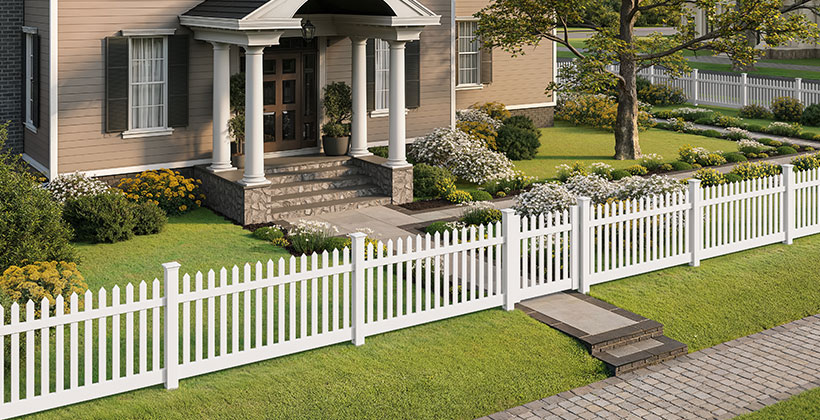
Which style makes sense depends on how you use the yard. Privacy panels are usually 6 feet tall and 6 feet wide. Spaced picket usually runs 4 feet. A vinyl privacy fence is one of the most common choices in St. Louis because it creates a clean, enclosed space using solid privacy panels that block sightlines from neighbors, streets, or alleyways.
For front yards and decorative boundaries, picket fences remain a timeless option. Vinyl picket styles work especially well for owners who want definition without closing off their property.
On larger lots or rural edges, ranch rail vinyl fencing provides structure without visual heaviness. For safety-focused installations, a vinyl pool fence is built to meet pool code, and it still lets you watch the water.
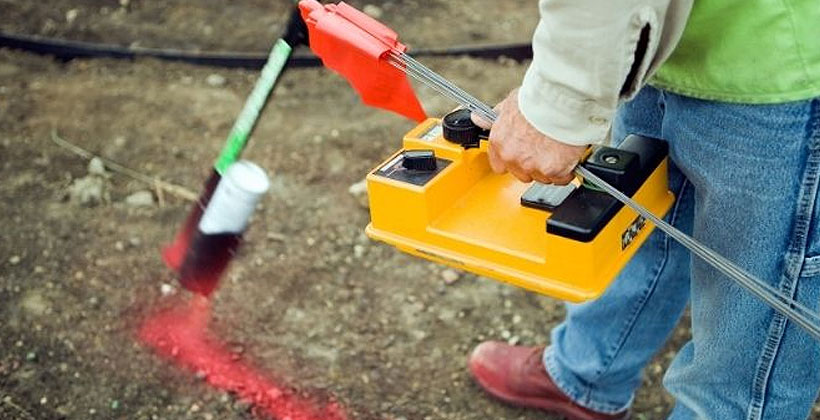
Before any fence goes in the ground, fence height and placement are two of the most important details to get right. Local codes and HOA rules set most of this. So does how close the fence sits to the line. Getting this wrong can lead to fines, forced changes, or disputes that could have been avoided.
Most cities and HOAs set height limits for front, side and back yards. Some also want the fence set back from the line.
Confirm the survey and the local rules first. It is cheaper than moving a fence later, and it keeps the neighbors out of it.
Why Calling 811 Before You Dig Matters
Before any vinyl fence installation begins, you should contact 811 before you dig. Fence posts require digging, and buried utility lines may be much closer to the surface than owners expect. Hitting a gas, electric, water, cable, or communication line can lead to dangerous injuries, service outages, expensive repairs, project delays, and possible fines. Call 811 before any digging. They mark the buried lines, it is free, and it is the law.
In other words, calling 811 is not just a smart precaution. It is one of the most important first steps in planning a fence project safely
The numbers a fence company will ask you for:
St. Louis weather is hard on fences, plain and simple. Between freezing winters, heavy spring rains, summer heat, and strong storm systems, materials are constantly expanding, contracting, and taking abuse. From what I’ve seen on installs across the metro area, vinyl handles those conditions better than most.
Because vinyl doesn’t absorb moisture, it isn’t vulnerable to rot, swelling, or splitting during freeze-thaw cycles. It also holds up well in high winds and seasonal storms when properly installed.
That stability is why a vinyl fence still looks square years later.
One of the questions I hear most often is how much work a vinyl fence really requires after it’s installed. Compared to wood or metal options, vinyl has very simple upkeep. There’s no need for painting, staining, or sealing, just occasional cleaning to remove dirt or pollen.
Another major advantage is that vinyl isn’t affected by insect damage. Termites, carpenter ants, and other pests that commonly cause problems for wood fences simply aren’t an issue with vinyl.
For anyone who wants a fence that stays solid without constant upkeep, that difference is the whole argument.
While vinyl fencing offers strong long-term performance, it’s not without limitations. Most complaints come down to price, thin panels or a rushed install, not the vinyl itself.
Vinyl costs more than wood on day one and less over twenty years, because it never needs paint or stain. Height, style, gate count and ground conditions all move the number, so there is no single price.
We price from the line you walk, not from the lot size. See what a vinyl fence costs in St. Louis, or ask for a free on-site estimate.
Wood reacts to Missouri weather. It takes on water, dries out, and moves with every season, so it needs staining and board replacement. Vinyl does not. The table shows where each one lands.
Vinyl vs Wood Fencing in Missouri Climate
| Feature | Vinyl Fencing | Wood Fencing |
|---|---|---|
| Climate response | Stays stable through humidity and temperature swings. | Expands, contracts, and absorbs moisture more easily. |
| Maintenance needs | Typically needs occasional cleaning. | Often needs staining/sealing and periodic repairs. |
| Insect resistance | Not affected by termites or carpenter ants. | Can be vulnerable to insect damage over time. |
| Appearance over time | Maintains a consistent look with minimal change. | Can warp, fade, crack, or rot depending on upkeep and exposure. |
| Long-term ownership | More predictable performance with fewer upkeep demands. | Ongoing maintenance is usually required to keep it looking and performing well. |
Mobile tip: Swipe left/right to view the full table.
Neither rusts. The choice is what you want to see. Vinyl closes the yard in, aluminum leaves the view open and meets pool code. The table lays them side by side.
Vinyl vs Aluminum Fencing: Choosing the Right Fit
| Feature | Vinyl Fencing | Aluminum Fencing |
|---|---|---|
| Privacy | Privacy styles available for full yard enclosure. | Open design; provides visibility rather than privacy. |
| Appearance | Solid, uniform panels and consistent lines. | Decorative, lightweight look with open pickets. |
| Noise reduction | Can reduce some outside noise due to solid panels. | Minimal noise buffering because it’s open. |
| Best use cases | Backyards, pets, families, privacy-focused spaces. | Front yards, decorative boundaries, visibility-focused areas. |
| Visual consistency | Enclosed look that helps define the space. | Open look that preserves sightlines and views. |
Mobile tip: Swipe left/right to view the full table.
Posts go 30 to 36 inches deep here, set in concrete over a gravel base, because that is what the local frost line asks for. Gates need a bigger hole than the rest of the run, because they swing.
The rest is layout, slope and panels. Our install guide walks through all six steps and has a calculator for the panel count.
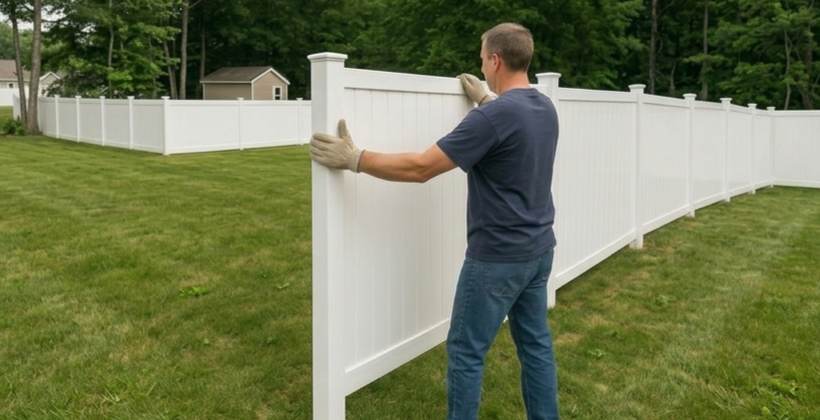
Even the best materials can fall short if the work isn’t done right. I’ve seen fences made from high-quality products fail simply because corners were cut during installation. A fence built with high-quality vinyl still depends on precise post depth, correct spacing, and clean connections to perform as intended.
Set right, the fence stays straight through wind and temperature swings for years. Just as important, correct installation protects manufacturer warranties.
Craftsmanship is what turns good materials into a fence that truly lasts.
Technically, yes. But I rarely recommend it.
Vinyl fencing is manufactured with color mixed all the way through the material, not just on the surface. That’s exactly why it never needs painting in the first place. If you paint over it, you’re adding a maintenance task back onto a product that was designed to eliminate one.
Standard latex or oil-based paints don’t bond well to PVC’s slick surface. Most DIY paint jobs start peeling, chipping, or flaking within a season or two, especially through a St. Louis summer of direct sun and humidity.
If you are set on changing the color, use a paint made to bond to vinyl or PVC siding. Test it on a hidden section first.
In most cases, though, it’s more cost-effective and longer-lasting to replace the panels with vinyl fencing manufactured in the color you actually want. Bufftech and CertainTeed both offer several standard colors we can match to your existing posts.
Vinyl repair means replacing the damaged piece, not patching it. PVC does not fill the way wood does.
Our systems use separate rails and pickets that snap or screw into the posts, so one damaged picket is one picket, not a whole panel. Write down the maker and the style when the fence goes in. An exact match is easy to order in five years. Guessing at a color is not.
If more than two sections are damaged, or a post has shifted, get someone out to look at the posts before you order parts.
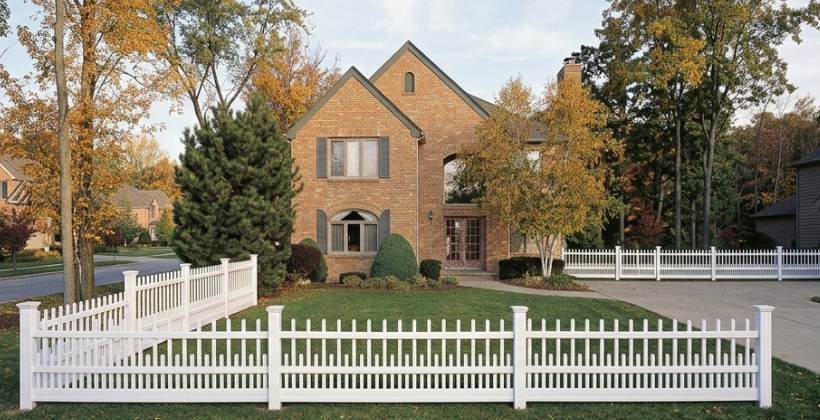
Vinyl fencing is a popular choice for owners who want a long-term solution with little ongoing work and a look that stays the same. It suits people who want a fence that lasts and behaves predictably, and who would rather not spend weekends on it.
Vinyl is not for you in four cases.
If your job is one of those, we say so on the estimate rather than selling you vinyl. Read what owners say about working with us.
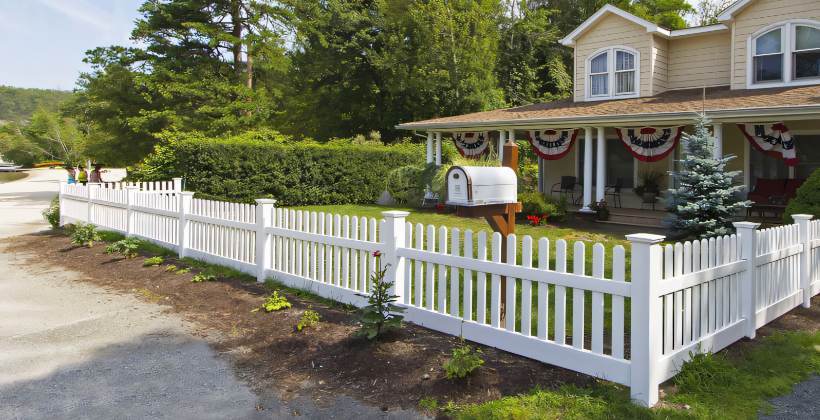
Six vinyl fences we installed around St. Louis. Each one has its own page with photographs and the numbers.
Two things show up on nearly every St. Louis job. Your city or subdivision may have to approve the height or the style before anything is ordered, and the ground decides the schedule. Rock, roots and slope cost more time than extra footage.
Many vinyl fencing products come with a lifetime warranty, but it’s important to understand what that actually covers. A warranty covers defects in the material. It does not cover a bad install, misuse or ground movement.
From my experience, a warranty is only as valuable as the quality of the product and the way it’s installed. When owners choose reputable manufacturers and professional installation, that warranty becomes meaningful long-term protection rather than just marketing language. Knowing what’s covered, and what isn’t, helps set realistic expectations and avoids surprises years down the road.
With quality panels and posts set to depth, a vinyl fence lasts decades with very little change in how it looks.
Good vinyl is made with UV inhibitors, so it holds its color far better than wood that has to be stained.
In many St. Louis suburbs vinyl is approved, because the look stays the same. Check your own rules first, and expect the height and style to need approval.
Yes. It holds up through freeze-thaw, humidity and storms when the posts are set to depth in concrete.
No. Wash it with a hose once or twice a year. There is no painting, staining or board replacement.

Vinyl fence posts go 30 to 36 inches deep in the St. Louis area, set in concrete over a 3 to 6 inch gravel base. The depth follows your local frost line, which averages about 30 inches here. Gate posts go deeper and wider than line posts, because they carry a swinging load every day.
That one measurement is what most vinyl fence installations get wrong, and it is why a fence leans within a few years instead of staying straight for decades. Too shallow and frost heave lifts the post. Everything else on this page assumes you got the holes right first.
Want it done for you? See how our vinyl fence installation works, or reach us at 636-464-1144 to set up a free on-site visit.
The holes decide the fence. Get the depth and the spacing right and a vinyl fence stays straight for decades. Get them wrong and no amount of care with the panels saves it.
We have been putting vinyl fence in the ground around St. Louis since 1994. This page is the order I work in, the same order as the six jobs below: layout, slope, holes, posts, panels, cleanup. The six jobs further down are real ones, with the footage, the gates and the days each took.
You can do this yourself with your own vinyl fence supplies, or have us install it.
Six steps, in the order I do them on a job:
Read all six before you start, because what you find in step two changes how deep you dig in step three.
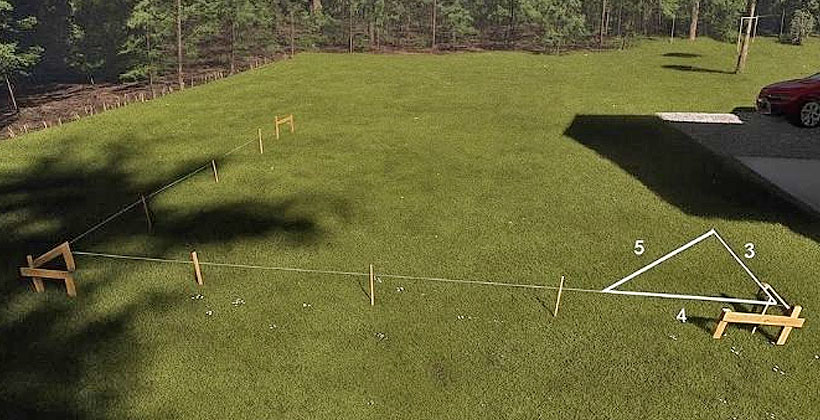
Objective: Define your fence line clearly to ensure accurate panel alignment, gate placement, and post spacing. Before digging a single hole, you need to have a well-planned layout. Proper marking helps you avoid installation errors that can throw off the entire fence line.
Step-by-Step Instructions:
Pro Tip: Lay out the entire fence line before digging any holes. This helps you visualize the layout and make adjustments before committing to post placement.
Objective: Determine how terrain affects the placement of vinyl fence posts and the configuration of panels.
Understanding your landscape is crucial before installation. Uneven ground can significantly impact the appearance and performance of your fence over time. Taking the time to evaluate your slope now will save you significant headaches during the build.
Step-by-Step Instructions:
Stretch a string line along the planned fence run. Keep it tight between corner posts and about 6–12 inches above ground.
Use a line level or laser level to identify elevation changes along the string. This reveals how much slope you’re dealing with across each section of fence.
Walk the fence line and mark slope changes. Note where the ground rises or falls significantly between post locations.
Stepped Fence Design: Ideal for steep slopes. In this approach, each vinyl panel remains level, and posts are installed at varying heights to create a stair-step effect. This is the most common option for traditional vinyl panels that aren’t designed to flex.
Racked Fence Design: Best for gentle slopes. Here, the vinyl panels follow the contour of the land. Posts remain vertical, but the panels angle slightly to match the terrain. Not all vinyl fences can be racked, so this requires special panels.
Important: Most standard vinyl fence panels are not racked by default. Check with your manufacturer or supplier (like Maintenance-Free Outdoor Solutions) to confirm whether your style allows for racking or requires stepping.
For steep grades: You may need taller fence posts and may even need to custom-trim panels to maintain visual consistency and stability.

Objective: Dig stable, well-positioned holes that accommodate vinyl post type, terrain variations, and climate conditions for a long-lasting fence.
The success of your installation largely depends on how well you dig and prep your post holes. Inadequate depth or poor drainage are among the top reasons vinyl fences shift or lean over time, especially in freeze-thaw climates like St. Louis.
When installing a vinyl fence on uneven ground, the hole depth may need to be adjusted accordingly. Dig deeper holes on downhill runs so that the tops of all posts stay level along your string or laser line. Use a string line or laser level to guide height consistency across sloped areas. Whatever the slope, keep the bottom of every hole below the frost line. Some posts will need a deeper hole than the rest.
Pro Tip: On steep slopes, mark post tops in advance with painter’s tape to maintain a consistent visual line while setting posts.
Gate posts endure more force than any other part of your fence. Treat them like structural load-bearing supports.
Concrete Requirements:
Pro Tip: Always install gate posts first, then build the fence outward. This ensures precise gate spacing and alignment for hardware and function.
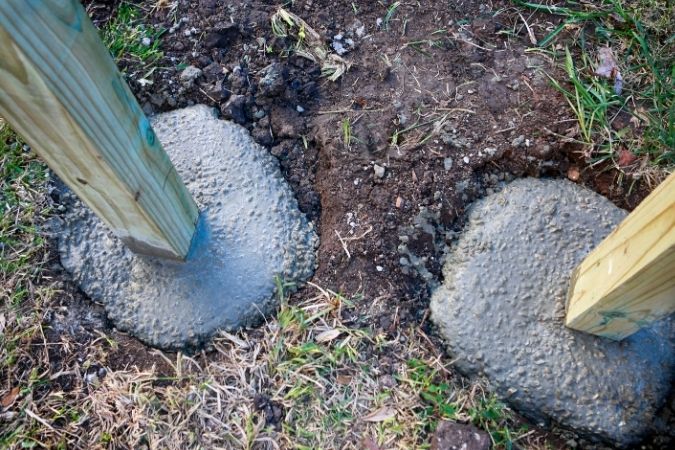
Objective: Secure each vinyl post in place with proper alignment, spacing, and support to ensure long-term durability and performance.
Once your post holes are dug and gravel bases installed, it’s time to set your fence posts in concrete. Precision here is critical, mistakes in leveling or spacing will impact the entire vinyl fence installation.
Pro Tip: Only install one or two posts at a time. Pour and level each before moving to the next. This ensures precision and avoids compounding errors.
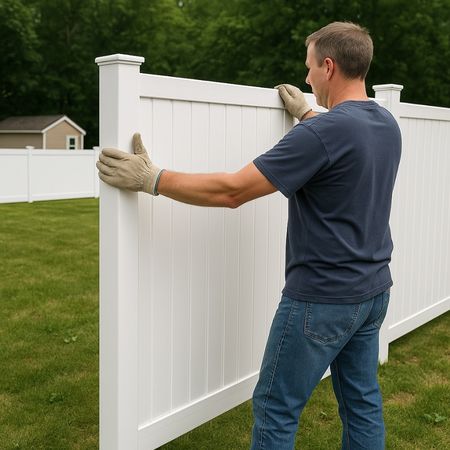
Objective: Secure vinyl fence panels between posts with proper alignment, structural integrity, and a clean, professional look.
Once your posts are fully set and cured, it’s time to connect your fence line. Panel installation can vary slightly by product, so always refer to the manufacturer’s instructions, but these general guidelines apply to most vinyl fencing systems.
Insert panels into routed post holes or attach them with mounting brackets, depending on your fence design. Routed posts allow the panel rails to slide directly into the post. Bracketed systems require attaching the rails to the outside of the post using clips or brackets.
Use a level or string line to ensure each panel stays consistently level and aligned with the rest of the fence.
Check fit before fastening. Make sure panels are seated fully and evenly inside the posts or brackets before securing, especially on sloped terrain where one side may settle differently.
Fasten securely with rust-resistant screws. Use manufacturer-approved stainless steel fasteners to avoid corrosion over time. Avoid overtightening, which can crack vinyl.
Pro Tip: Work one panel at a time, checking spacing and level as you go. This helps catch misalignments early before they affect multiple sections.
Objective: Achieve a clean, safe, and professional finish when custom trimming panels for shorter sections, slopes, or obstacles.
Vinyl fence panels often require trimming at end runs, near buildings, or around unique features. Cutting correctly ensures both structural stability and curb appeal.
Pro Tips:
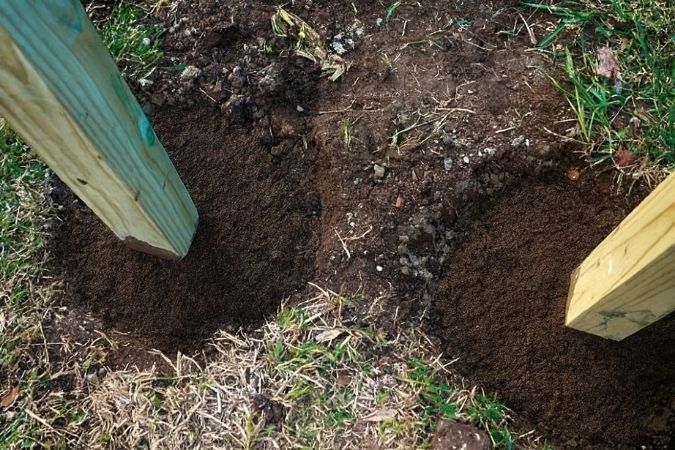
Objective: Ensure a polished, level, and secure finished fence, and leave your yard looking better than before.
You’re in the home stretch! Before calling the job done, it’s essential to inspect your entire installation and identify any minor issues thoroughly. Making small adjustments now can prevent long-term problems and enhance curb appeal.
Pro Tip: Slightly mound soil around each post to direct water runoff away from the base, a small detail that protects against pooling and frost heave.
Optional: Hose off panels to remove dust or scuff marks from handling. Vinyl is low-maintenance, but a quick rinse makes everything look brand new.
Every one has its own page with before and after photographs, the footage and the number of days.
Look at the range before you plan your weekend. 61 feet took two days and 531 feet took five, because removal, gates and slope drive the schedule more than footage does. We took two days on 104 feet, and we do this every day. Budget accordingly if it is your first fence.
If you are installing it yourself, we sell the panels, posts, gate hardware and concrete over the counter. The supply store is open to the public. The staff will check your post count and spacing before you load up. That check is free and takes ten minutes. For a national look at what a professional install costs, HomeGuide publishes a vinyl fence cost guide, and our own vinyl fence cost guide has St. Louis prices.
Where this guide stops. It covers flat to gently sloped yards with standard panels. It does not cover a fence on a retaining wall, a run inside a drainage easement, or anything needing engineered footings. Ask your building department about those, and ask us. Vinyl panels will not carry a gate: the gate posts carry that load, which is why they go deeper and wider than line posts.
Three situations mean the job is not for you: You cannot get 30 inches down by hand or with a rented auger. Your fence line runs along a main road or a sidewalk, where the city has to approve the height. Or your subdivision approves the style first. On the Wildwood job above, the height change needed city approval before anything was ordered. Any of those three stretches a weekend into a month.
When we do the install, the labor is guaranteed for a year, on top of the manufacturer’s warranty on the vinyl. We can usually get out to see your yard within 1 to 4 days. To see the panels and gates before you buy, visit our showroom in Arnold.
Would rather skip digging 30 holes yourself? Call 636-464-1144 or book a free estimate for vinyl fence installation.
That visit looks like this: we measure your line and bring a real panel out so you can see the style in person before deciding. You walk the layout with us, and nothing gets dug until you sign off on it. Most yards take 1 to 3 days. Read what homeowners say about their fences.
Either way, get the post depth right. It is the one step that cannot be corrected later without pulling the fence back out.
30 to 36 inches in the St. Louis area, set in concrete over a 3 to 6 inch gravel base. The figure follows your local frost line, which averages about 30 inches here. Gate posts go deeper and wider than line posts because they carry a swinging load.
6 to 8 feet on center, measured post centre to post centre, depending on the panel size your manufacturer supplies. Measure the panel before you dig, not after.
Budget 2 to 5 days doing it yourself. We took 1 day on an 84-foot run and 5 days on 531 feet that included tearing out the old fence. Removal, gates and slope drive the schedule more than footage does.
Permits are set by your municipality, not by the state, and they differ across the St. Louis area. Ask your building department before you dig. Call 811 first either way, which is free and required.
A vinyl fence is a weekend-and-a-half job when the holes are right. Mark the line. Check the slope. Dig to 30 inches. Set the posts in concrete over gravel. Everything after that is panels, and the panels we set are Catalyst, made by Barrette Outdoor Living. We are listed on their installer directory. Once the fence is up, our fence cleaning guide shows how to keep it looking new.

Dogs were meant to run free — but whether you live in the suburbs, the city or the secluded countryside, keeping your pets safe with reliable fencing is an important concern. We’ve been installing dog-friendly fences in the greater St. Louis area for 20+ years.
Read More
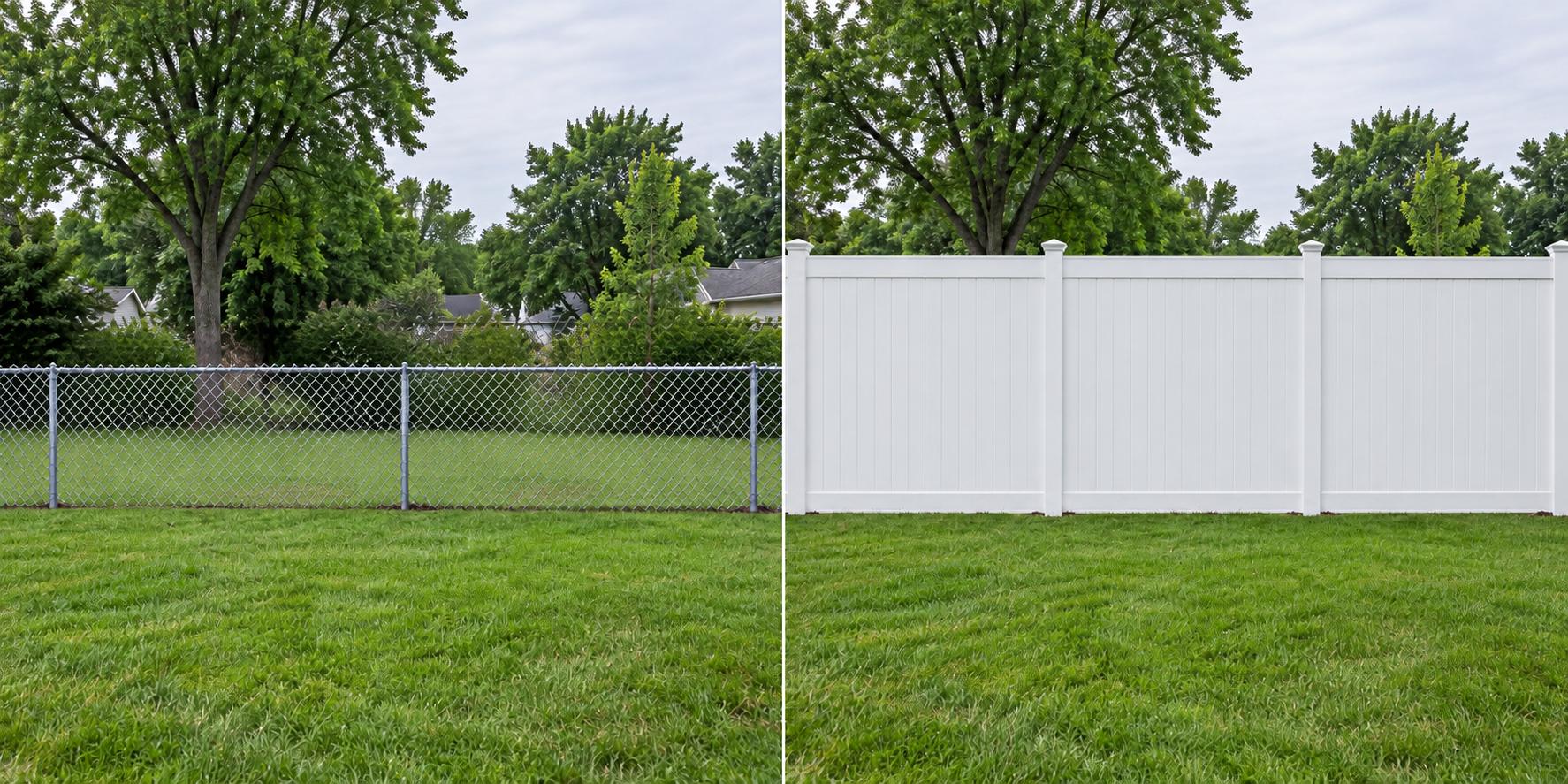
Chain link costs less than vinyl to install, and vinyl gives you privacy that chain link cannot. HomeGuide puts chain link at $10 to $40 per linear foot installed, and our St. Louis vinyl cost guide puts vinyl at $45 to $75.
Maintenance-Free Outdoor Solutions installs vinyl and does not install chain link, so we can price only one side of this choice. We will still tell you where chain link wins.
The sections below cover what each fence costs per foot, what each costs over its life, replacing a chain link fence in St. Louis and a check for your own yard. When vinyl is the fit, we measure your yard and put a written price on vinyl fence installation.
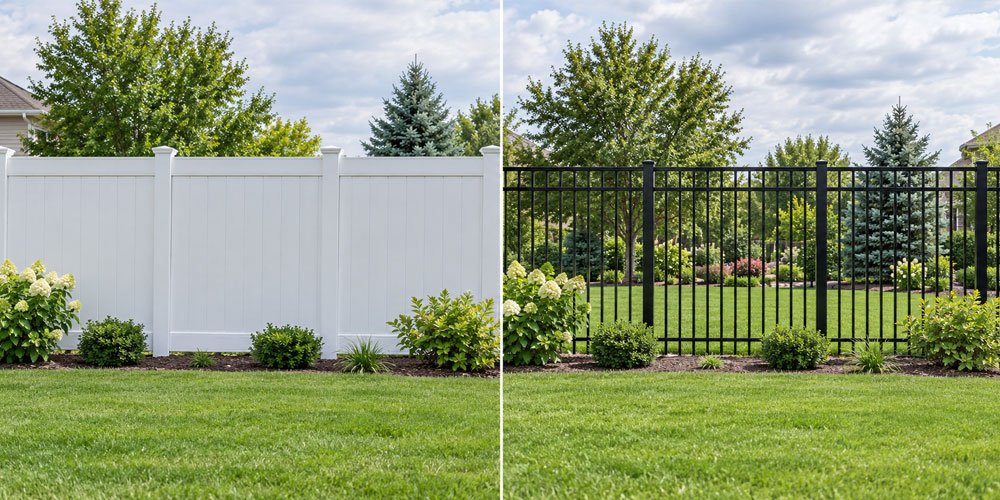
Vinyl wins on privacy, aluminum wins on keeping your view. Expect $45 to $75 a foot for vinyl in the St. Louis area, and $20 to $45 a foot for aluminum. Both need almost no upkeep. The real choice usually comes down to whether you want a solid screen or an open sightline.
Both materials come from us, so nothing below is a sales pitch for one over the other. Our vinyl fence page and aluminum fence page cover the details of each install. If you’d rather just talk it through, 636-464-1144 reaches us directly.
Vinyl is a solid PVC panel. It blocks sightlines completely, which is why homeowners pick it for privacy fencing. Aluminum is an open picket style. You can see through it. That is why homeowners pick it when they want to keep a view of the yard, pool, or landscaping beyond it.
Neither one rots, rusts, or needs paint. Past that starting point, the two materials solve different problems.
Aluminum edges out vinyl on raw strength. A picket can take a hit without shattering. The welded or bolted frame also holds its shape under wind load better than a flat panel does.
Vinyl is not fragile, though. Bufftech, the vinyl we install most, typically lasts 20 to 30 years with almost no maintenance. Aluminum from Elite carries a lifetime limited warranty from the manufacturer and does not rust, ever, since it contains no iron.
Vinyl can crack under a hard, direct impact, especially in cold weather when the material gets more brittle. Aluminum flexes instead of cracking, but a picket can bend if something hits it hard enough.
A homeowner in Wildwood added a pool and needed real privacy from a busy street and sidewalk. We found their existing 4-foot fence did not screen the pool area at all, so on the Bryant job, 31 August 2026, we replaced it with a 6-foot solid vinyl fence. A solid panel was the only material that closed the view completely.
Aluminum will not do that job. Standard picket spacing leaves gaps a person can see through from either side. If privacy is the actual goal, vinyl is the only one of the two that delivers it.
On the Voegtli job in Kirkwood, 15 May 2026, the homeowner wanted to contain two small dogs. They also wanted to keep the yard’s open feel. We closed the aluminum picket gaps to 1 and 5/8 inches for pet containment. The sightline through the fence stayed intact. A vinyl privacy panel would have solved the dog problem too. It also would have blocked the view the homeowner wanted to keep.
You cannot get real privacy out of an open aluminum picket, no matter how tight the spacing runs. Aluminum is not for you if your main goal is blocking a neighbor’s view or screening a busy street. Save the money and get vinyl instead.
Vinyl privacy fencing runs $45 to $75 a foot in the St. Louis area. Most jobs land between $55 and $65. Aluminum runs $20 to $45 a foot, usually $25 to $40. See our vinyl fence cost page or aluminum fence cost page for the current line-by-line figures. For national price ranges, HomeGuide publishes guides to vinyl fence cost and aluminum fence cost.
The gap is real. A solid vinyl panel uses more material than an open aluminum picket, and that shows up in the price per foot.
Vinyl wins if you want privacy. Aluminum wins if you want to keep your view of the yard or landscaping. Cost, maintenance, and lifespan are close between the two. The real deciding factor is almost always which look and function you actually need.
Vinyl costs more per foot than aluminum, and a hard impact can crack a panel, especially in cold weather. You also cannot see through it, which some homeowners find too closed-in for a front yard.
Aluminum will not give you privacy since standard picket spacing leaves clear gaps. It also costs more up front than chain link, though it beats chain link on looks and upkeep.
Bufftech vinyl, the brand we install most, typically lasts 20 to 30 years with almost no maintenance. Most homeowners just spray it down a couple of times a season and that covers it.
Yes, a well-installed vinyl fence tends to help. Buyers see a solid, low-maintenance privacy fence as a finished feature, not a future expense. An aging wood fence usually reads the opposite way.
At $55 to $65 a foot installed for most jobs, 100 feet of vinyl privacy fencing runs roughly $5,500 to $6,500, before gates. Gates are priced separately.
Bufftech vinyl and Elite aluminum are both stocked and installed by our own crews across St. Louis and the Metro East. We hold a spot on the Catalyst installer directory, and every job we do carries a one-year workmanship guarantee from us on top of whatever the manufacturer promises.
You reach out by phone or online. Within 1 to 4 days, we measure your yard in person, not off a photo. You walk away with a written number for vinyl, aluminum, or both, so the comparison is apples to apples.
The Arnold showroom has samples of both materials if you want to see the color and feel before deciding. Past customers have also left their own notes on the reviews page, and you can confirm our start date on our BBB profile.
Call 636-464-1144 and get a real number, no charge, no obligation.
