Skip to main content


Vinyl costs more on the day it goes in and less by about year 10. Installed vinyl runs $45 to $75 a foot around St. Louis, and most jobs land between $55 and $65. That is the short answer. Wood starts lower and then asks for money every two or three years, which is the half of the sum most calculators leave out.
Vinyl, PVC and plastic fencing are three names for the same product, so whichever word you searched, these are the figures that apply. What the material actually is, rather than what it costs, is covered on our plastic fencing page.
Maintenance-Free Outdoor Solutions installs vinyl across St. Louis and the Metro East. See how we run a vinyl fence job in St. Louis. You can dial 636-464-1144 and get a walk of the line, plus a firm number, at no cost.
What Each One Costs to Put In
Our own installed figures for the St. Louis metro, 2026:
- Budget, $45 to $52 a foot. Flat ground, plain white, and room to get the truck near the line.
- Typical, $55 to $68 a foot. A six foot solid run in a stock color on an ordinary lot. Most jobs sit here.
- Top end, $70 to $90 and up. Anything special ordered, a textured or stone-look panel, or ground the machine cannot reach.
Gates, custom colors and panel-top details add $500 to $2,000 on top. For the line-by-line breakdown, our vinyl fence cost page gets updated as prices move, so it stays accurate after this article does not.
Watch the $25 a foot you see advertised. That is panels off a shelf. It does not include posts set in concrete, gates, hardware, permits, or anyone to dig the holes.
Solid vinyl is what those figures cover. Woodgrain vinyl sits a little above them, and stone-look composite and ornamental steel sit above that again. Aluminum is priced differently because it is a different job.
Whatever material you choose, you are paying for the same basic parts: posts, concrete footings, rails, panels, post caps, and gate hardware. Buyers focus on the panel, but it is the footings that decide whether the fence is still standing straight five years from now.
Wood tends to start lower. The exact number turns on the species and the grade, and that pricing is not ours to give. The next section says who to ask instead.
The Cost That Turns Up Later
Upkeep is where the two part company, and the difference is not an opinion. It is a schedule.
Wood runs on a maintenance clock. On a two- or three-year clock it wants another coat of stain or sealer, and somewhere in between a board or two will cup, warp, or rot out at the base and need swapping. That is not poor workmanship. It is what happens to timber left outside in St. Louis, where the clay soil stays damp for months and the summer sun does the rest.
Vinyl skips that clock entirely. A rinse with the hose once or twice a season is the whole routine. No staining, no sealing, no sanding, no boards to swap. A decade later it still looks like the day it went in.
That is the whole cost argument, and it is why the day-one price is the wrong number to decide on.
The 20-Year Sum, and How to Do It Yourself
Do not take anyone’s average. Do this with your own two quotes:
- Get both installed prices for your actual footage. Ours for vinyl, and a wood contractor’s for wood.
- Ask the wood contractor how often it needs staining, and what they charge to do it.
- Multiply that by the number of times it happens in 20 years. On a three year cycle that is six times. On a two year cycle it is nine.
- Add board replacement. Ask what share of boards they expect to replace by year 10.
- Add both columns. That is your answer, on your yard, not a national average.
The point of writing it out is that step 3 is where the gap closes, and step 3 is the step nobody puts in a calculator. If I were doing this on my own yard, that is the line I would press the contractor on hardest, because six staining cycles is where the wood number catches up.
Where the math runs out. No per-foot figure can price your yard sight unseen, and neither can we without walking the line. It does not fix a slope, a property line you share with a neighbor who has to sign off, or a fence sitting on an easement. Those get settled on site, not from a spreadsheet.
Four Real Jobs, and What They Measured
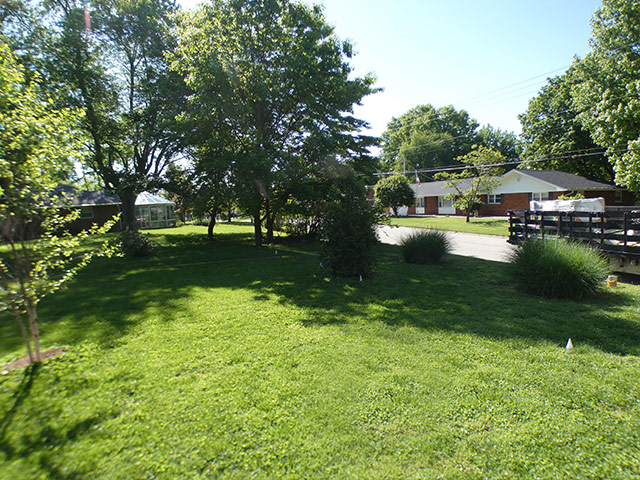
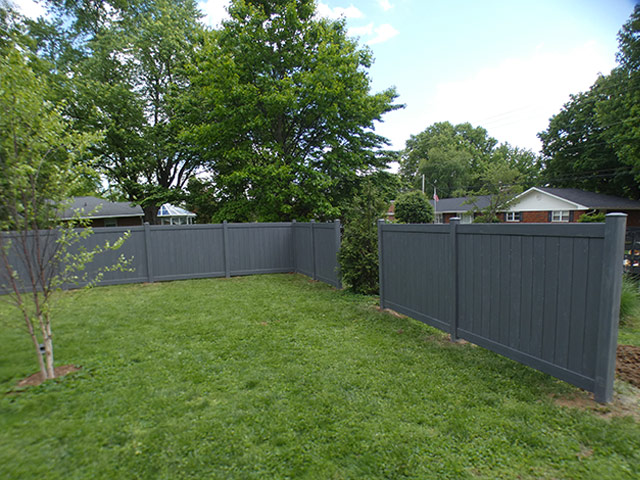
Multiply your own footage by the per-foot price for a rough total. These four yards show what real jobs actually needed this year:
- Harvengt, Collinsville IL, 1 May 2026. 84 linear feet, 6 feet tall, woodgrain vinyl, 1 day. Three short runs around existing shrubs rather than one long line.
- Rogers, St. Louis city, 25 June 2026. 61 linear feet, 6 feet tall, white, 2 days. A narrow lot with an old fence to pull out first.
- Bryant, Wildwood MO, 31 August 2026. 104 linear feet, 6 feet tall, 2 days.
- Morris, Arnold MO, 30 May 2026. 232 linear feet, 6 feet tall, white, 3 days. The longest of the four and the only one that needed three days.
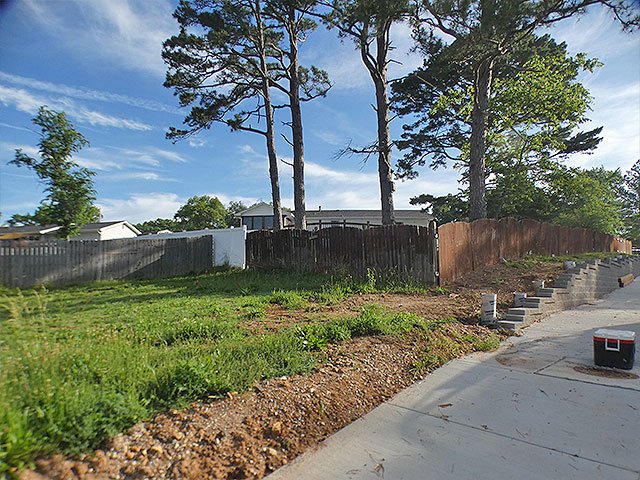
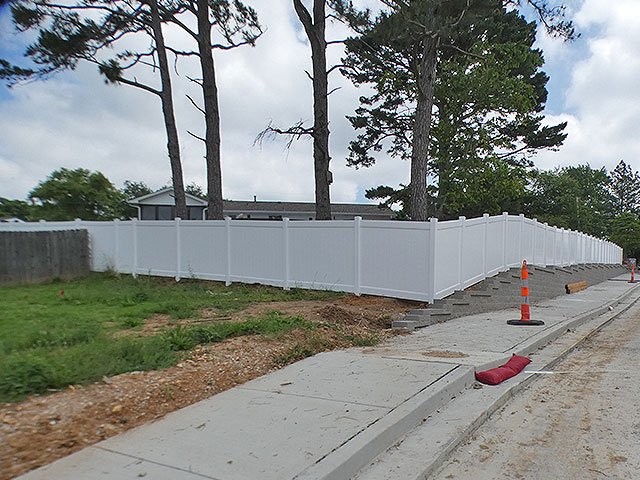
St. Louis back yards run anywhere from about 60 feet to well over 230, and these four jobs span that range. To get your own number before you call anyone, use our guide on figuring out how much fence you need.
Where to Get an Honest Wood Number
We do not build wood fences. Everything we install is maintenance-free by design, which means timber pricing is not ours to give, and we will not fake a number just to look complete.
Get an honest number from someone who actually builds wood fences, and set it beside ours. If wood comes out cheaper for your yard and the staining does not bother you, that is a legitimate choice. Take it.
Moving within the next two years? You do not need the 20-year math. Take whichever quote costs less and put the savings toward something else on the house.
What we do install is Catalyst, the vinyl fence brand from Barrette Outdoor Living. Our listing is public on the Catalyst installer directory, so you can look us up yourself.
What Actually Moves the Price
Four things, roughly in order of how much they matter:
1. Linear feet. Everything else is a rounding error next to this.
2. Gates. Each one carries hardware and hanging time. Three gates is a different job from one.
3. What is in the ground. On the Rogers job we found old concrete pods from the previous fence and every one had to come out before a new post went in. On the Morris job the sonotubes left from the first phase sat too deep for the posts, so every one had to be filled with crushed stone to the right height first. Neither shows up in a per-foot number.
4. The grade. A slope means the panels get racked to follow the ground rather than stepped down it, which takes longer and looks better.
Height matters less than people expect. Going from 4 feet to 6 feet adds material, not days.
Frequently Asked Questions
Is a vinyl or PVC fence cheaper than wood?
Not on day one. Installed vinyl runs $45 to $75 a foot here, and a PVC or plastic fence is the same product at the same price, while wood starts lower. Over 20 years the order usually flips, because wood needs staining every two or three years and vinyl needs a hose.
How much for 150 feet of vinyl fencing?
At $55 to $68 a foot, 150 feet of vinyl runs roughly $8,250 to $10,200 installed. That is before any gate or surprise in the dirt gets added, so treat it as the ballpark; your actual quote is the number that counts.
Why is vinyl more expensive up front?
The panel costs more than a wood board, and the posts are set the same way either fence is built. You are paying at the start for the staining you will never do.
How long does a vinyl fence last?
Decades, and it looks the same in year 10 as in year one, which is the part that matters to the sum. A wood fence that old has typically gone through several rounds of staining and at least a few replaced boards.
Does a vinyl fence add value when selling?
A buyer looks at a fence with no upkeep waiting on it, and that reads as worth more than one that needs a weekend of staining soon. White is the safest color on resale.
Can I install it myself and save the labor?
You can, and we sell the material through our fence supply store for exactly that. The real labor is digging and setting the post holes correctly, since that is what keeps the fence standing straight years from now.
How to Decide
Price both fences for your actual footage. Find out from the wood contractor what a round of staining runs and how often it is due. Work through the 20-year math. Then decide, knowing exactly which numbers you are weighing against each other.
If price is settled and you are still weighing the two materials on everything else, our vinyl vs wood fence guide covers privacy, upkeep and the real downsides of vinyl.
When you are ready for our side of it, we measure your line, hold a real panel against your siding so the color reads true, and put a price on it in writing. Homeowners around St. Louis have left their own account of working with us on our reviews page.
Whichever fence you pick from us, the install comes with a one-year guarantee on our work. The vinyl has a separate warranty from its maker. Expect the measuring visit within 1 to 4 days, as a rule. You can also see the panels in person at our showroom in Arnold.
Ring 636-464-1144 to get that visit on the books, no charge to you.