Skip to main content
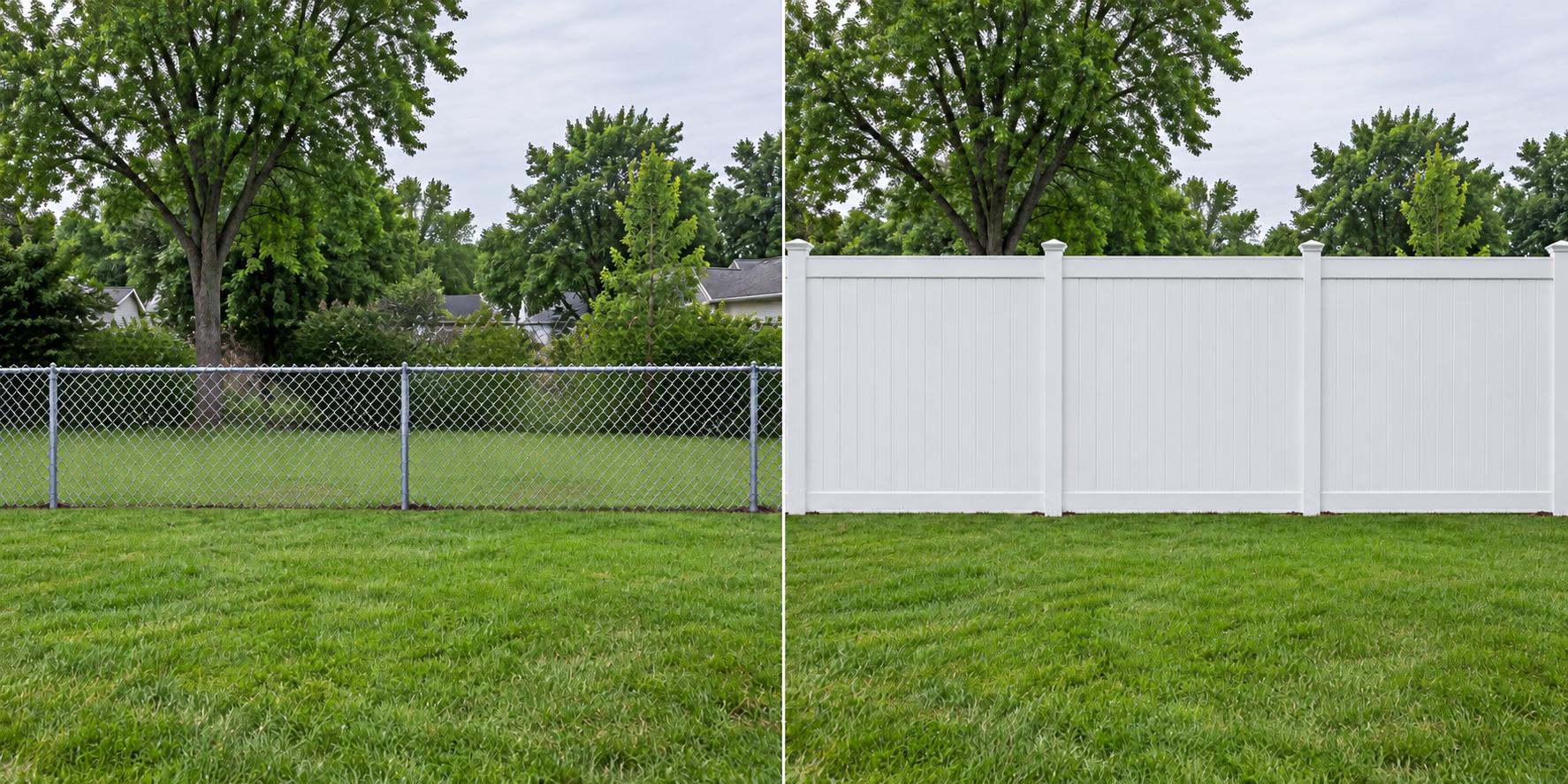
Chain link costs less than vinyl to install, and vinyl gives you privacy that chain link cannot. HomeGuide puts chain link at $10 to $40 per linear foot installed, and our St. Louis vinyl cost guide puts vinyl at $45 to $75.
Maintenance-Free Outdoor Solutions installs vinyl and does not install chain link, so we can price only one side of this choice. We will still tell you where chain link wins.
The sections below cover what each fence costs per foot, what each costs over its life, replacing a chain link fence in St. Louis and a check for your own yard. When vinyl is the fit, we measure your yard and put a written price on vinyl fence installation.
Compare like with like.
A bare 4-foot chain link fence and a 6-foot solid vinyl fence do different jobs. Price the height and style you will actually build.
Chain link is woven steel mesh hung on steel posts, in galvanized or colored-coating versions. Vinyl is a plastic PVC fence built from sections in solid privacy, semi-privacy, picket and rail styles.
Is Chain Link Cheaper Than Vinyl?
Yes. In every range we found, chain link costs less per foot than vinyl, and the gap is widest against a 6-foot vinyl privacy fence. HomeGuide says most backyard chain link stands 6 to 8 feet tall.
| Fence | Installed, per linear foot | Where it comes from |
|---|---|---|
| Chain link, 6 feet tall | $13 to $30 and up | HomeGuide, a national cost directory |
| Chain link with privacy slats | $5 to $18 more than the same fence without | HomeGuide |
| Vinyl privacy, 6 feet tall | $45 to $75, most often $55 to $65 | Our St. Louis vinyl cost guide |
The chain link numbers are national averages that HomeGuide updated in August 2025, and the vinyl numbers are ours for the St. Louis area. They come from different sources, so read them as ranges and not as quotes. As a cross-check, HomeGuide’s own vinyl range is $40 to $85 per foot for privacy fence.
HomeGuide says labor is about half of a chain link install. Its vinyl guide puts basic vinyl labor at $5 to $15 per foot on a level site. Gates, slopes and an old fence to remove move either price.
Chain Link vs Vinyl Fence Cost and Lifespan, Side by Side
A fence that lasts longer spreads its price over more years. This table sets a 6-foot backyard fence with privacy in each material, using the prices above and the lifespans HomeGuide lists.
| Chain link with slats | Vinyl privacy | |
|---|---|---|
| The view | Slats close part of it | Solid, no gaps |
| Installed, 100 feet | $1,800 to $4,800 | $4,500 to $7,500 |
| Lifespan | 15 to 20 years | 20 to 30 years |
| Per year of life | $90 to $320 | $150 to $375 |
The per year ranges overlap. That is the lowest price over the longest life and the highest price over the shortest, and it leaves out upkeep because the sources give no figures.
HomeGuide’s vinyl guide adds that well-maintained vinyl can pass 40 years. Our vinyl fence lifespan guide covers the vinyl side in detail.
Pick the job first, then compare bids on that one fence.
Vinyl Coated Chain Link vs Vinyl Fence
A vinyl coated chain link fence is still chain link. It is steel mesh with a colored coating, usually black, green or brown, and you can see through it. It is not a vinyl fence.
HomeGuide lists coated chain link at $30 to $60 per foot installed and says it lasts longer than galvanized, without giving a number.
A contractor guide we read puts the coating nearer 30 percent above plain galvanized. Those two do not agree, so ask a chain link installer to price galvanized and coated on the same footage.
A black coating blends into trees and lawns better than bare galvanized, but it does not add privacy. Color costs more on vinyl too: our guide lists $3 to $7 more per foot for a custom color.
Does Chain Link Give Privacy?
No. Chain link is open mesh, so it shows your yard to the street. Slats close part of the view, and a solid vinyl panel has no gaps at all.
- Chain link. The line of sight passes through the diamond mesh. Slats or a privacy screen close part of it.
- Solid vinyl. Solid privacy panels leave no gap between boards, so the view stops at the fence.
If privacy is your reason to fence, price vinyl first. We stock a 6-foot white vinyl privacy fence at our Arnold showroom. Other styles and colors are special orders, and our guide to privacy fence ideas shows what is possible.
How Long Does a Fence Install Take?
HomeGuide says chain link crews install 80 to 150 feet a day, with a post every 6 to 10 feet. Our vinyl sections are 8 feet wide.
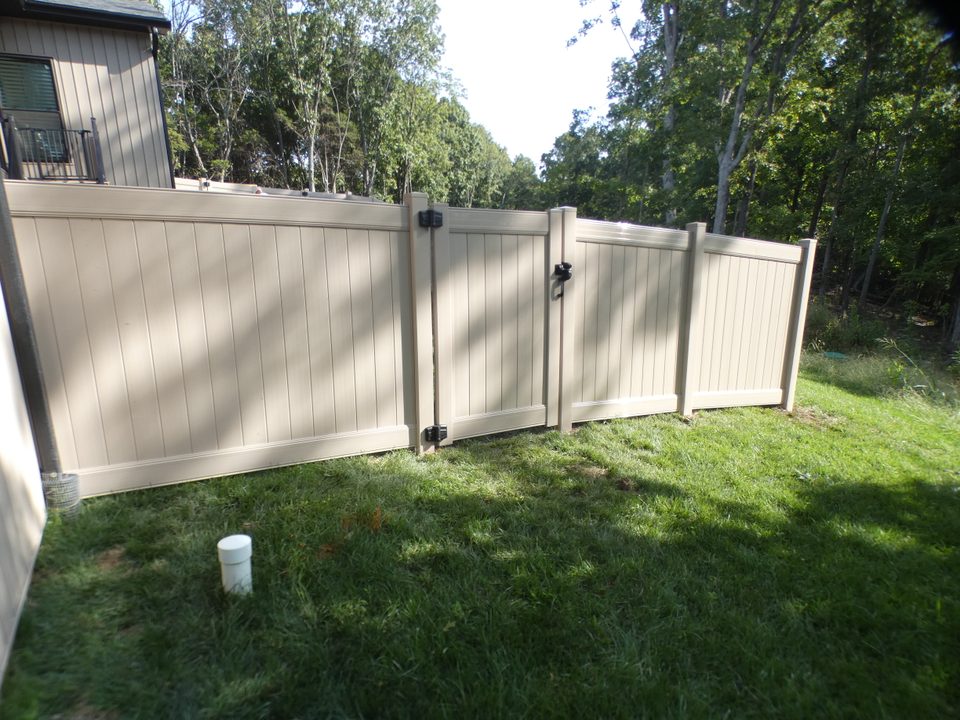
Our own recent jobs give you real vinyl timelines. We built 160 feet of picket in Imperial in two days, 61 feet of privacy in the City of St. Louis in two days, and 100 feet of privacy with three gates on a slope in Byrnes Mill in three days. Gates, slopes and removal add days to either fence.
Which Is Better for Dogs, Chain Link or Vinyl?
For many dogs, solid vinyl is the better fit, and chain link is the lower-cost choice for a calm dog that stays put. Our dog fence guide applies three tests: can the dog climb it, get under it or squeeze through it.
- Open mesh. The dog sees every person and dog on the other side. One contractor guide notes that the mesh also gives a climber footholds.
- Solid vinyl. Our dog guide recommends solid panels for a dog that barks at passersby. The dog still hears and smells them, so panels cut the barking without ending it.
Vinyl is not automatically the better pick. A solid fence costs more, and a calm dog that does not climb does well behind an open fence. A vinyl picket fence works only when the gaps are smaller than your smallest dog.
On a 160-foot picket job in Imperial in July 2026, our salesman brought a vinyl sample so the owner could hold the smallest dog against the spacing before signing. On a 100-foot job in Byrnes Mill, the owner picked full privacy so deer would not spook the dogs.
Replacing a Chain Link Fence With Vinyl in St. Louis
A new vinyl fence is a new fence, and that matters for the permit. The City of St. Louis requires a permit for all new fences of any type.
The City exempts only a like-for-like swap: the same height, the same material and the same spot in a rear or side yard. That is all on the City’s permit page.
Going from chain link to vinyl changes the material, so that exception does not cover it. Ask the Building Division to confirm before you order.
Homes in one of the City’s historic districts have another step. The same page says every fence there needs approval. Other cities and St. Louis County set their own rules, so call your building office first.
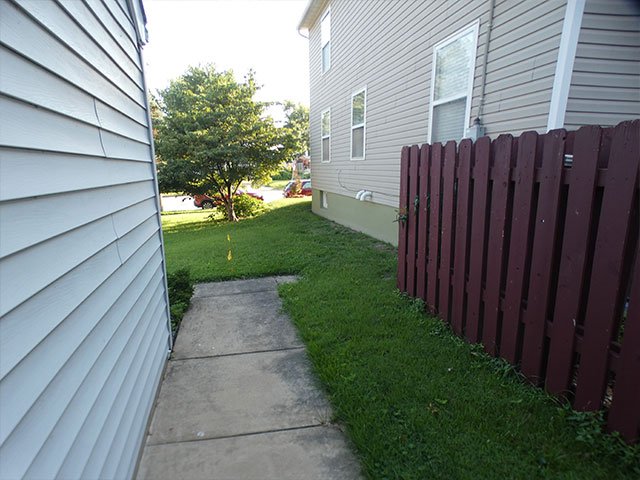
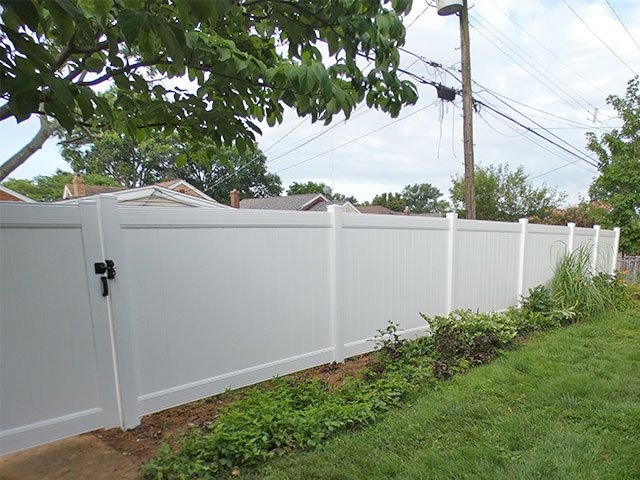
The Rogers job in the City of St. Louis replaced an old wood fence, not chain link, with 61 feet of 6-foot white vinyl and two gates in two days. It followed the same path.
Our salesman helped coordinate the City permits, the crew pulled the old concrete pods, and the hole inspection passed. The Rogers case study has the full story.
- Check the permit rule. Call the Building Division in the City, or your own building office elsewhere.
- Check your HOA. Our HOA fence approval guide shows what your packet needs.
- Know your property line. If you already own a survey, our land survey guide shows how to read it.
- Ask every bidder to list removal as its own line. HomeGuide lists $3 to $5 a foot for an old chain link fence, and $10 to $20 in its vinyl guide for an old fence in general, so get it in writing.
- Decide where the gates go. A gate costs more than a plain section on either fence.
You do not have to replace everything. You can use vinyl where the patio and the neighbors look and keep chain link along a back line. Plan the break at a corner or a gate so the two materials do not meet in the middle of a run.
Which Fence Fits Your Yard? Tap Your Answers
Six quick questions give you a first read. It is a place to start, and a walk around your yard says more.
| If this describes you | Do this |
|---|---|
| The lowest price matters most. | Chain link is the cheaper fence in every range above. Ask a chain link installer for that price, because we do not install it. |
| You want privacy. | Price solid vinyl first. Chain link needs slats or a screen and still leaves gaps. |
| You have an HOA. | Get the approved material list in writing before you price either fence. |
| The yard slopes. | Chain link mesh follows the ground. Vinyl sections step down it, as on the Byrnes Mill job above. |
| You have a dog. | Check height and the bottom gap first. Our dog fence guide covers both. |
| There is an old fence to remove. | Ask every bidder to list removal as its own line. In the City of St. Louis, a change of material needs a permit. |
When Chain Link Wins, and When Vinyl Does
Most yards fit one side of this list.
Chain link is the better buy when
Price comes first. It is the cheaper fence at every height we found.
The run is long. Cost per foot adds up fast across a big lot.
You want the view. The open mesh lets you watch kids and pets from the house.
The job is a utility area. A dog run or a storage yard rarely needs privacy.
Vinyl is the better buy when
Privacy is the point. Solid panels leave no gaps.
You want a finished look. It sits in a front or side yard without looking like a utility fence.
Your HOA limits materials. Read its list before you choose.
You do not want to paint. Neither fence needs paint or stain, and vinyl needs only a wash.
The advice here is not for a pool barrier or a business site. Our pool fence guide covers pool rules, and our commercial fence page covers business sites.
The chart and the checker use published ranges and will not know your soil, your slope or your gates. You cannot use them as a bid or as legal advice.
Want an open view with a finished look? Aluminum is the third option. HomeGuide lists $25 to $75 a foot and a 30 to 50 year life, and our chain link vs aluminum guide compares the two.
Installing the vinyl yourself? Our vinyl fence supply sells 8-foot sections, gates, posts and caps.
Call Maintenance-Free and describe your yard, and we will tell you if vinyl suits it.
Want a written price on vinyl? Ask for a visit, and we will walk and measure your fence line. The estimate is free, the visit is usually within 1 to 4 days, and our installation carries a one-year workmanship guarantee.
Book an on-site estimate Rather call? Dial 636-464-1144
Maintenance-Free has built fences in St. Louis since 1994. The Maintenance-Free Advantage page explains how we work, or you can start with Tim Kelley and our team.
Chain Link vs Vinyl Fence Questions, Answered
How much does a vinyl gate cost compared with a chain link gate?
A chain link gate is cheaper, though the two prices are not on the same footing. HomeGuide lists a walk-through gate at $80 to $200, a double drive gate at $175 to $500 and a rolling gate at $350 to $1,000 or more, all before installation. Our St. Louis vinyl cost guide puts a vinyl double drive gate at $1,500 to $3,500 or more, installed.
Does black or green chain link cost more than plain galvanized?
Yes. HomeGuide lists custom colors at 10 to 20 percent over the standard price. Ask for galvanized and coated bids on the same footage before you compare.
How much does a land survey cost before I build a fence?
HomeGuide puts a land survey at $300 to $900 on average. It shows where your property line runs, so you do not build on a neighbor’s yard. Our land survey guide covers where to look for one you already own.
Do I need to call 811 before I build either fence?
Yes, the Missouri Public Service Commission asks you to call 3 to 10 days before you dig, and fences are on its list of projects that need it. Missouri 811 marks underground lines at no charge. Ask online or dial 811.