Skip to main content

Most residential yards take 100 to 260 feet of fence. Walk the line you want to enclose and measure it in feet. That total is your linear footage, and it is the number every quote starts from. At Maintenance-Free Outdoor Solutions we price from that line, not from the lot size. The five jobs documented below ran from 38 feet around a small dog run to 260 feet around a whole yard.
Three things change it once you have it. Gates replace a section of fence and cost more than the fence they replace, so count them separately. Corners each need their own post, so a yard with several turns uses more posts than a straight run of the same length. Slope means the fence is either stepped down in sections or raked to follow the grade, and both use more material than flat ground.
For scale, these are real St. Louis yards and what they actually took. Five jobs we completed and documented. 38 feet for a small dog run in Kirkwood. 100 feet around a patio in Brentwood. 122 feet for pet containment in Eureka. 171 feet around a pool in Barnhart. 260 feet with four gates in St. Louis. Most residential jobs land between 100 and 260 feet.
A shortcut before you measure anything: your plat or property survey already has the boundary dimensions on it. Starting there is faster than a tape measure, and it shows you where the line actually is.
Measure Your Yard in Five Steps
Fifteen minutes with a tape measure and your plat map gets you a number you can order from. Building it yourself? Get your materials from our fence supply store. Rather we handled it? Send us your measurements and we will price the job.
- Walk the line and measure it in feet. Start at one corner and follow the boundary you want to enclose. That total is your linear footage, and every quote starts from it. Your plat map already carries these dimensions, so you do not have to pull a tape to find them.
- Count your gates. Each gate replaces a section of fence, needs two posts instead of one, and costs more than the fence it replaces. Write that number down separately.
- Count your corners. Every turn in the line needs its own post. A yard with five turns uses more posts than a straight run of the same footage.
- Note any slope. Ground that falls away means the fence is stepped down in sections or raked to follow the grade. Both use more material than flat ground.
- Divide by your panel width. Vinyl and aluminum sections are usually 6 feet. A 150 foot run is 25 sections and 26 posts, one per section plus one to close the run, then two more for every gate.
A Worked Example, Start to Finish
Take a rectangular back yard measuring 60 feet across the back and 45 feet down each side, fenced on three sides with the house closing the fourth.
Perimeter to fence: 60 + 45 + 45 = 150 linear feet.
Sections: vinyl and aluminum both come in 6-foot sections, so 150 divided by 6 is 25 sections.
Posts: one per section plus one to finish the run, so 26 posts, and each of the two corners needs a corner post rather than a line post.
Gates: one 4-foot walk gate. Subtract that opening from the fence run and add gate posts, which are heavier than line posts.
What that leaves you with: roughly 146 feet of fence, 25 sections, 26 posts, 2 corner posts and one gate.
Now the part a calculator cannot do. If that yard slopes, the sections step or rake and the post count changes. If there are tree roots, rock or a buried line on the route, the dig changes. Those are the two things that move a real quote away from the arithmetic, and they are why we walk the line with you before pricing anything.
Preparing For the Fence Installation Project
Measuring Your Property Line
Knowing where your property line actually sits matters more than most people expect. It decides where you can legally build, and it heads off a dispute with the neighbor. County records carry this information, or a professional land surveyor can confirm it on the ground.
For a post count, measure around the yard and divide by the panel width. Most maintenance-free panels run 6 feet, and wood posts are usually 8 feet apart.
You cannot settle a property line with a tape measure. A survey or the recorded plat does that, and a tape will not stand up if a neighbor disagrees. We recommend Marler Surveying Company here in St. Louis, MO.
Marking Your Own Corners
Mark every corner and gate opening with a stake or flag before you measure anything else. If posts or trees already sit where a corner should go, use those as your reference points instead.
Calculating Fence Posts, Rails, and Pickets
A fence calculator does this math for you: enter the total length and the spacing between posts, and it returns the post and picket count with an allowance for rails. Take your measurements before you settle on a style, since the numbers change with panel width.
Fence Post Spacing
Keep post spacing consistent for a fence that looks and holds together right.
- Number of posts = (fence length ÷ post spacing) + 1.
Typical spacing runs 8 to 25 feet depending on the fence type. Account for gates and any obstruction on the line before you set a single post.
Fence Rail Requirements
Rail count follows height, at one rail for every 24 inches of fence. A 4-foot fence needs 2 rails, and a 6-foot fence needs 3. An online fence calculator will confirm this for your exact height.
Count one post per section, plus one more to close the run.

Picket Spacing and Width
Picket count comes from dividing the fence length by the combined width of one picket plus its gap. Picket gaps run from 2 to 12 inches, and the gap decides what the fence does. Tight gaps hold small dogs and give privacy. Wide gaps are decorative and let you see the yard. Pick the gap first, then the style.
Gap size is why the Kirkwood yard on this page needed a custom picket. At 1 5/8 inches the dogs stayed in.
How Many Boards, Slats or Sections Do You Need?
This depends entirely on what the fence is made of, and the answer is simpler than it looks.
Boards and slats are wood vocabulary. A wood privacy fence is built board by board, which is why people ask how many boards they need. We do not install wood, so we are not the right people to count boards for you.
Vinyl, aluminum and ornamental steel arrive as finished sections, not as loose boards. You are not counting pickets, you are counting sections. Divide your linear footage by the section width, which is 6 feet on most vinyl and aluminum, and that is your section count.
The specification most people never think to ask about is picket spacing, and it matters more than the section count. A Brentwood yard took the standard 3 11/16 inch gap. A Kirkwood yard needed 1 5/8 inches, because two small dogs fit through anything wider. Same material, same finish, same footage, completely different fence.
Slopes and Obstructions
A slope or an obstacle like a tree or boulder changes how many posts you need and where they go. On a steep grade, panels either step down the slope or rack to follow it, and either method can call for extra posts. Work around what is already there rather than fighting it.
Mapping Out Utilities
Call before you dig, every time. In Missouri, that is the Missouri One Call System (MOCS), reached by dialing 811, the federally designated call-before-you-dig number. The service is free, and it marks gas, water, electric and communication lines before anyone breaks ground. Local utility companies do the actual marking after your call; the city planning department or county land use office can tell you about easements but will still send you back to 811 for on-site marking.
The Importance of Plat Maps
A plat map shows your property lines, structures and other boundary details on record. Review it with your neighbor before you break ground, so both of you are working from the same lines.
Accurate Measuring
Mark corners with stakes, then run a tape measure for the perimeter. Include gates and any other entry points in that number, since a gate is not free footage.
Understanding Local Zoning Codes
Your city decides what you can build, not the state. Check before you order anything.
Five things local codes usually control:
- Height, often lower in a front yard than a back yard.
- Material, where some subdivisions allow only certain styles.
- Setback, how far the fence sits off the property line.
- Which side faces out. Many codes want the finished side toward the street.
- Special zones near historic districts, water or commercial land.
Call your building department and ask those five questions. St. Louis County publishes its ordinances online. On the Brentwood job below, the city inspected the post holes before the fence went up.
Calculating Costs: How Much Does It Cost to Fence a Yard?
With your measurements in hand, these are the real St. Louis numbers, from our own installed prices.
Vinyl fencing in the St. Louis metro runs $45 to $75 per linear foot installed, and most homeowners land between $55 and $65. That includes labor, concrete footings and hardware.
Style moves the number more than anything else:
- Picket, three to four feet: $40 to $50 per linear foot
- Semi-privacy, six feet with narrow gaps: $50 to $60 per linear foot
- Privacy, six-foot solid panels: $55 to $65 per linear foot
- Ranch rail: $25 to $40 per linear foot
Gates are priced separately. A four-foot walk gate runs $300 to $1,200, and a double drive gate runs $1,500 to $3,500 and up. Pool enclosures run 15 to 30 percent above standard residential fencing.
Source: our own 2026 St. Louis vinyl fence pricing guide, kept current for this market. These are St. Louis metro figures and they run higher than national averages.
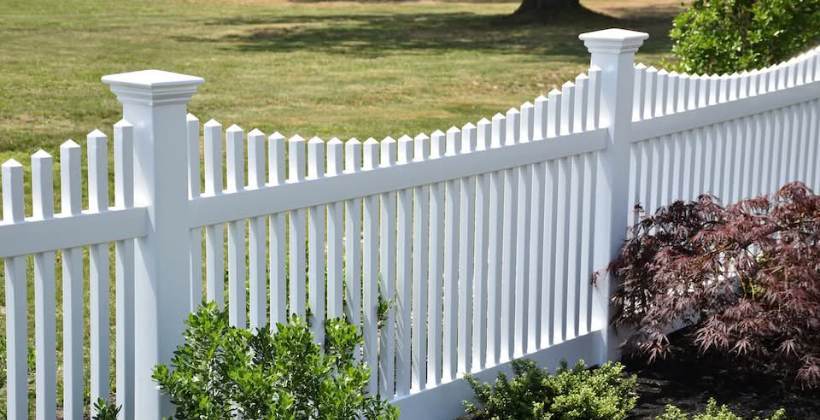
Exploring Fencing Materials
We sell and install maintenance-free materials only, each one suited to a different job.
- Vinyl: privacy and picket styles, no painting, washes with a hose.
- Aluminum: see-through pickets, pool codes, powder coated so it will not rust.
- Ornamental steel: heavier than aluminum, for security and commercial runs.
- Composite: the look of wood without the staining.
We do not sell wood or bamboo, so nothing on this page is steering you toward them. Compare the types side by side.
The Intricacies of Gates and Access Points
Gates take real planning too. They come in single, double and custom styles, and a double drive gate for vehicle access needs different framing than a walk gate. Measure the gate opening separately and add it to your total, since it changes both the material count and the price.
Seasonal Considerations
The time of year moves the schedule more than the price. Frozen ground is slower to dig. Summer is the busy season, so the wait for a start date is longer. The Barnhart job above was timed around rain and a permit that was about to expire.
Maintenance: An Ongoing Responsibility
Every fence needs some care, but the amount is not close. Wood needs staining or repainting, and boards replaced as they rot. Aluminum, vinyl and composite need a hose and mild detergent, and nothing else.
We only sell maintenance-free materials, so the upkeep question is settled before you pick a style.
DIY vs. Professional Assistance
Doing it yourself saves the labor and costs you weekends. You need a way to dig 30 holes to 30 inches, a level line across a slope, and patience with gates.
Hiring it out costs more and buys back the schedule. We measure, order the right count, and deal with the hole that hits rock.
Do it yourself if the run is short and flat and you can rent an auger.
In three situations, this job is not for you: the line runs along a main road where the city approves the height, the ground drops more than a foot across one panel, or your subdivision approves the style first. Each of those three stretches the timeline from a weekend to a month.
Professional Consultation
Even if you do the work yourself, a fence supply store will count your posts and panels against your measurements before you pay for anything. It costs nothing and takes ten minutes.
Key Takeaways
Still working it out?
- Use these numbers to decide the fence before you spend on it.
- Measure your property line and mark the corners before you start.
- Work out posts, rails, pickets and spacing with a fence calculator.
- Check local zoning codes, then decide between DIY and hiring it out.
Five Real Jobs and What They Measured
Click any one to see that job: the photographs, the footage, the gates and the days it ran.
- Schwyhart, St. Louis: 21 August 2026. 260 feet, 6 feet tall, 4 gates, 3 days. We core drilled through concrete for the gate posts, and lost a day to rain.
- O’Malley, Barnhart: 15 May 2026. 171 feet around a pool, 3 gates, on a slope, 2.5 days. We finished inside a break in the weather, before the permits expired.
- Criscione, Eureka: 4 August 2026. 122 feet in Eureka, 2 days, matched to the style already standing on the neighbor’s side. The layout walk ran long because of HOA questions about where the line sat.
- Stowe, Brentwood: 14 May 2026. 100 feet mounted to a patio, 1 day. Brentwood inspected the post holes first, and it passed.
- Voegtli, Kirkwood: 15 May 2026. 38 feet with 2 gates including a sidewalk gate, 1 day. We found rocky digging and came prepared for it.
Note how little the footage predicts the time. The 100-foot Brentwood job and the 38-foot Kirkwood job both took a day. The 171-foot Barnhart job took two and a half, because of the slope and the pool gates. Site conditions drive the schedule more than length does. When I price a yard, I work from the line you walk, not from the lot size. Those two are rarely the same number.
Frequently Asked Questions
How do I calculate how much fence I need?
Measure the perimeter you want to enclose in feet, note any slopes, and decide whether the run is free-standing or attached to a building. Divide that linear footage by your panel width, usually 6 to 8 feet, for your section count. From there, add one post per section, one more to close the run, and two for every gate.
How much fence do I need for an acre?
A square acre runs about 835 feet around the outside. That is 209 feet a side, four sides. A quarter acre is roughly 417 feet. Most suburban back yards are far smaller, and the five documented jobs above ran from 38 to 260 feet.
How many fence panels do I need?
Divide your linear footage by the panel width. Vinyl and aluminum sections are usually 6 feet, so a 150 foot run takes 25 sections and 26 posts, one per section plus one to close the run.
How deep should fence posts be buried?
Plan on 30 to 36 inches here, which is what the local frost line asks for. Bury at least a third of the post, set it in concrete on a gravel bed, and dig the gate holes deeper and wider than the line holes. Our install guide walks through the whole method.
Do I need a permit?
Permits are set by your municipality and differ across the St. Louis area. One phone call to your building department settles it. Separately, call 811 before any digging. Having the utilities located is free, and it is the law.
How do I find out about local zoning laws for fences?
Visit your local municipal office or its website to read the zoning rules that apply to fences. Check height limits, setback distance from the property line, and any restrictions on material or style before you order anything.
How far apart should fence boards be spaced?
For a privacy fence, leave 1/4 to 3/8 of an inch between boards. That keeps the fence private while allowing the wood room to move and letting wind pass through instead of pushing against a solid wall.
How do I accurately measure my property line and perimeter?
Check your deed or plat map first, since the boundary dimensions are usually recorded there. Then pinpoint the corner markers on the ground and run a tape between them to confirm the total length.
What is the best material for a low-maintenance fence?
Vinyl and aluminum. Neither needs painting, staining or sealing, and both hold their finish through St. Louis winters and summers without annual upkeep.
What factors should I consider when choosing a fence material and style?
Start with why you need the fence, whether that is privacy, pet containment, pool safety or appearance. Then weigh the look you want against your local rules on height and setback, and how much maintenance you are willing to take on.
Getting a Real Number for Your Yard
Once you have your linear footage, your gate count and the height you want, the rest is a quote rather than a calculation.
We price and install the Catalyst range from Barrette Outdoor Living, and we are listed on their installer directory.
Every install we do comes with a one-year workmanship guarantee, separate from the warranty the panels carry from their manufacturer. We usually get out to measure within 1 to 4 days after you call. You can see panels and gates in person at our Arnold showroom.
Call 636-464-1144 or send us your measurements and we will price it properly.
What happens next: we come out, measure your line, and bring a real panel so you see the style before deciding. Once you approve it, we walk the layout together before anything gets dug.
Most residential runs take 1 to 3 days. Read what homeowners say about their fences. Where your municipality requires a hole inspection, we schedule it and it happens before the posts are set.
Would rather not measure it yourself? We can do that part too.
Have you not yet decided on which fence is best for your home?
Download this free guide: