Skip to main content

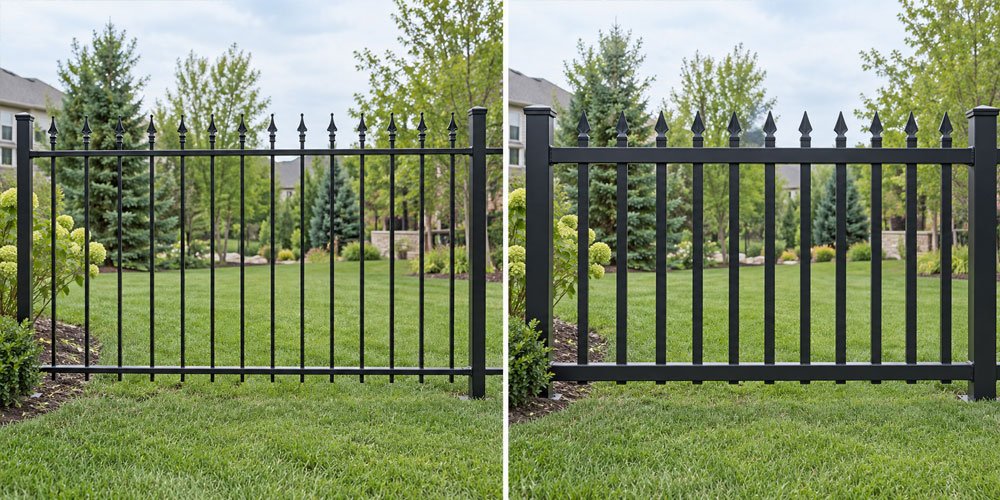
Steel wins on strength, aluminum wins on upkeep and cost. Expect $20 to $45 a foot installed for aluminum in the St. Louis area, with steel usually running 15 to 25% higher for the same height and style. Steel is heavier and welded rather than bolted together, so it takes more force to bend or breach. Aluminum will never rust. Neither one needs paint, and both clear most HOA rules that reject chain link.
We install both, so you get the real trade-off here, not a push toward whichever one we’d rather sell. Check our aluminum fence installation page or our steel fence installation page for what each job involves. Or dial 636-464-1144 for a no-charge price on your yard.
Strength and Security
Aluminum fence sections are built from separate rails, pickets and brackets joined together. Steel sections are welded as one piece. That is why steel takes more force to bend, pry or break through than aluminum of the same style.
Home-grade aluminum rails usually hold up to about 350 lbs of pressure before they give. The steel we install most is Ameristar’s Montage line, built from galvanized steel with a welded frame. Builders reach for it on business and high-security jobs where aluminum would not pass review.
If security is your deciding factor, steel is the stronger choice. If your fence is decorative or for pet containment, aluminum holds up fine for nearly every yard. Steel matters most when you need to stop a determined intruder, not just keep the dog in.
Rust, Finish and How Long Each One Lasts
Aluminum does not rust. It contains no iron, so it cannot oxidize the way steel does. The powder-coat finish is cured on at the plant before the fence ever ships, not touched up on site.
Steel can rust if the coating is ever breached. Ameristar’s Montage line ships with an E-coat, maintenance-free finish over recycled galvanized steel to stop exactly that. Montage II, the heavy-duty version, carries a 20-year warranty from Ameristar. Montage’s home steel fencing carries a lifetime limited warranty from Ameristar, the same tier of backing as Elite’s aluminum.
In practice, both materials outlast the person who bought them when the coating stays intact. You only see a real gap if the coating gets cut through to bare metal for years. That is rare on a home fence. Nobody is grinding on it.
Style and Color Options
Aluminum comes in a wider color range. Elite, the aluminum we install most, ships in seven standard colors plus custom options. That makes it the easier match for an existing house color or an HOA palette.
Steel usually comes in fewer standard colors, most often black or bronze. The finish has to hold up to the E-coat process. If you want your fence to disappear into the yard, black works on both. Need one accent color to match your trim or brick? Aluminum gives you more room to get it right.
Both materials come in picket, flat-top, arched and finial-topped styles, so style alone rarely settles the decision between them.
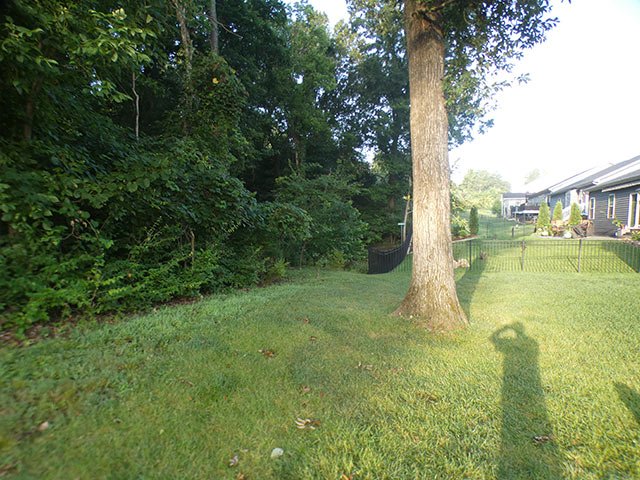
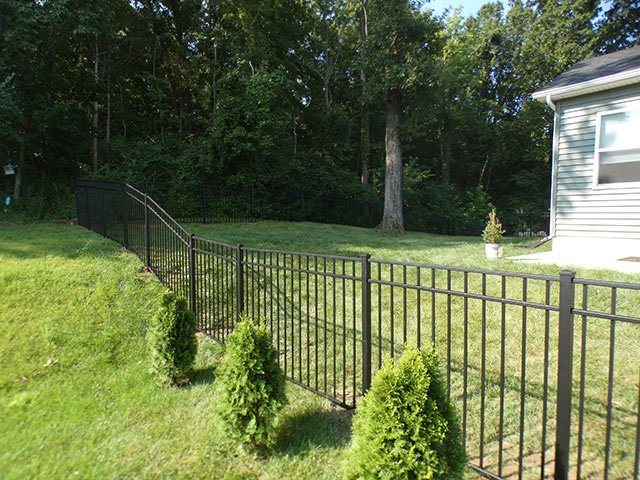
On the Criscione job in Eureka, we found the yard sloped enough that a rigid steel panel would have left gaps under the rails at the low end. Aluminum’s raked panels stepped down the grade instead, so the fence line followed the hill rather than fighting it.
Cost
Aluminum sits in the $20 to $45 a foot range for most St. Louis yards, with $25 to $40 covering the majority of jobs. Our aluminum fence cost page breaks that down further by height and gate count.
Steel costs more than aluminum for the same style and height. A welded frame takes more labor and material to build than a bolted-together aluminum section. The gap is real, but it is not huge on a normal home job. Budget roughly 15 to 25% more for steel than aluminum at the same height and style.
Neither material adds an ongoing maintenance cost the way wood does. The extra you pay for steel up front buys strength, not lower lifetime cost.
What We’ve Actually Installed
The three aluminum case studies below are real, dated jobs from 2026. We do not have a published steel case study on this site yet. The strength and warranty numbers above come from Ameristar’s own published specs, not from one of our own installs. Steel installs happen here too, just not written up yet. Ask us for photos when you call if a specific steel job matters to your decision.
- Voegtli, Kirkwood MO, 15 May 2026. 38 linear feet of aluminum picket, 4 feet tall, matte black, 2 gates, 1 day. Picket gaps closed to 1 and 5/8 inches to contain two small dogs.
- Criscione, Eureka MO. Matte black Elite aluminum, approved by the subdivision on the first submission.
- Schwyhart, St. Louis, 21 August 2026. 260 linear feet of black aluminum picket, 6 feet tall, 4 gates, 3 days. Height set to keep deer out of the flower beds.
Frequently Asked Questions
Which is better, a steel fence or an aluminum fence?
Steel is stronger and better for security or high-impact areas. Aluminum costs less, comes in more colors, and needs zero maintenance either way. Is your yard a normal home yard where nobody is trying to force their way in? Then aluminum is the better value for you. Steel is not for you if all you need is a decorative line around a flower bed or a low-traffic side yard – you would be paying for strength you will never use. Steel earns its extra cost on a business site or a pool fence with a strict code. It also earns it anywhere security is the real goal.
What are the downsides of aluminum fences?
Aluminum is softer than steel, so it takes less force to bend a picket or rail out of shape. It costs more up front than chain link. Standard picket spacing will not hold back a determined cat or a small, thin-bodied dog breed, so order it tighter up front if that matters for your yard.
What are the downsides of steel fencing?
Steel costs more than aluminum for the same style and height. It is heavier too, which can mean more labor if your site is difficult to dig. If the protective coating is ever cut through to bare metal and left unrepaired, that spot can rust.
Do aluminum fences increase property value?
Yes, aluminum fences tend to help rather than hurt. A buyer sees a rust-free, no-maintenance fence as one less thing to budget for. An aging wood or chain link fence reads the opposite way to that same buyer.
How much does a 100 foot aluminum fence cost?
At $25 to $40 a foot installed, 100 feet of aluminum runs roughly $2,500 to $4,000, before gates. Gates are priced separately based on width and hardware.
Which fence requires the least maintenance?
Aluminum and steel are close to tied here. Both need an occasional rinse and nothing else under normal conditions. Aluminum has a slight edge only because there is no coating to ever worry about being breached.
Getting a Price for Your Yard
We handle both materials, wherever your property sits in the St. Louis region, and we are a listed installer on the Catalyst installer directory. Your finished install carries one year of our own workmanship backing on top of whatever the manufacturer promises.
Getting a firm number takes three steps:
- You call or request an estimate online.
- We measure your yard, usually within 1 to 4 days.
- You get a written price for aluminum, steel, or both, so you can compare them side by side before deciding.
Our Arnold showroom keeps samples of both materials if you want to see and touch them before committing. You can also read what past customers say about the crew on our reviews page.
Ready for a number? Dial 636-464-1144. There is no charge for the visit or the quote.